斑点双缨丽鱼 · Spadetailed Checkerboard Cichlid
概要
| 字段 | 值 |
|---|---|
| 类别 | 鱼 |
| 学名 | Dicrossus maculatus |
| 别名 | 斑弦尾鱼、斑點雙纓麗魚、斑弦尾魚 |
| 分类 | 慈鲷目 Cichliformes › 慈鲷科 Cichlidae › Dicrossus |
| 水体 | 淡水 |
| 原产地 | 巴西 |
| 成体体长 | 5.3 cm |
| 饲养难度 | 中等 |
| 最小水体 | 68 L |
| 最小缸长 | 60 cm |
| 性情 | 温和 |
| 外部数据 | seriouslyfish dicrossus-maculatus;fishbase 46804 |
| 繁殖方式 | 产卵 |
水质参数
| 参数 | 耐受范围 | 最适范围 | 单位 |
|---|---|---|---|
| 水温 | 26–30 | — | °C |
| pH | 3.4–5.4 | — | — |
| 总硬度 | 0–1 | — | dGH |
概述
斑点双缨丽鱼(Dicrossus maculatus)在贸易中不常见,繁殖需要特别软、酸性很强而又清洁的水。育幼时雌鱼会利用腹鳍动作引导鱼苗,是观察亲鱼照护行为的有趣对象。
分布与栖息地
原产巴西亚马孙流域的塔帕若斯河、毛埃斯河及邻近区域。
饲养环境
宜密植水草,并设置许多入口较小的洞穴供躲藏。保持很软的酸性水,繁殖和育苗期间尤其不能忽视水质。布置时应让鱼能避开干扰,而不只是留下开阔游动区域。
食性与喂食
以多种优质冷冻饵料交替投喂。若准备繁殖,活饵可能是促使亲鱼进入良好状态的重要条件,不应假定单一冷冻饵就能满足所有阶段的需求。
习性与混养
对其他物种非常温和。不过,这一描述不等于保证同种个体之间始终相容。繁殖时有加入少量小型群居鱼改善亲鱼照护表现的观察,可作为有条件的参考。
雌雄区分
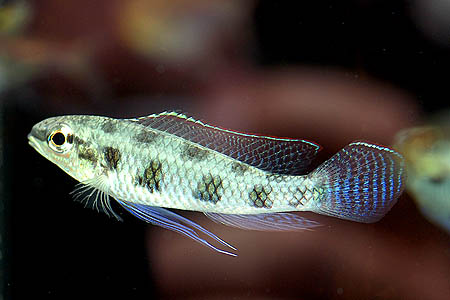
雌鱼可与雄鱼一样大,甚至更大,因此体型不是可靠标准。雄鱼通常颜色更鲜明,头部两侧和鳃盖有明显蓝色光泽;雌鱼颜色较淡。
繁殖
繁殖有一定挑战,卵的孵化依赖极软、强酸性且优质的水。雌鱼育幼时腹鳍会显出鲜明黄色,展开腹鳍可引导鱼苗靠近,收拢时则让它们停止,夜间休息前常把幼鱼赶往安全位置。仍照顾上一窝幼鱼的雌鱼可能不会顺利开始下一轮繁殖,不能单纯通过继续投喂来催促。
图片
图片来自 SeriouslyFish,版权归各摄影者所有。
English
Overview
The uncommon checkerboard cichlid Dicrossus maculatus is a demanding breeding project. Very soft, strongly acidic water is important for egg development, while the female's fin signals make brood care particularly engaging to observe.
Distribution & habitat
It originates in Brazil's Amazon basin, including the Tapajos and Maues rivers and neighboring waters.
Aquarium setup
Use substantial planting and numerous sheltered cavities with small entrances. Maintain the soft acidic conditions consistently and give water quality particular attention during reproduction. Cover should offer genuine retreats from disturbance rather than merely decorating an open tank.
Diet & feeding
Rotate good frozen foods for routine meals. Live foods may be important when bringing adults into breeding condition, so a single frozen item should not be assumed adequate for every stage.
Behaviour & compatibility
Its peaceful disposition is specifically described toward other species; this does not establish universal tolerance of conspecifics. Small shoaling companions have reportedly improved parental care during breeding, an observation to consider cautiously in an otherwise suitable setup.
Sexual dimorphism
Size is unreliable: females can match or exceed males. Males generally display stronger colors, including a striking blue sheen across the sides of the head and gill covers, while females look more subdued.
Breeding
Eggs require exceptionally soft acidic water, and maintaining cleanliness remains essential under those conditions. Brooding females develop bright yellow pelvic fins and use them to direct the young. Spreading these fins draws the fry closer; folding them signals a stop. The brood is often guided into shelter before nightfall. A female still caring for young may not reproduce successfully again until that brood has been separated from the adults.
来源
- https://www.seriouslyfish.com/species/dicrossus-maculatus(抓取于 2026-10-10)
dicrossus-maculatus · 文件: data/species/dicrossus-maculatus.md · 状态: 草稿