皮颏鱵 · Wrestling Halfbeak
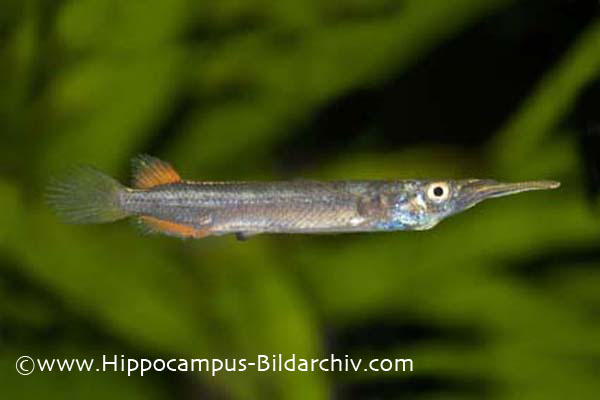
概要
| 字段 | 值 |
|---|---|
| 类别 | 鱼 |
| 学名 | Dermogenys pusilla |
| 别名 | 皮頦鱵 |
| 分类 | 颌针鱼目 Beloniformes › 鱵科 Hemiramphidae › Dermogenys |
| 水体 | 淡水 |
| 成体体长 | 5.5 cm |
| 饲养难度 | 入门 |
| 最小水体 | 68 L |
| 最小缸长 | 60 cm |
| 特征 | 会跳缸: 是 |
| 外部数据 | seriouslyfish dermogenys-pusilla;fishbase 11298 |
| 原产地 | 印度、缅甸、泰国、老挝、柬埔寨、越南、菲律宾、马来西亚、印度尼西亚 |
| 游动层 | 上层 |
| 繁殖方式 | 卵胎生 |
水质参数
| 参数 | 耐受范围 | 最适范围 | 单位 |
|---|---|---|---|
| 水温 | 24–28 | — | °C |
| pH | 6.5–8 | — | — |
| 总硬度 | 10–20 | — | dGH |
概述
皮颏鱵(Dermogenys pusilla)以下颌明显延长的外形和雄鱼锁颌争斗而引人注意。它几乎一直活动在水面下,初入缸时容易受惊,水面空间、边缘水草与严密缸盖都很重要。
分布与栖息地
记录分布于印度、缅甸、泰国、老挝、柬埔寨、越南、菲律宾、马来西亚及印度尼西亚。多见于水流缓慢或静止的河流、运河、沟渠、淹水农田、湖泊和水塘,常有浓密水面植被。雨季也偶见于红树林附近的轻微咸淡水环境。
饲养环境
小群体可用至少 60 × 38 × 30 cm、约 68 L 的缸体,水面面积比高度更重要。沿缸边种植浓密水草,减少受惊时口部撞伤玻璃的机会,浮水植物配合贴合紧密的缸盖防止跳出。水面以下的装饰可按需要安排。
水质偏硬、较偏碱时可以用淡水饲养,海盐不是必需条件;也可采用比重约 1.005 的轻度咸淡水。对水质恶化和温度、水化学突然变化都敏感,换水宜少量而频繁。
食性与喂食
只在水面摄食。先用营养食物喂养过的果蝇是合适活饵,也可尝试丰年虾、红虫等。新鱼可能拒绝干粮,适应后通常有机会转食;实际是否吃到比单纯投下饲料更重要。
习性与混养
选择体型相近、性情温和且水质要求相同的鱼。淡水布置中可考虑其他胎生鱼、小型彩虹鱼或淡水虾虎;咸淡水环境则应搭配耐盐的合适种类。体型过大、性情强势的同伴会使它紧张,并压过它抢食。
群体饲养通常能减轻胆怯。雄鱼会争斗,但在空间充足时多能很快结束,弱者也有机会退让;可以只留一尾雄鱼,或在足够空间内安排多尾分散冲突,不宜将少数雄鱼挤在狭窄处。
雌雄区分
雄鱼明显较小,臀鳍改形为交配用结构,成熟后背鳍有雌鱼缺少的红色斑块。
繁殖
能够人工繁殖,但养出健康后代比促成交配更困难。部分雌鱼会产出死胎,营养不足可能参与其中;某些解释将其归于维生素缺乏,尚不宜当作唯一确定原因。
用一群亲鱼在水面植被丰富的单养缸中调养,妊娠期随温度变化,约 3–6 周,每胎通常 10–20 尾。健康新生鱼可立即吃粉状干粮和丰年虾无节幼体,最好及时移出,避免亲鱼捕食。
补充说明
雄鱼锁颌是竞争行为,不应为了观赏而用小容器迫使它们持续争斗。近似种也可能使用同一商品名称出售,因此商品名不能替代可靠的物种识别。
图片
图片来自 SeriouslyFish,版权归各摄影者所有。
English
Overview
The extended lower jaw and male jaw-locking contests characterize Dermogenys pusilla. It spends nearly all its time just below the surface and can be very nervous after introduction. Broad surface space, planted margins, and secure containment are more important than aquarium depth.
Distribution & habitat
Records extend from India and Myanmar through Thailand, Laos, Cambodia, Vietnam, the Philippines, Malaysia, and Indonesia. Still or slowly moving rivers, canals, ditches, flooded fields, lakes, and ponds typically offer abundant surface vegetation. Slightly brackish mangrove waters are occasionally used during the rainy season.
Aquarium setup
A small group can occupy an aquarium from approximately 60 by 38 by 30 cm, around 68 L. Dense planting along the sides reduces the chance of delicate mouthparts striking glass during a fright. Floating vegetation complements a tight-fitting cover against jumping. Furnishings below the surface are largely optional.
Hard, moderately alkaline freshwater is suitable; marine salt is not obligatory. A lightly brackish arrangement around specific gravity 1.005 is another option. Use frequent small water changes because both deteriorating conditions and abrupt temperature or chemical shifts are poorly tolerated.
Diet & feeding
All feeding occurs at the surface. Nutritionally conditioned fruit flies are useful, alongside accepted brine shrimp, bloodworms, and similar foods. Dry preparations may be refused initially but are often accepted after acclimation. Confirm consumption rather than assuming that introduced food reaches the fish.
Behaviour & compatibility
Choose peaceful fishes of similar size and matching water requirements. Other livebearers, small rainbowfishes, or freshwater gobies may suit freshwater arrangements; brackish companions must tolerate the same salinity. Large or aggressive fishes readily intimidate and outcompete it.
A group usually reduces nervousness. Males spar, but lasting injury is uncommon when sufficient room allows withdrawal. Keep either one male or several with adequate space to distribute attention, rather than confining a few rivals together.
Sexual dimorphism
Males are much smaller, with the anal fin modified into a mating organ. Mature males also carry a red dorsal-fin patch absent from females.
Breeding
Captive reproduction is possible, though producing healthy newborns can be harder than inducing mating. Stillbirths have been associated with nutritional problems; proposed specific deficiencies should not be treated as the sole established cause.
Condition a group in a species aquarium with abundant surface plants. Pregnancy varies with temperature and commonly lasts three to six weeks, producing about 10–20 young. Healthy fry immediately take fine powdered food and newly hatched brine shrimp. Remove them from the adults to reduce predation risk.
Notes
Jaw-locking is rivalry rather than a reason to force fights in confined containers. Several similar halfbeaks share trade names, so a sales label alone cannot reliably identify a specimen.
来源
- https://www.seriouslyfish.com/species/dermogenys-pusilla(抓取于 2026-10-10)
dermogenys-pusilla · 文件: data/species/dermogenys-pusilla.md · 状态: 草稿