Dekeyseria brachyura · Butterfly Plec
概要
| 字段 | 值 |
|---|---|
| 类别 | 鱼 |
| 学名 | Dekeyseria brachyura |
| 别名 | L168 |
| 分类 | 鲶形目 Siluriformes › 骨甲鲶科 Loricariidae › Dekeyseria |
| 水体 | 淡水 |
| 成体体长 | 14 cm |
| 饲养难度 | 中等 |
| 最小水体 | 108 L |
| 最小缸长 | 120 cm |
| 外部数据 | seriouslyfish dekeyseria-brachyura;fishbase 49971 |
| 原产地 | 巴西尼格罗河 |
| 食性 | 草食 |
| 繁殖方式 | 附着产卵 |
| 领地性 | 是 |
水质参数
| 参数 | 耐受范围 | 最适范围 | 单位 |
|---|---|---|---|
| 水温 | 25–28 | — | °C |
| pH | 5.6–7 | — | — |
| 总硬度 | 2–12 | — | dGH |
概述
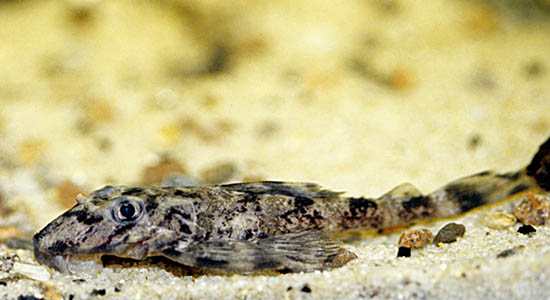
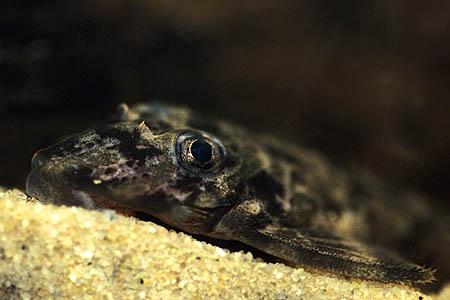
Dekeyseria brachyura 即 L168,身体扁平,能随底材和周围表面改变颜色,夜间也有不同体色。饲养时应重视温暖、富氧和水流,不能把变色本身直接当作异常。
分布与栖息地
来自巴西尼格罗河,栖居流动溪流及支流。腐烂植物释放的物质常使水呈茶色。
饲养环境
缸底至少约 120 × 30 cm。以沉木根枝提供大量遮蔽,也可加光滑岩石和水草。维持良好溶氧,最好有较明显水流;偏凉或缺氧环境不利于长期状态。
食性与喂食
主要偏植物食。以黄瓜、焯菠菜等鲜蔬及藻片、螺旋藻片为食物主体,也可规律搭配少量红虫、水蚤等活饵或冷冻饵,不能只给动物饵。
习性与混养
可与条件相符的鱼混养,重点是伙伴同样适应温暖、富氧流水。普通混养也必须把增氧做好,而不是仅凭体形和表面安静来决定。
雌雄区分
成熟雄鱼吻部及胸鳍棘附近的齿突通常比雌鱼长。
繁殖
人工繁殖不常见,但已有成功。提供软水、酸性水及多个洞穴,卵在雄鱼选中的洞内产下,由雄鱼扇水、护卵并驱逐入侵者。约 7~10 天孵化,幼鱼卵黄很快消耗,应及时持续供应与成鱼相似的适口食物,并每日小量换水。
若未产卵,可尝试约 50%~70% 稍凉换水,数日一次模拟雨季刺激,但温度仍须保持在适宜范围。
补充说明
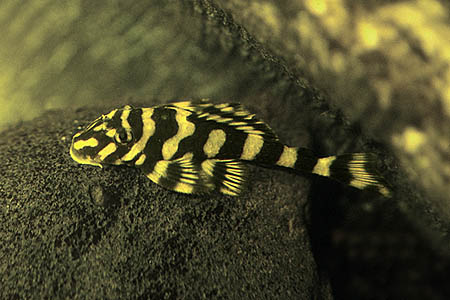
与奥里诺科河 L052 的关系仍存在同种可能,不能据相似花纹直接合并。购鱼应检查腹部和眼睛是否消瘦,捕捞时防吻部齿突和胸鳍棘挂网。
图片
图片来自 SeriouslyFish,版权归各摄影者所有。
English
Overview
Dekeyseria brachyura, known as L168, has a flattened profile and changes color in response to surrounding surfaces. Its nighttime appearance also differs. Warm, oxygenated moving water is central to care, and color change alone need not indicate a problem.
Distribution & habitat
It comes from Brazil's Negro drainage, occupying flowing streams and tributaries. Decomposing vegetation commonly stains the water a tea-like color.
Aquarium setup
Provide at least a 120 × 30 cm footprint. Wood, roots, and branches should supply abundant cover; smooth rocks and plants are optional additions. Maintain ample oxygen and preferably substantial movement. Cool or poorly oxygenated accommodation is unsuitable.
Diet & feeding
Plant foods should dominate the menu. Combine fresh cucumber or blanched spinach with algae wafers and spirulina preparations. Small regular supplements of bloodworms, water fleas, or similar live and frozen foods can add variety without displacing the vegetable base.
Behaviour & compatibility
It can join a community of fishes sharing its environmental needs. Strong aeration remains essential even in a general setup; apparent calmness alone does not establish compatibility.
Sexual dimorphism
Mature males develop longer odontodes around the snout and pectoral spines than females.
Breeding
Captive spawning is uncommon but documented. Supply soft acidic water and several caves. Eggs are placed in a male-selected cave, where he fans them and excludes intruders. Hatching takes approximately seven to ten days. Small yolk reserves are depleted quickly, so fry need continuing access to suitable versions of the adult foods and small daily water changes.
If spawning does not occur, changes of roughly 50–70% with slightly cooler water every few days may provide a stimulus, while remaining within appropriate temperatures.
Notes
Its relationship to Orinoco L052 remains uncertain, including possible conspecificity. Do not merge identities solely from similar patterns. Inspect imports for emaciation and handle carefully because snout and pectoral spines can snag nets.
来源
- https://www.seriouslyfish.com/species/dekeyseria-brachyura(抓取于 2026-10-10)
dekeyseria-brachyura · 文件: data/species/dekeyseria-brachyura.md · 状态: 草稿