泰北虎鱼 · Mekong Tiger Perch
概要
| 字段 | 值 |
|---|---|
| 类别 | 鱼 |
| 学名 | Datnioides undecimradiatus |
| 别名 | Coius undecimradiatus、Datnioides undecimradiatus |
| 分类 | 拟松鲷科 Datnioididae › Datnioides |
| 水体 | 淡水 |
| 原产地 | 柬埔寨、老挝、泰国、越南 |
| 成体体长 | 30 cm |
| 饲养难度 | 中等 |
| 最小水体 | 648 L |
| 最小缸长 | 180 cm |
| 群居方式 | 独居 |
| 外部数据 | seriouslyfish datnioides-undecimradiatus;fishbase 16200 |
| 食性 | 肉食 |
| 特征 | 吃小鱼: 是;吃虾: 是 |
水质参数
| 参数 | 耐受范围 | 最适范围 | 单位 |
|---|---|---|---|
| 水温 | 20–28 | — | °C |
| pH | 5.5–7.5 | — | — |
| 总硬度 | 2–15 | — | dGH |
概述
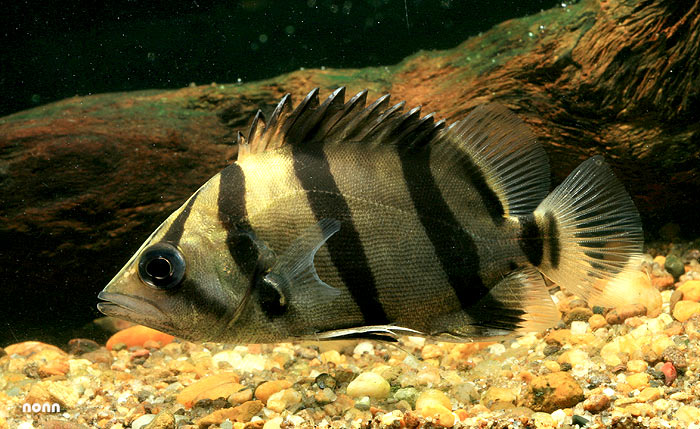
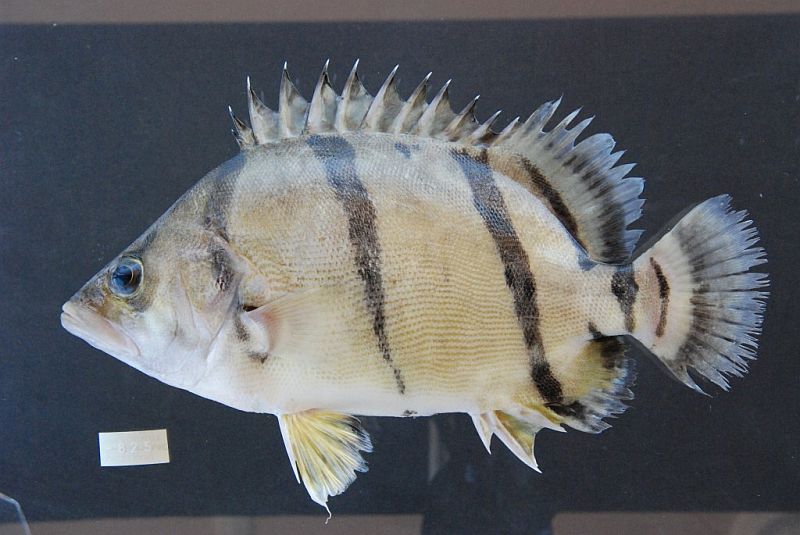
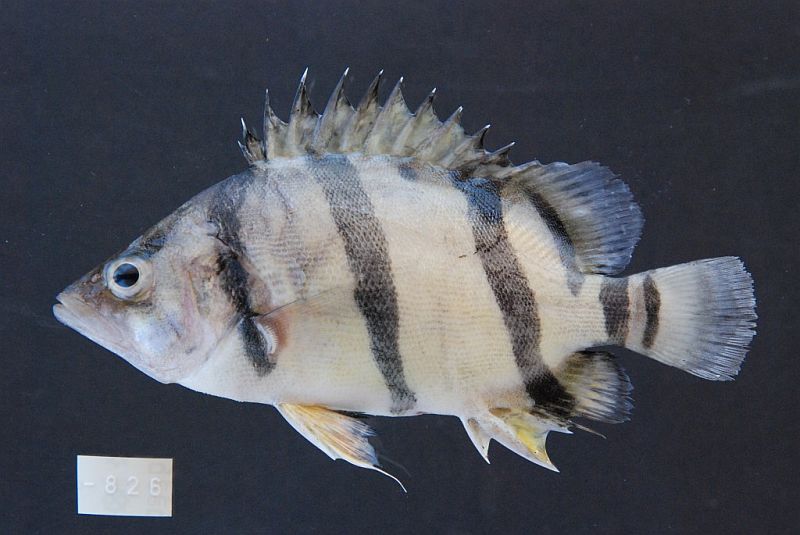
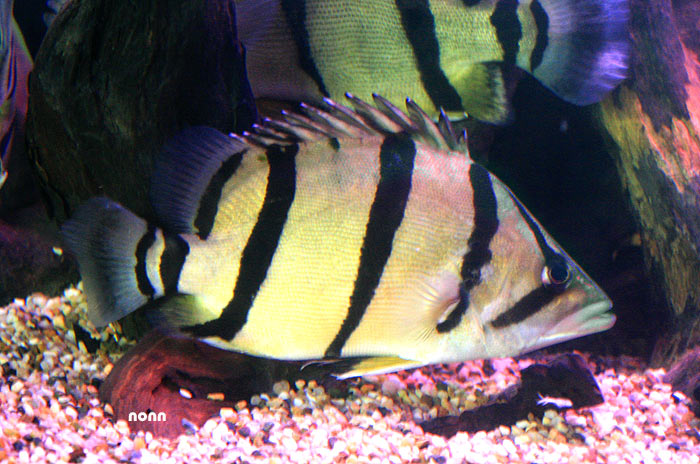
泰北虎鱼(Datnioides undecimradiatus)是湄公河中下游的大型淡水捕食鱼,通常有四条较窄深纹。它与宽纹泰国虎鱼容易因商品名混淆,购买时应看花纹细节和身份,不只看产地称呼。
分布与栖息地
分布记录限于泰国、老挝、柬埔寨和越南的湄公河中下游,包括 Xe Bangfai、Mun 和 Sekong 等大支流。模式地点位于老挝孔瀑布下游不远的湄公河。
利用大型、较深的低地淡水河流,不认为通常进入半咸水。河流工程、岸边植被减少、污染及食用和观赏捕捞可能对野生种群造成压力。
饲养环境
至少以 180 cm 长的大缸为起点,幼鱼和亚成鱼需要水草、根木及枝条遮蔽,大个体也会利用浮水植物或垂枝形成的上方覆盖。任何阶段都不需要常规添加海盐。
此属排泄负荷较大,大型外置过滤或底滤很重要。成鱼可能碰坏水下设备,加热器应有坚固防护,或安置于隔开的底滤区域。
运输后可能难稳定、拒食。应激或夜间体色可灰褐至发黑,深纹淡去,仅边缘或点状部分仍清楚。判断时要结合进食和适应情况,不能只看瞬时颜色。
食性与喂食
天然主要捕食鱼类,可伸出口器迅速吸取猎物。幼鱼可喂红虫、小蚯蚓和碎虾,成鱼可接受鱼肉条、整虾、贻贝、活河虾以及较大蚯蚓。成熟大鱼不必天天投喂,每周两三次可作为常规安排。
不要喂牛心、鸡肉等禽畜肉,其中部分脂质不适合其代谢,可能造成脂肪沉积与器官问题。活饵鱼没有必需性,还可能引入疾病或寄生虫,营养是否合适也取决于之前的调养。
习性与混养
空间充足时可与体形相近的鱼同养,但强领地、强竞争伙伴可能压制它。小鱼则可能被当成猎物。
幼鱼可暂成群,成年后通常不合群,可能攻击同种及外形相似鱼。单养较直接;若考虑多条,至少五条并有与之匹配的大型空间,不能只增加鱼数而不增加容量。
补充说明
本种四条窄纹中,第一条在鳃盖上有时中断,通常不延续到胸腹;个别鱼可多一条较小、不完整暗纹。它的鳞片小、背鳍前轮廓较直,也有助于区别近缘。
Northern Thai、NTT、Thin Bar 等名称常用于本种,而 Siamese、Gold Datnoid 通常指泰国虎鱼(Datnioides pulcher)。两者名称混用时,不能仅凭“泰虎”标签判断品种。
图片
图片来自 SeriouslyFish,版权归各摄影者所有。
English
Overview
The Mekong tiger perch Datnioides undecimradiatus is a large freshwater predator usually marked by four relatively narrow dark bars. Commercial names can confuse it with the broader-barred Siamese tiger perch, so assess the fish rather than relying on a geographical label.
Distribution & habitat
Records are confined to the middle and lower Mekong in Thailand, Laos, Cambodia, and Vietnam, including major tributaries such as the Xe Bangfai, Mun, and Sekong. The type locality lies in the Mekong a short distance below the Khone Falls in Laos.
It uses large, deep lowland freshwater rivers and is not expected to enter brackish habitats routinely. River engineering, bank vegetation loss, pollution, and fishing for food and aquaria may place pressure on wild populations.
Aquarium setup
Start with an aquarium at least 180 cm long. Juveniles and subadults need plants, roots, and branches for cover; larger fish still appreciate overhead shelter. Routine marine-salt addition is unnecessary at any stage.
Substantial external filtration or a sump is important because the genus produces considerable waste. Adults may damage submerged equipment. Protect heaters securely or place them in a separate sump compartment.
Transport can be followed by feeding refusal and difficulty settling. During stress or at night, the body may become gray-brown or blackish while the dark bars fade, leaving outlines or spots more distinct. Interpret this alongside feeding and adjustment rather than judging one moment's color alone.
Diet & feeding
Its natural diet is chiefly fish, captured with highly protrusible mouthparts. Juveniles can take bloodworms, small earthworms, and chopped shrimp. Adults accept fish strips, whole shrimp, mussels, live river shrimp, and larger earthworms. Mature fish do not need daily meals; two or three weekly are a suitable routine.
Avoid beef heart, chicken, and other mammal or bird meat because some fats are poorly processed and may contribute to deposits and organ problems. Feeder fishes are unnecessary and may introduce parasites or disease; nutritional quality also depends on how they were conditioned.
Behaviour & compatibility
Similar-sized fishes can share a sufficiently large aquarium, although strongly territorial or competitive companions may intimidate it. Small fishes can become prey.
Juveniles may associate, but adults are generally unsociable and may attack their own species or similarly shaped fishes. Single housing is straightforward. Groups should contain at least five with correspondingly large accommodation; increasing numbers without increasing capacity is unsuitable.
Notes
The first of the four narrow bars can be interrupted over the operculum and normally does not continue across the chest or belly. An additional small, incomplete bar sometimes occurs. Small scales and a relatively straight predorsal profile provide further clues.
Northern Thai, NTT, and Thin Bar commonly refer to this species, while Siamese and Gold Datnoid more often identify Datnioides pulcher. A generic Thai tiger label is therefore insufficient for identification.
来源
- https://www.seriouslyfish.com/species/datnioides-undecimradiatus(抓取于 2026-10-10)
datnioides-undecimradiatus · 文件: data/species/datnioides-undecimradiatus.md · 状态: 草稿