四带捉松鲷 · Silver Tiger Perch
概要
| 字段 | 值 |
|---|---|
| 类别 | 鱼 |
| 学名 | Datnioides polota |
| 别名 | 淡水松鲷、四帶捉松鯛、淡水松鯛、Chaetodon quadrifasciatus、Coius polota、Coius binotatus、Lobotes hexazona、Datnioides quadrifasciatus |
| 分类 | 拟松鲷科 Datnioididae › Datnioides |
| 水体 | 淡水 |
| 原产地 | 孟加拉国、印度、印度尼西亚、马来西亚、缅甸、新加坡、泰国、越南 |
| 成体体长 | 30 cm |
| 饲养难度 | 中等 |
| 最小水体 | 648 L |
| 最小缸长 | 180 cm |
| 群居方式 | 独居 |
| 外部数据 | seriouslyfish datnioides-polota;fishbase 14698 |
| 食性 | 肉食 |
| 特征 | 吃小鱼: 是 |
水质参数
| 参数 | 耐受范围 | 最适范围 | 单位 |
|---|---|---|---|
| 水温 | 20–28 | — | °C |
| pH | 7.5–9 | — | — |
| 总硬度 | 15–30 | — | dGH |
概述
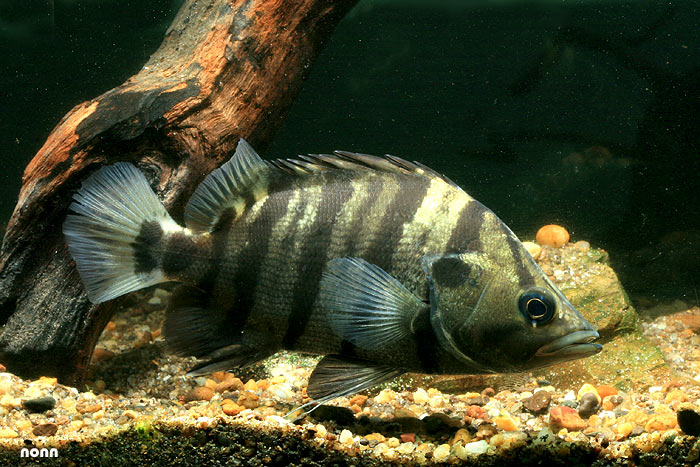
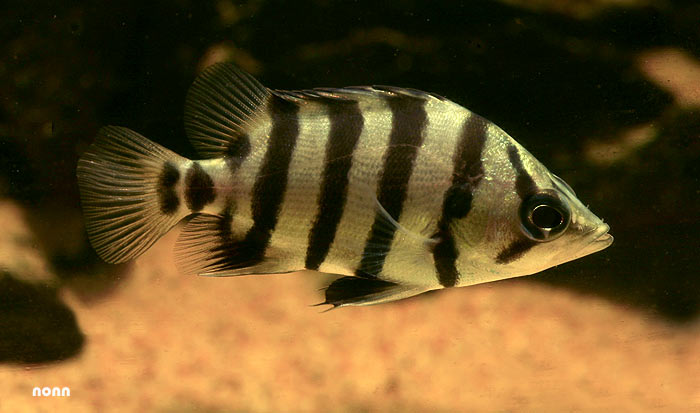
四带捉松鲷(Datnioides polota)是一种条纹变化很大的虎鱼,通常出现在河口和其他咸淡水环境。即使能在中等至较硬淡水中存活,也不应忽略其天然咸淡水需求。幼鱼结群和成年相互攻击的差异,是规划饲养方式的重要依据。
分布与栖息地
分布从印度、孟加拉国向东,经过缅甸、泰国、越南、马来西亚和新加坡,至印度尼西亚。常见环境包括河口、红树林、沿海潟湖、灌溉水道及河流下游,偶尔在潮汐影响范围以上也有记录;巴布亚新几内亚的相关记录属于其他种。
饲养环境
底面至少参考 180 × 60 厘米。幼鱼和亚成鱼宜有沉木枝条、树根等丰富遮蔽,成鱼也可保留水面覆盖。虽然能适应中硬淡水,长期养护仍建议使用海盐配成低盐度咸淡水,约为海水盐度的 10%–20%,不要将这个比例误读成盐占水重的百分比。
虎鱼属排泄量大,大型外滤或底滤更适合;加热器置于底滤或套坚固护罩,避免损坏。运输后的拒食和体色发暗需要留意,本种受压时整体明显变深、条纹模糊,夜间也有类似变化。
食性与喂食
天然主要捕食小鱼和甲壳动物,口器能明显前伸。幼鱼可喂红虫、小蚯蚓和碎虾肉,成鱼用鱼肉条、整虾、贝肉及较大蚯蚓。较大个体每周两三次即可,不需每天喂。牛心、禽肉不适宜,活饵鱼也会带来疾病、寄生虫和营养风险。
习性与混养
有足够空间时可与相似体型的鱼混养,但不要配强领地或抢食很凶的伙伴。成年鱼不群居,容易攻击同种或体形近似的鱼,通常单养,或在足够大型设施中用至少五尾的群体,不要把幼鱼能聚集当作长期和平保证。
补充说明
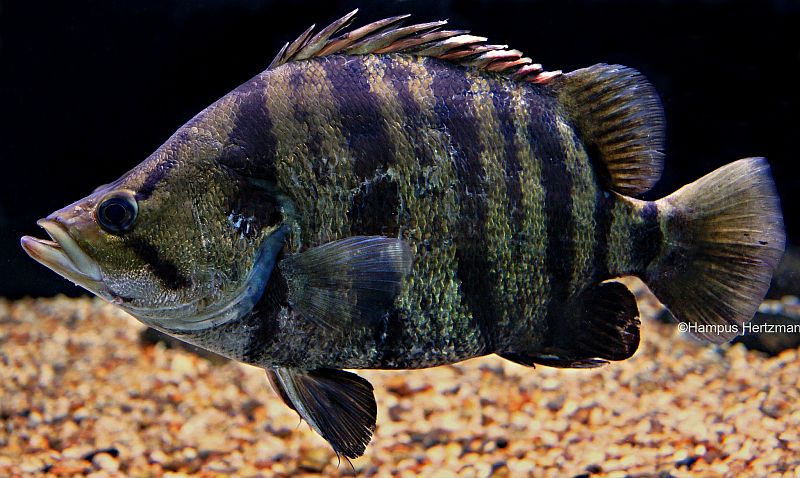
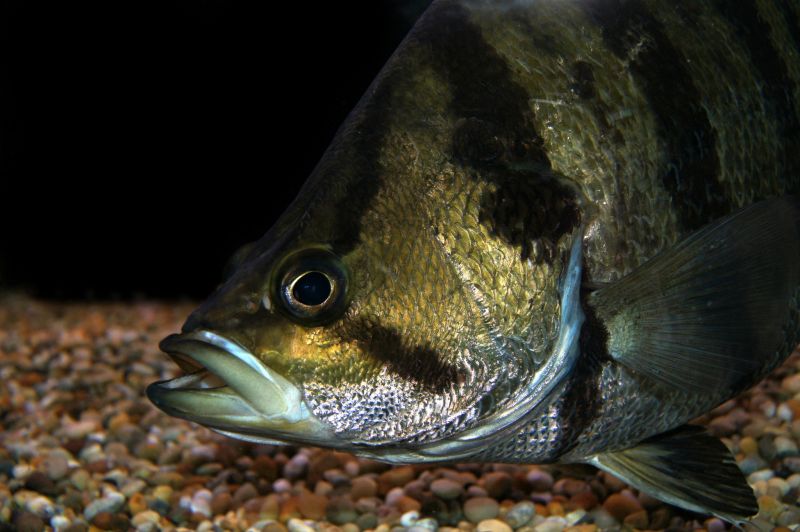
条纹数可达七条,主条纹之间还可能有细条,头背轮廓明显内凹、鳞片相对较大。俗名中的“淡水”或英文商贸地名不能代替真实产地和盐度判断。
图片
图片来自 SeriouslyFish,版权归各摄影者所有。
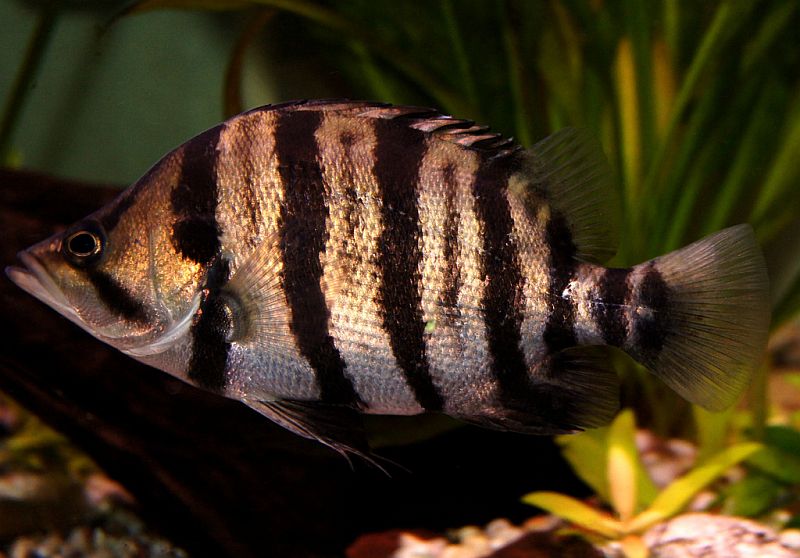
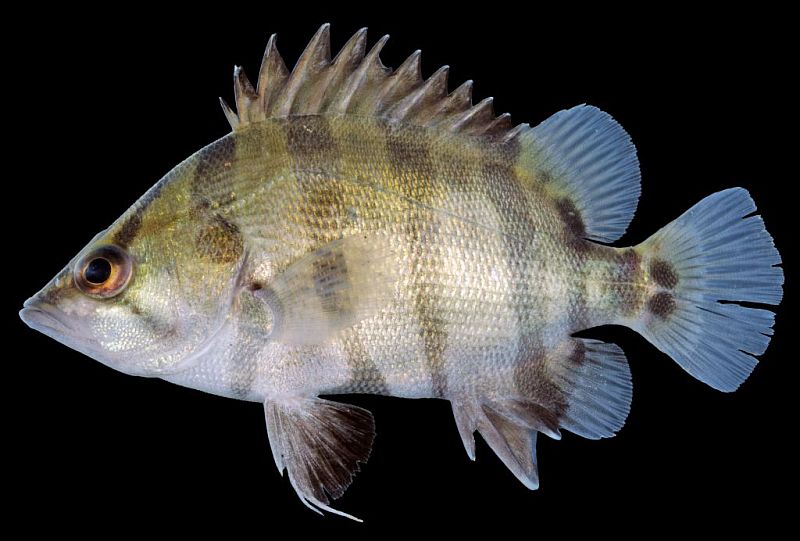
English
Overview
A variably barred tiger perch, Datnioides polota is principally associated with brackish habitats. Survival in moderately hard or hard freshwater should not obscure that natural preference. Stocking also needs to account for the change from grouping juveniles to less sociable adults.
Distribution & habitat
Its range extends from India and Bangladesh through Myanmar, Thailand, Vietnam, Malaysia, and Singapore to Indonesia. Estuaries, mangroves, coastal lagoons, canals, and lower rivers are typical, with occasional records above tidal influence. Papua New Guinea records concern a different species.
Aquarium setup
Provide at least a 180 by 60 cm footprint. Young fish need woody refuges, while adults also appreciate surface cover. Although hard freshwater is tolerated, marine salt is recommended to produce low-salinity brackish water, around 10–20% of normal seawater strength. This is a fraction of seawater salinity, not a salt-to-water mass percentage.
Large external filters or a sump suit the genus’s waste load. Protect heaters or house them in the sump. Imports may be difficult to stabilize, refusing food and darkening until their bars become indistinct. Similar nighttime color changes also occur.
Diet & feeding
Small fish and crustaceans form the main natural prey, caught with protrusible jaws. Juveniles can take small worms and chopped shrimp; larger fish accept suitable fish strips, whole shrimp, mussels, and earthworms. Older individuals usually need only two or three meals weekly. Avoid mammalian or avian meat and routine feeder fish.
Behaviour & compatibility
Companions of comparable size are possible in spacious housing, but strongly territorial or competitive fish may intimidate it. Adults are not gregarious and can attack conspecifics or similar-shaped fish. Keep one, or a group of at least five where facilities allow; juvenile grouping does not guarantee adult harmony.
Notes
There may be up to seven main bars with narrower additional markings between them. A concave predorsal outline and relatively large scales are useful identification features. Trade labels should not override the actual geographic range or brackish habitat association.
来源
- https://www.seriouslyfish.com/species/datnioides-polota(抓取于 2026-10-10)
datnioides-polota · 文件: data/species/datnioides-polota.md · 状态: 草稿