印尼虎 · Indonesian Tiger Perch
概要
| 字段 | 值 |
|---|---|
| 类别 | 鱼 |
| 学名 | Datnioides microlepis |
| 别名 | 小鱗擬松鯛、小鳞拟松鲷 |
| 分类 | 拟松鲷科 Datnioididae › Datnioides |
| 水体 | 淡水 |
| 原产地 | 印度尼西亚、马来西亚 |
| 成体体长 | 50 cm |
| 饲养难度 | 中等 |
| 群居方式 | 独居 |
| 外部数据 | seriouslyfish datnioides-microlepis;fishbase 14506 |
| 食性 | 肉食 |
| 特征 | 吃小鱼: 是 |
水质参数
| 参数 | 耐受范围 | 最适范围 | 单位 |
|---|---|---|---|
| 水温 | 20–28 | — | °C |
| pH | 5.5–7.5 | — | — |
| 总硬度 | 2–15 | — | dGH |
概述
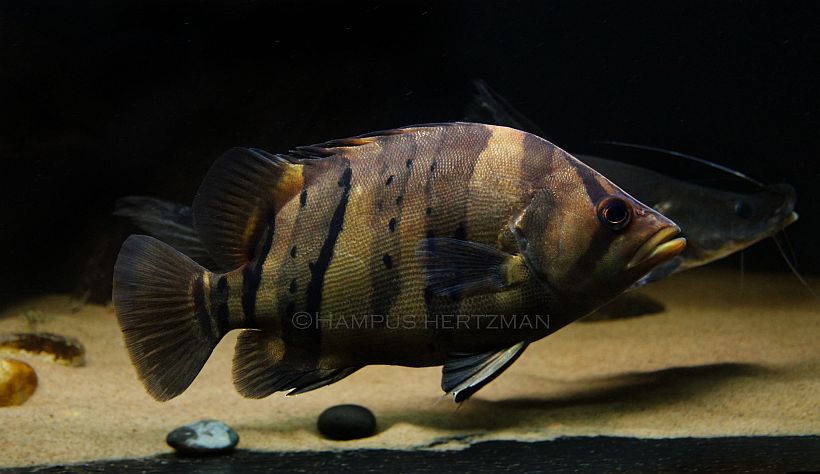
印尼虎(Datnioides microlepis)是一种大型淡水虎鱼,成年空间需求很高,只适合公共展示或极大型私人设施。幼鱼可能结群,成年后却不群居,并容易攻击同种和体形相似的鱼,不能按幼鱼时期的表现规划终身混养。
分布与栖息地
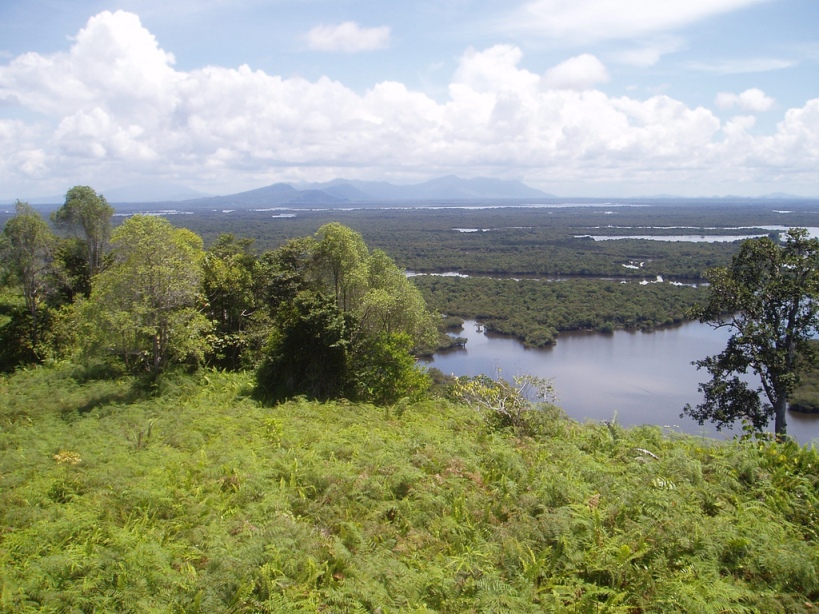
已知范围包括马来半岛的霹雳河与雪兰莪河、苏门答腊的巴当哈里与穆西水系,以及印度尼西亚加里曼丹的卡普阿斯河。是否延伸到泰国半岛仍不清楚。它生活在大型、较深的低地淡水河流,雨季也进入淹水森林,不需要按咸淡水虎鱼饲养。
饲养环境
幼鱼和亚成鱼宜有较丰富的水草、枝根和沉木遮蔽,成鱼对装饰较随意,但仍可提供水面遮蔽。任何阶段都无须加海盐。
虎鱼属排泄负荷较高,应采用大型外滤或底滤。加热器可放在底滤中,或加坚固护罩,避免成鱼损坏设备。运输后往往不易稳定,可能拒食和持续发暗;本种紧张时黑色横带内部褪去,边缘或斑点仍清楚,身体大部变灰褐或黑。夜间也可能出现类似颜色,需结合进食和环境判断。
食性与喂食
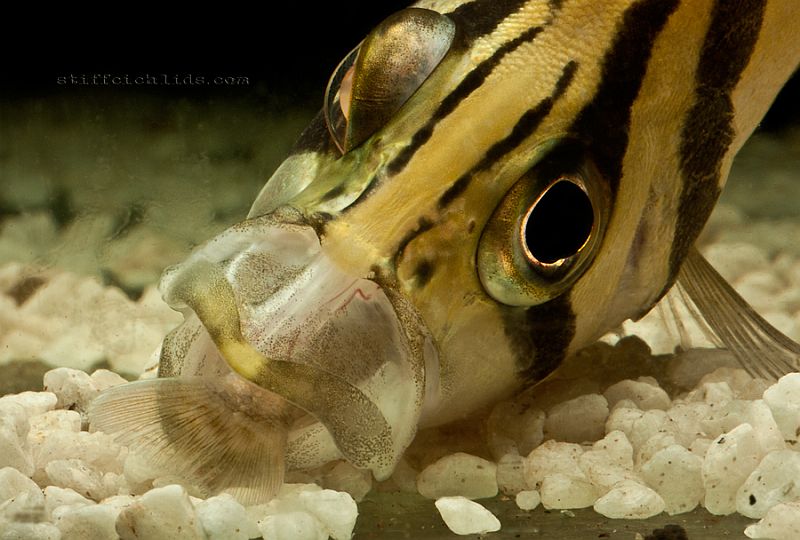
主要捕食鱼类,能用突出的口器快速吸取猎物。幼鱼可喂红虫、小蚯蚓及碎虾肉,成鱼可用鱼肉条、整虾、贝肉和较大蚯蚓;较大个体每周喂两三次即可,不必每天投喂。
不要以牛心、禽肉为饵,也不必长期用活饵鱼,避免不合适脂肪、病原和寄生虫问题。
习性与混养
有足够空间时可与相似体型的鱼搭配,但强领地、竞争激烈的伙伴可能压迫它。成年后对同种和近似体形鱼容易攻击,通常单养,若群养则建议至少五尾,并配备相应的大型空间;不应只养少数几尾强行相处。
繁殖
卡普阿斯河的当地观察认为它可能不进行迁徙,在 4–5 月繁殖且不护卵。人工繁殖尚未记录,不能将这些野外观察直接当作人工操作流程。
补充说明
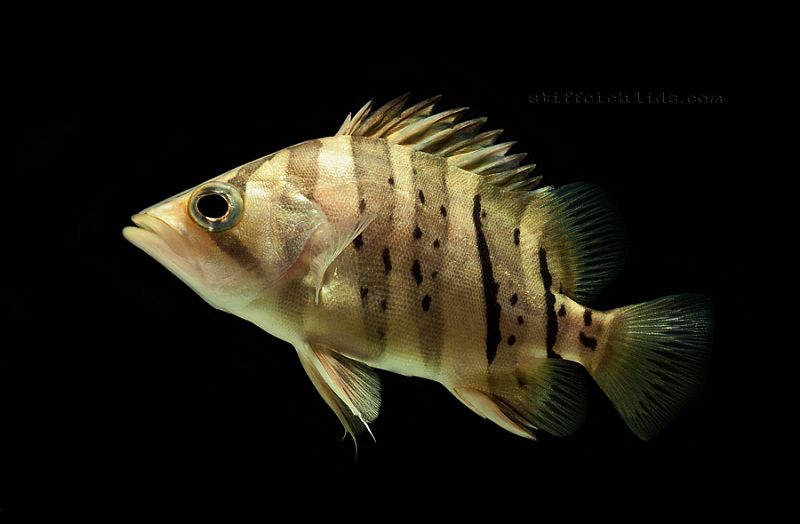
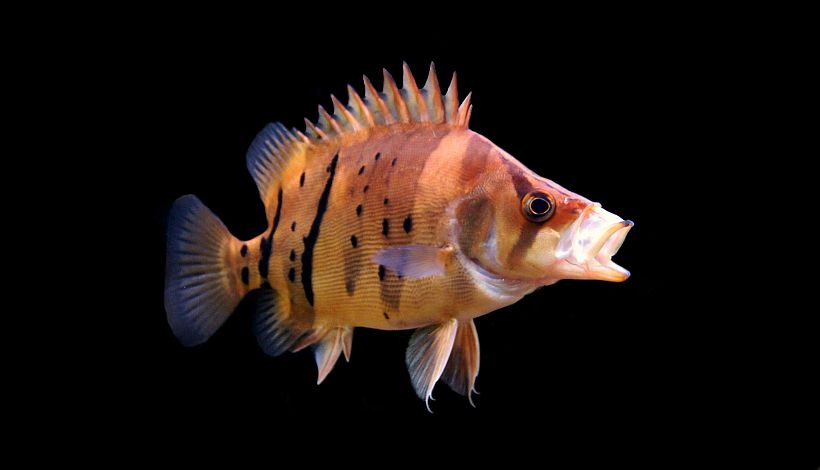
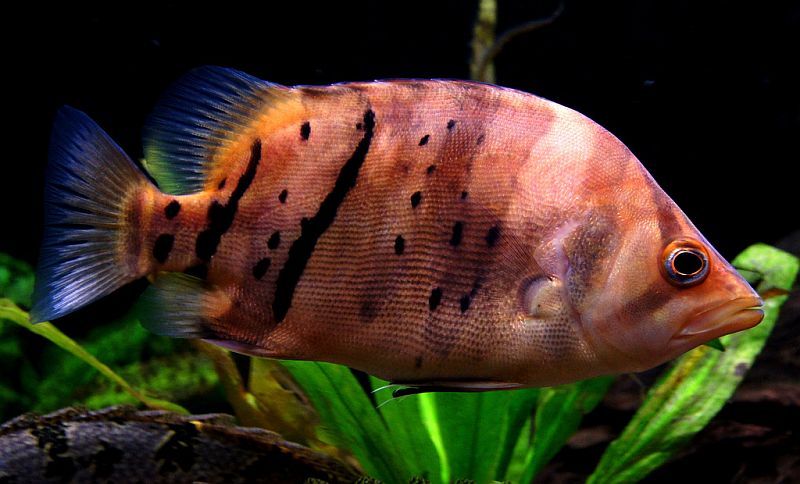
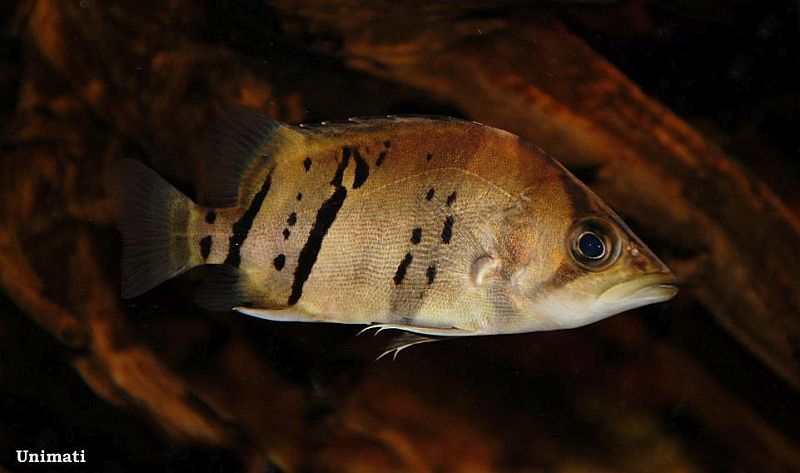
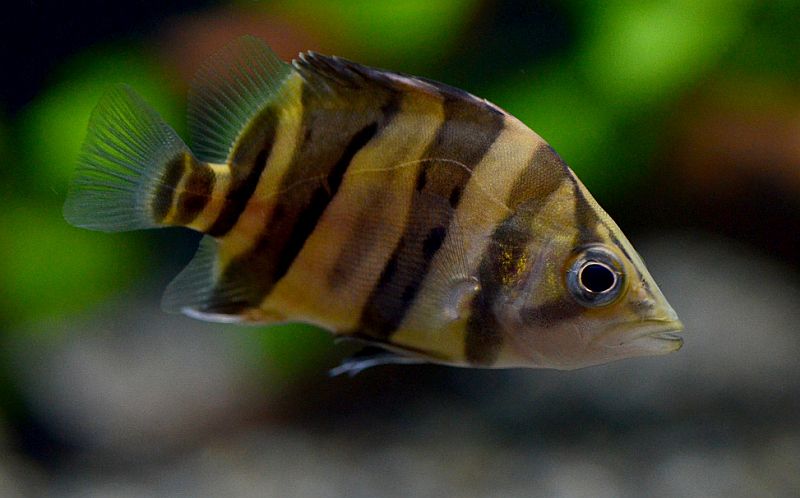
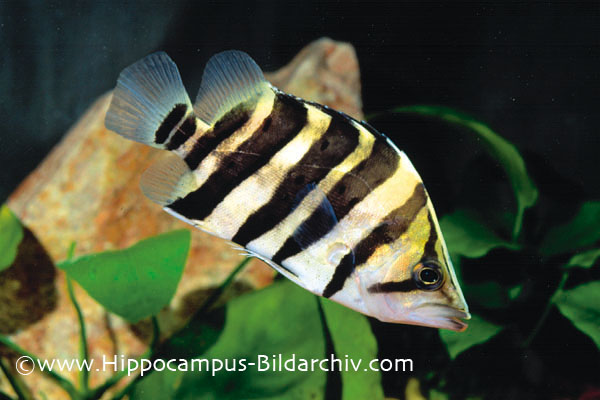
常见宽暗带有六至七条、体鳞较小,但不同种群花纹仍有识别边界。市场中有将本种冒作其他更稀有虎鱼出售的情况,不应只凭售价、条纹数或俗名认定身份。
图片
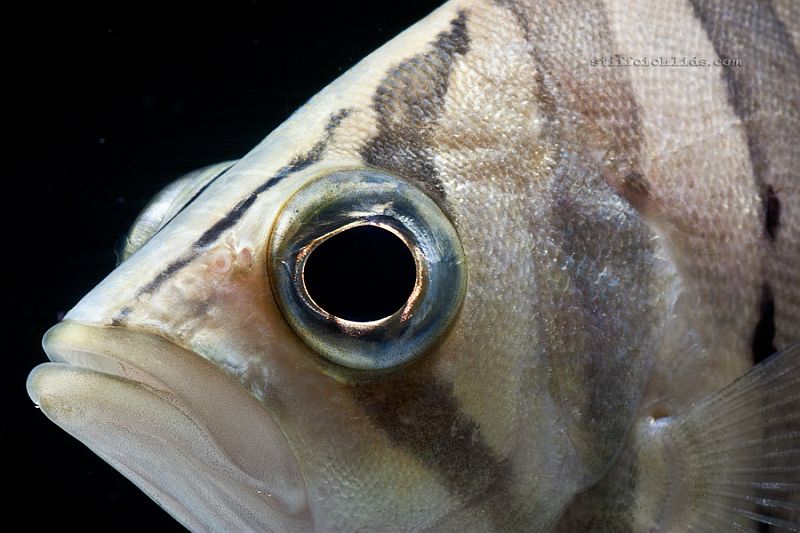
图片来自 SeriouslyFish,版权归各摄影者所有。
English
Overview
A large freshwater tiger perch, Datnioides microlepis needs public-display facilities or exceptionally large private accommodation. Juveniles may associate in groups, but adults become unsociable and aggressive toward conspecifics or similarly shaped fish. Juvenile compatibility is therefore a poor guide to adult stocking.
Distribution & habitat
Known localities include the Perak and Selangor systems, Sumatra’s Batang Hari and Musi, and the Kapuas in Indonesian Borneo. Extension into peninsular Thailand is uncertain. It occupies large, deep lowland freshwater rivers and seasonally flooded forest rather than brackish habitat.
Aquarium setup
Provide juveniles and subadults with substantial planting and woody cover. Adults are less particular, although surface shelter remains useful. Marine salt is unnecessary at every life stage.
Use large external filters or a sump to handle the genus’s heavy waste production. Protect heaters or locate them outside the display because adults can damage equipment. Imports may refuse food and remain stressed. In this species the dark bars can lose their centers, leaving outlines or spots against a gray, brown, or dark body. Similar coloration also occurs at night, so assess it alongside feeding and surroundings.
Diet & feeding
Primarily fish-eating, it captures prey with strongly protrusible jaws. Offer juveniles small worms and chopped shrimp, and adults suitable fish strips, whole shrimp, mussels, or larger worms. Older fish generally need only two or three feedings weekly.
Avoid mammalian or avian meat and routine feeder fish because of unsuitable fats and disease or parasite risks.
Behaviour & compatibility
Similarly sized tankmates are possible in sufficiently large housing, but territorial or competitive fish may intimidate it. Adults can attack their own species and similar-shaped fish. Single housing or groups of at least five are suggested, with the substantial space such groups require.
Breeding
Local Kapuas observations suggest nonmigratory reproduction in April and May without parental care. Captive breeding has not been recorded; these field observations do not supply an aquarium protocol.
Notes
Six or seven broad dark bars and small body scales are useful features, but geographic variation limits simple identification rules. Mislabeling as rarer tiger perch occurs in the trade, so price, bar count, or a common name alone is insufficient.
来源
- https://www.seriouslyfish.com/species/datnioides-microlepis(抓取于 2026-10-10)
datnioides-microlepis · 文件: data/species/datnioides-microlepis.md · 状态: 草稿