Datnioides campbelli · New Guinea Tiger Perch
概要
| 字段 | 值 |
|---|---|
| 类别 | 鱼 |
| 学名 | Datnioides campbelli |
| 分类 | 拟松鲷科 Datnioididae › Datnioides |
| 水体 | 淡水 |
| 原产地 | 巴布亚新几内亚 |
| 成体体长 | 35 cm |
| 饲养难度 | 中等 |
| 最小水体 | 756 L |
| 最小缸长 | 210 cm |
| 群居方式 | 独居 |
| 外部数据 | seriouslyfish datnioides-campbelli;fishbase 27022 |
| 食性 | 肉食 |
| 特征 | 吃小鱼: 是;吃虾: 是 |
水质参数
| 参数 | 耐受范围 | 最适范围 | 单位 |
|---|---|---|---|
| 水温 | 20–28 | — | °C |
| pH | 7.5–9 | — | — |
| 总硬度 | 15–30 | — | dGH |
概述
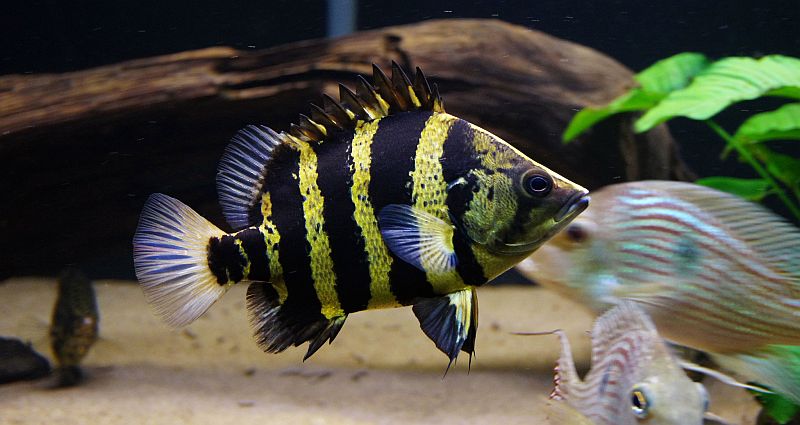
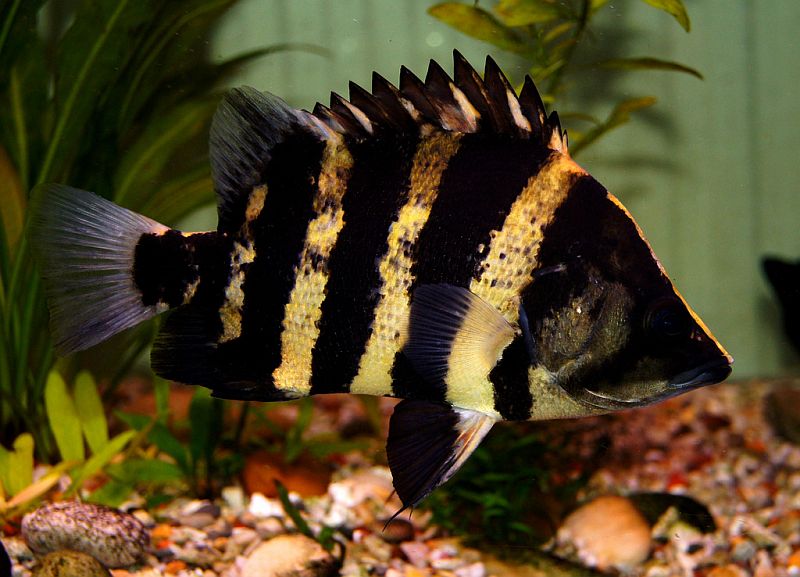
Datnioides campbelli 是大型虎鱼,金黄色底色配四至六条边缘较模糊的宽深纹,能与不少近缘种区别。它能伸出口器捕食小鱼和甲壳类,成年后需要很大的空间及强有力的过滤。
分布与栖息地
似乎局限于新几内亚岛南部,从印度尼西亚巴布亚 Lorentz 河至巴布亚新几内亚 Kikori 河,记录以 Fly 河下游最多。旧模式产地曾误写为 Sepik 河上游,实际采自 Fly 河。
它有广盐性,既见于下游受潮汐影响的半咸水支汊,也生活在中上游大支流及沼泽,最远记录距海至少约 900 km;不能只因来自河口就认为全部个体必须长期海水化饲养。
饲养环境
至少以 210 cm 长的大缸为起点。幼鱼和亚成鱼需要根木、枝条等充足遮蔽,成鱼对底部布置较不挑剔,但仍会利用浮水植物、垂枝等上方遮盖。可生活于中硬至硬淡水或半咸水,具体管理不宜按其他虎鱼一概套用。
此属排泄负荷较高,需要大型外置过滤或底滤。成鱼可能损坏水下设备,加热器应有牢固防护,或放置在隔开的底滤区域。
运输后有时难稳定,可能拒食并持续变暗,体纹不清;夜间也可能出现类似色型,应结合新到缸状态与进食表现判断。
食性与喂食
主要捕食较小鱼类和甲壳类。幼鱼可喂红虫、小蚯蚓、切碎虾肉;大个体可接受鱼肉条、整虾、贻贝、活河虾及较大蚯蚓。成熟大鱼不必每天投喂,每周两三次可满足常规安排。
不要喂牛心、鸡肉等哺乳类或禽肉,其中部分脂质不适合其代谢,可能造成脂肪沉积与器官问题。活饵鱼也没有必需性,可能携带寄生虫或疾病,未充分调养时营养价值也未必合适。
习性与混养
空间充足时可与体形相近的鱼同养,但强领地或强竞争伙伴可能反过来压制它,小鱼则有被捕食风险。
幼鱼可暂成群,成鱼通常不合群,对同种及体形相似鱼可能攻击。单养较直接;若考虑多条,应至少五条并有足够大空间,这不是把普通大型缸塞满的理由。
补充说明
除金黄底色和模糊宽纹外,本种鳞片较大、背鳍前轮廓明显凹入,也有助于区别其他虎鱼。旧名 New Guinea、Papua 或 NGT 主要用于此种,但销售简称不能代替学名与产地核实。
图片
图片来自 SeriouslyFish,版权归各摄影者所有。
English
Overview
A bright golden background and four to six broad, diffuse dark bars distinguish Datnioides campbelli from many related tiger perches. Its protrusible mouth captures smaller fishes and crustaceans. Adults require substantial space and filtration capacity.
Distribution & habitat
The range appears confined to southern New Guinea, from the Lorentz in Indonesian Papua to the Kikori in Papua New Guinea, with most records from the lower Fly. The published upper Sepik type locality was erroneous; the specimens actually came from the Fly River.
This is a euryhaline species. It occurs in tidal brackish creeks downstream and in large tributaries and swamps farther inland, with records at least 900 km from the sea. An association with estuaries does not mean that every population must be kept under marine conditions.
Aquarium setup
Consider an aquarium at least 210 cm long. Juveniles and subadults need substantial cover from roots and branches. Larger fish are less particular about lower-level decoration but still use overhead shelter from floating plants or overhanging branches. Medium-to-hard freshwater and brackish conditions are both possible; do not transfer another tiger perch's requirements automatically.
Members of the genus generate a heavy waste load. Use substantial external filtration or a sump. Adults can damage submerged equipment, so protect heaters firmly or house them in a separate sump compartment.
Transported fish can be difficult to settle, refusing food and becoming very dark with indistinct bars. A similar pattern occurs at night, so interpret it alongside recent transport and feeding behavior.
Diet & feeding
Natural prey is chiefly smaller fishes and crustaceans. Juveniles can take bloodworms, small earthworms, and chopped shrimp. Larger fish accept fish strips, whole shrimp, mussels, live river shrimp, and larger earthworms. Mature individuals need not eat daily; two or three meals weekly are a suitable routine.
Avoid mammal or bird meat such as beef heart and chicken. Some of their fats are poorly processed and can cause excessive deposits and organ problems. Feeder fishes are unnecessary, can introduce parasites or disease, and may offer poor nutrition if not properly conditioned.
Behaviour & compatibility
Similar-sized companions are possible with enough room, but strongly territorial or competitive fishes may intimidate it. Smaller fishes are potential prey.
Juveniles may associate in groups, whereas adults are generally unsociable and may attack their own species or similarly shaped fishes. Single housing is straightforward. Groups should contain at least five and require enough space to support them; the number is not a reason to overcrowd a conventional large aquarium.
Notes
Besides the golden color and diffuse broad bars, relatively large scales and a distinctly concave predorsal profile help identify this species. New Guinea, Papua, and NGT are associated trade labels, but abbreviations do not replace dependable identity and locality information.
来源
- https://www.seriouslyfish.com/species/datnioides-campbelli(抓取于 2026-10-10)
datnioides-campbelli · 文件: data/species/datnioides-campbelli.md · 状态: 草稿