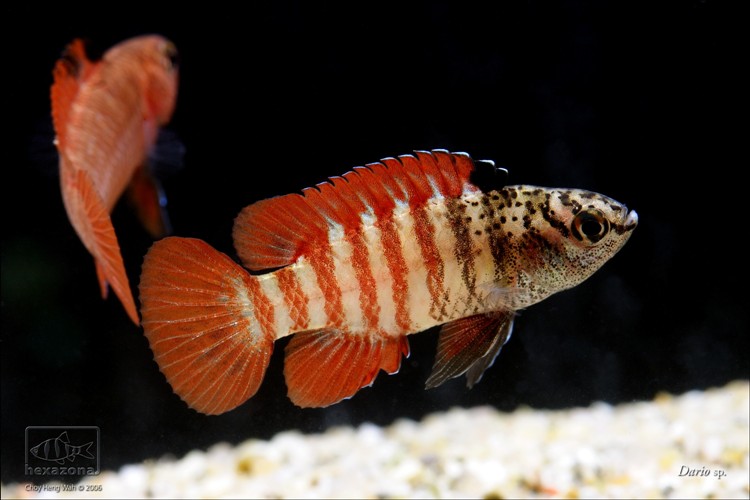
Dario tigris · Black Tiger Dario
概要
| 字段 | 值 |
|---|---|
| 类别 | 鱼 |
| 学名 | Dario tigris |
| 别名 | Dario sp. 'Myanmar' |
| 分类 | 攀鲈目 Anabantiformes › 变色鱼科 Badidae › Dario |
| 水体 | 淡水 |
| 原产地 | 缅甸 |
| 成体体长 | 3.5 cm |
| 饲养难度 | 中等 |
| 最小水体 | 41 L |
| 最小缸长 | 45 cm |
| 群居方式 | 成对 |
| 外部数据 | seriouslyfish dario-tigris;fishbase 71127 |
| 领地性 | 是 |
| 繁殖方式 | 附着产卵 |
水质参数
| 参数 | 耐受范围 | 最适范围 | 单位 |
|---|---|---|---|
| 水温 | 20–24 | — | °C |
| pH | 7–9 | — | — |
| 总硬度 | 1–5 | — | dGH |
概述
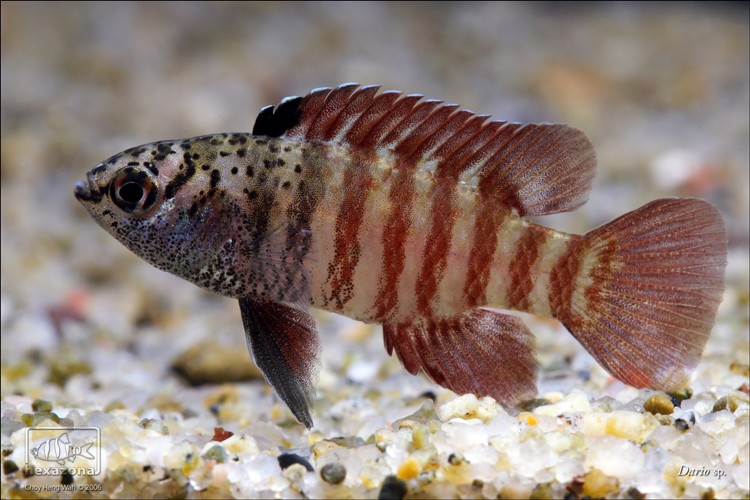
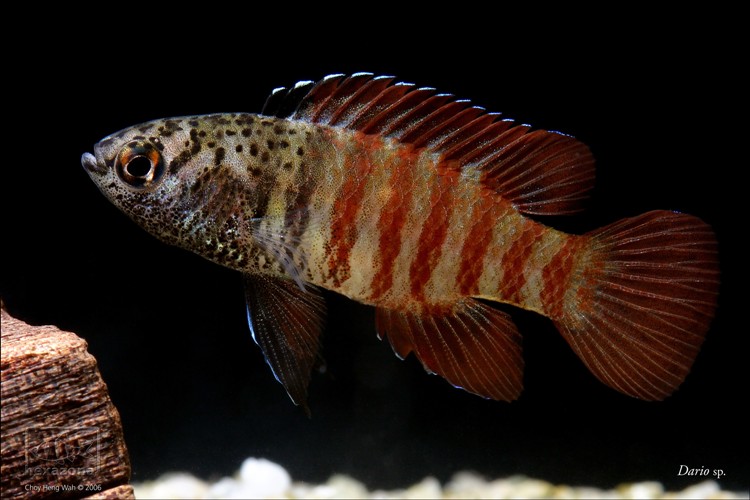
Dario tigris 是缅甸北部的条纹型变色鲈,过去以 Myanmar、Pyjamas 或 Black Tiger 等名称流通,2022 年被正式描述为独立种。它曾被当成 Dario hysginon 的色型,但体形较大,雌鱼及形态特征也有区别。
分布与栖息地
局限于缅甸克钦邦,模式产地为孟拱以南、伊洛瓦底江水系的一条山溪。较早纳入近似种标本系列的两个雄鱼,则来自密支那附近不同地点,包括溪流和鱼塘边沟渠。
具体栖地细节尚未清楚。近似种偏好植物浓密的小静水潭,这只是比较背景,不能直接定为本种全部栖息环境。
饲养环境
细软底床或细砾石配大量藏身处,可用隐棒花与附生 Microsorum、Anubias、Taxiphyllum;莫丝可作产卵表面,枝条、浮水植物和落叶帮助分隔空间。
一对或一雄数雌可从 45 cm 长缸起步,多雄需更大空间并各有视线遮挡。洞穴和潜在产卵区应分散。水偏中性至碱性但保持软,不能把较高 pH 当成需要高硬度。
食性与喂食
Dario 属捕食小型水生甲壳类、蠕虫、昆虫幼体与浮游动物。人工应给微小活、冻饵,例如丰年虾无节幼体、小水蚤、微虫和香蕉虫。
它进食慢,需确认食物到口而没有全被同伴抢走。红虫与颤蚓有引起肥胖和健康问题的风险,宜排除出菜单。
习性与混养
专养较好,它不是群居鱼。有限空间以一对或一雄数雌为宜,多雄之间可激烈争斗,每条必须有独立领域和遮挡。
若混养,选择温和中上层小鱼或适合的微型鳅,避免大型、活跃和强抢食伙伴。行动隐蔽不等于适合长期与强势鱼共处。
雌雄区分
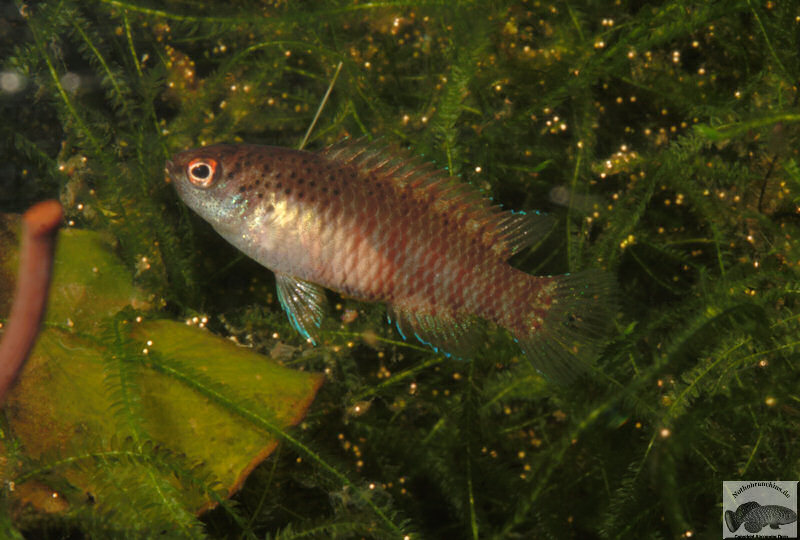
成熟雄鱼颜色更浓,腹鳍、背鳍和臀鳍延长。雌鱼较小、身体短圆,与近似种雌鱼也有区别,不能只根据商品名随意配对。
繁殖
在固体表面产卵,形成短期配对。调养时提供足量活、冻饵,并给雄鱼独立领域;若以育苗为目标宜排除其他种,多雄时通常只有优势个体充分参与繁殖。
求偶可持续数天,雄鱼显色增强,反复邀请又驱赶雌鱼。真正产卵只持续片刻,卵散布在叶片等固体表面的下侧。随后雌鱼被驱离,雄鱼保留领域。为减少孵化后吃苗,可把带卵介质移至原缸水中,或移走成鱼。
卵约两三天孵化,幼体可能还需约一周耗尽卵黄。开口必须用纤毛虫级食物,长大后逐步加入微虫和丰年虾无节幼体。
补充说明
它自 2005 年进入爱好者视野,早期与 Dario hysginon 的色型关系处理已经成为命名历史。正式描述区分了花纹、背鳍棘和椎骨数量;饲养观察也发现二者体形及雌鱼有别,未发生杂交。单凭未杂交观察不能把混养当成最佳安排。
图片
图片来自 SeriouslyFish,版权归各摄影者所有。
English
Overview
The barred Myanmar badid Dario tigris circulated under names including Myanmar, Pyjamas, and Black Tiger before its formal description in 2022. Formerly treated as a color form of Dario hysginon, it grows larger and differs in females and anatomical characters as well.
Distribution & habitat
It is restricted to Kachin State in northern Myanmar. The type locality is a mountain stream south of Mogaung in the Ayeyarwady basin. Two males included in an earlier series of the similar species came from separate sites near Myitkyina, including a stream and a ditch beside fish ponds.
Detailed habitat information remains uncertain. The similar species favors densely vegetated still pools, but that comparison should not be treated as a complete habitat description here.
Aquarium setup
Use soft substrate or fine gravel with ample retreats. Cryptocoryne, attached Microsorum, Anubias, and Taxiphyllum are suitable. Moss provides spawning surfaces, while branches, floating plants, and leaves subdivide the layout.
A pair or one male with several females can start in a 45 cm tank. Multiple males need more space and visual barriers. Spread caves and potential spawning areas apart. Maintain soft water despite the neutral-to-alkaline pH preference; higher pH does not mean high hardness is required.
Diet & feeding
The genus takes small aquatic crustaceans, worms, insect larvae, and zooplankton. Offer minute live or frozen foods such as Artemia nauplii, small Daphnia, microworms, and banana worms.
Ensure these slow feeders actually receive food before companions consume it. Bloodworms and Tubifex are associated with obesity and health problems and are best excluded.
Behaviour & compatibility
A dedicated aquarium is preferable. This is not a shoaling fish; use a pair or a single male with several females in limited quarters. Rival males can fight intensely, requiring individual territories and cover when kept together.
If companions are added, choose peaceful small upper-water fishes or suitable miniature loaches. Avoid large, busy, or strongly competitive feeders. A retiring manner is not evidence that long-term exposure to dominant tankmates is suitable.
Sexual dimorphism
Adult males are brighter and develop extended pelvic, dorsal, and anal fins. Females are smaller and rounder and can also be distinguished from females of the similar species. Do not assemble pairs by a broad trade name alone.
Breeding
It forms temporary pairs and spawns on solid surfaces. Condition adults with live and frozen foods and provide separate male territories. Exclude other species for fry production; with several males, a dominant individual usually gains most opportunities.
Courtship can continue for days, with stronger colors and alternating invitations and rejection of females. Egg laying itself is brief, depositing eggs beneath leaves or other hard surfaces. The female is then excluded while the male retains the territory. Moving egg-bearing material into spawning-tank water, or removing adults, reduces the risk of fry being eaten after hatching.
Eggs hatch in roughly two to three days. Yolk absorption may take another week. Begin with infusoria-sized foods and add microworms and Artemia nauplii only as the young become large enough.
Notes
The fish entered the hobby in 2005. Its early treatment as a form of Dario hysginon is part of its naming history. Formal separation used color pattern, dorsal spines, and vertebral counts; aquarium observations also found differences in size and females and no hybridization. Failure to hybridize does not by itself establish that mixed housing is the best arrangement.
来源
- https://www.seriouslyfish.com/species/dario-tigris(抓取于 2026-10-10)
dario-tigris · 文件: data/species/dario-tigris.md · 状态: 草稿