Dario dayingensis
概要
| 字段 | 值 |
|---|---|
| 类别 | 鱼 |
| 学名 | Dario dayingensis |
| 分类 | 攀鲈目 Anabantiformes › 变色鱼科 Badidae › Dario |
| 水体 | 淡水 |
| 原产地 | 中国 |
| 成体体长 | 3.5 cm |
| 饲养难度 | 中等 |
| 最小水体 | 41 L |
| 最小缸长 | 45 cm |
| 群居方式 | 成对 |
| 外部数据 | seriouslyfish dario-dayingensis;fishbase 60259 |
| 领地性 | 是 |
水质参数
| 参数 | 耐受范围 | 最适范围 | 单位 |
|---|---|---|---|
| 水温 | 20–24 | — | °C |
| pH | 6–7.5 | — | — |
| 总硬度 | 1–5 | — | dGH |
概述
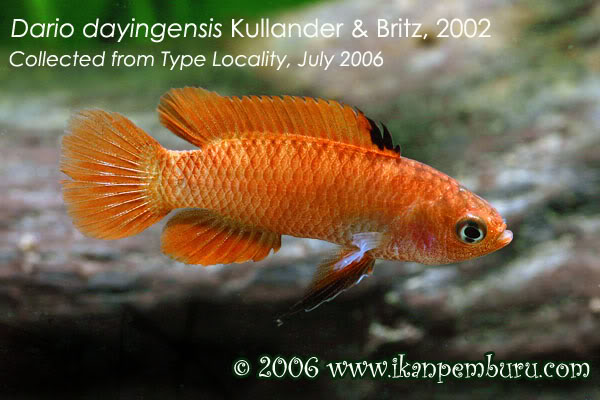
Dario dayingensis 是云南大盈江水系的小型变色鲈,过去曾被误认作火焰变色龙(Dario dario),实际与 Dario hysginon 更接近。它较隐蔽、慢食,专养有利于观察体况和繁殖尝试。
分布与栖息地
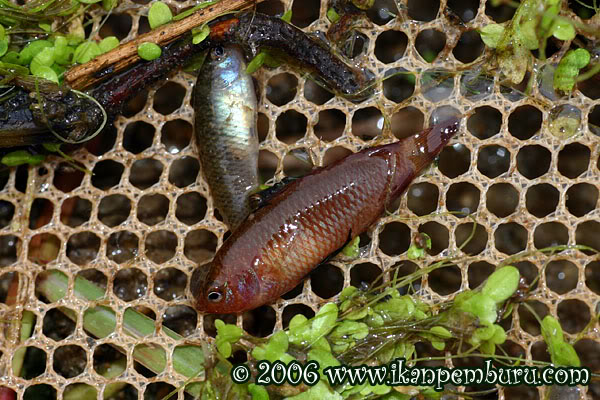
模式产地为云南盈江县旧城一带汇入大盈江的小溪,更北方腾冲也有记录。大盈江属于伊洛瓦底江水系。
采点海拔略高于 900 m,小溪宽约 2 m、深不足 30 cm,穿过农地,水流较快,底部有石、沙、落叶和泥。鱼倾向聚在淹入水中的岸边植被间,而不是始终暴露在主流中。历次采集中也记录到外来鱼,不能把所有同域鱼都当成本地自然群落成员。
饲养环境
用细软底床或细砾石,配大量水草和遮蔽。隐棒花、附生 Microsorum、Anubias、Taxiphyllum 可用,莫丝也能形成潜在产卵表面;枝条、浮水植物和落叶有助于分隔空间。
一对或一雄数雌可从 45 cm 长缸起步,多雄需要更多空间和视线遮挡。洞穴、边界和产卵介质分散布置,避免领地集中在一角。长期采用适合的稳定软水条件,不把野外季节极端视为日常目标。
食性与喂食
Dario 属捕食小型水生甲壳类、蠕虫、昆虫幼体和浮游动物,人工应投喂适口的小型活、冻饵,如丰年虾无节幼体、水蚤、微虫或香蕉虫。
进食慢而谨慎,需防止食物全被伙伴抢走。红虫和颤蚓有肥胖及健康风险,宜从菜单排除。
习性与混养
专养较好,它不是群居鱼。小缸采用一对或一雄数雌,多雄只有在每条有独立领地、遮挡和足够空间时才适合,雄间争斗可能很强。
若混养,只选温和中上层小鱼或适合的微型鳅,避开大型、活跃及强抢食伙伴。弱势个体是否能持续吃到食物比表面没有追咬更重要。
雌雄区分
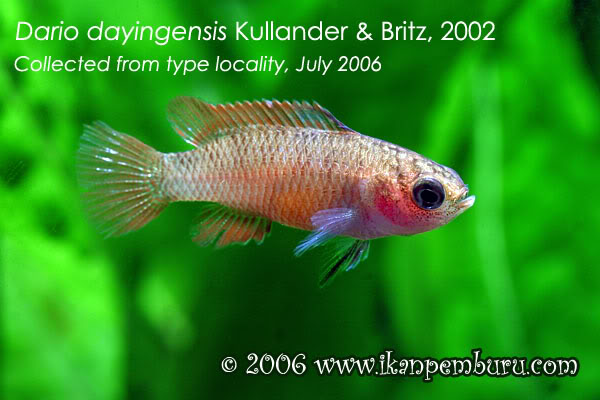
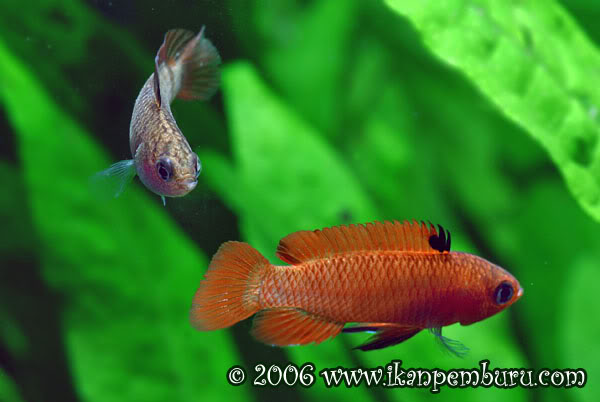
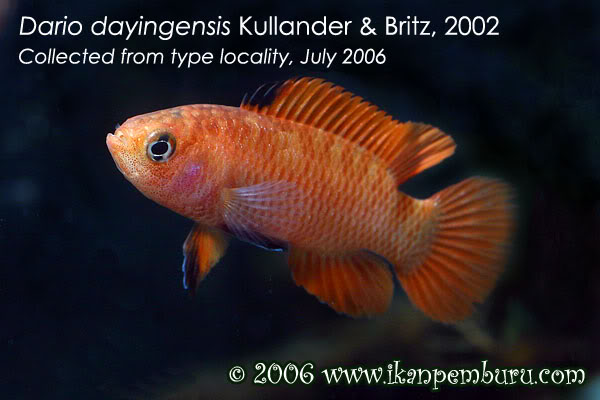
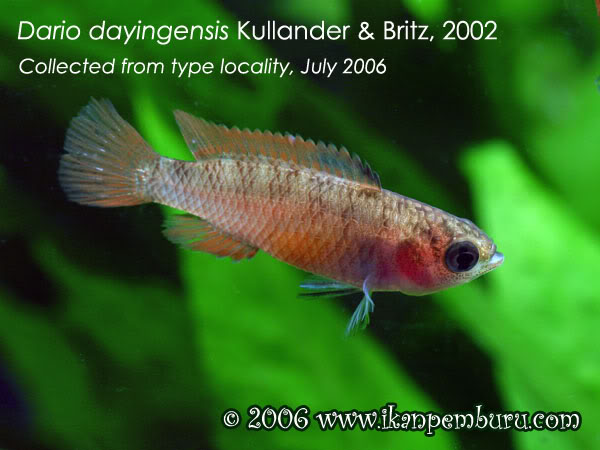
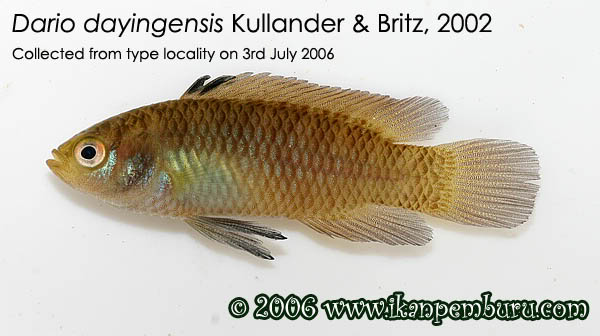
雄鱼成熟后颜色明显更鲜艳,腹鳍、背鳍及臀鳍延长。雌鱼较小、身体短圆。
繁殖
繁殖可能类似同属其他种,但尚不能视为本种已验证的流程。近缘采用固体表面产卵、短期配对,雄鱼设领域并显色,求偶可持续数天,雌鱼被赶开后又受到邀请;多雄时通常优势雄鱼占繁殖机会。
近缘产卵短暂,卵分散在叶片等固体表面的下侧。之后雌鱼被驱走,雄鱼保留领域。为保存鱼苗,可将带卵介质移到装有原缸水的容器,或移出成鱼。
作为近缘参考,卵约两三天孵化,幼体可能还需约一周耗尽卵黄;最初需要纤毛虫级食物,长大后再给微虫与丰年虾无节幼体。用于本种时必须以实际观察为准。
补充说明
它与 Dario hysginon 的差别包括上颌腭齿、鳞列及椎骨数量,单凭体色难以确认。早期被套用的 Badis dario 名称不能作为两者同种的依据。
图片
图片来自 SeriouslyFish,版权归各摄影者所有。

English
Overview
The small Yunnan badid Dario dayingensis was once misidentified as Dario dario but is closer to Dario hysginon. A retiring manner and deliberate feeding favor a dedicated aquarium for monitoring condition and attempting reproduction.
Distribution & habitat
The type locality is a small Daying tributary near Jiucheng in Yingjiang County, Yunnan, China; additional records come from Tengchong farther north. The Daying belongs to the Ayeyarwady system.
The agricultural stream lies just above 900 m elevation, measures about 2 m across and under 30 cm deep, and flows briskly over stones, sand, leaves, and mud. Fish gather among submerged bankside plants rather than remaining exposed in the main current. Collections have also included introduced fishes, so not every recorded companion represents an undisturbed native assemblage.
Aquarium setup
Provide soft substrate or fine gravel with extensive planted shelter. Cryptocoryne, attached Microsorum, Anubias, and Taxiphyllum are suitable; moss also offers potential spawning surfaces. Branches, floating cover, and leaves help divide the aquarium.
A pair or one male with several females can start in a 45 cm tank. More males require additional space and visual barriers. Spread caves, boundaries, and spawning material around separate areas. Maintain appropriate stable soft water rather than using seasonal field extremes as everyday targets.
Diet & feeding
The genus takes small aquatic crustaceans, worms, insect larvae, and zooplankton. Offer appropriately small live or frozen foods, including Artemia nauplii, Daphnia, microworms, and banana worms.
These cautious feeders must receive food before companions consume it. Bloodworms and Tubifex are associated with obesity and health concerns and are best omitted.
Behaviour & compatibility
Prefer a species aquarium. It is not a shoaling fish; a pair or single male with several females suits limited space. Rival males can fight strongly, so several require independent territories and cover.
If companions are included, choose peaceful small upper-water fishes or suitable miniature loaches. Avoid large, busy, or strongly competitive feeders. Continued access to food matters even when no obvious chasing is visible.
Sexual dimorphism
Mature males become much more colorful and develop extended pelvic, dorsal, and anal fins. Females are smaller and have a shorter, rounder profile.
Breeding
Reproduction is expected to resemble that of congeners, but the method is not confirmed for this species. Relatives form temporary pairs and spawn on solid surfaces. Males establish territories and intensify their colors; courtship may alternate rejection and renewed invitations for several days. A dominant male usually gains most breeding opportunities.
In those relatives, brief spawning deposits eggs beneath leaves or other solid surfaces. The female is then excluded while the male retains the territory. Moving egg-bearing material into a container with spawning-tank water, or removing the adults, can preserve young from predation.
As a comparative guide, eggs hatch after roughly two to three days and yolk absorption may take another week. First foods must be infusoria-sized, followed by microworms and Artemia nauplii as the young grow. Application here requires direct observation rather than assuming the same timetable.
Notes
Differences from Dario hysginon include palatine teeth and counts of scales and vertebrae. Color alone may not establish identity. Historical use of Badis dario for this fish is not evidence that they are the same species.
来源
- https://www.seriouslyfish.com/species/dario-dayingensis(抓取于 2026-10-10)
dario-dayingensis · 文件: data/species/dario-dayingensis.md · 状态: 草稿