火焰变色龙 · Scarlet Badis
概要
| 字段 | 值 |
|---|---|
| 类别 | 鱼 |
| 学名 | Dario dario |
| 别名 | Labrus dario、Badis dario、Badis badis bengalensis、Dario dario |
| 分类 | 攀鲈目 Anabantiformes › 变色鱼科 Badidae › Dario |
| 水体 | 淡水 |
| 原产地 | 印度 |
| 成体体长 | 2 cm |
| 饲养难度 | 中等 |
| 最小水体 | 41 L |
| 最小缸长 | 45 cm |
| 群居方式 | 成对 |
| 外部数据 | seriouslyfish dario-dario;fishbase 60260 |
| 领地性 | 是 |
| 繁殖方式 | 附着产卵 |
水质参数
| 参数 | 耐受范围 | 最适范围 | 单位 |
|---|---|---|---|
| 水温 | 18–26 | — | °C |
| pH | 6.5–8.5 | — | — |
| 总硬度 | 1–15 | — | dGH |
概述
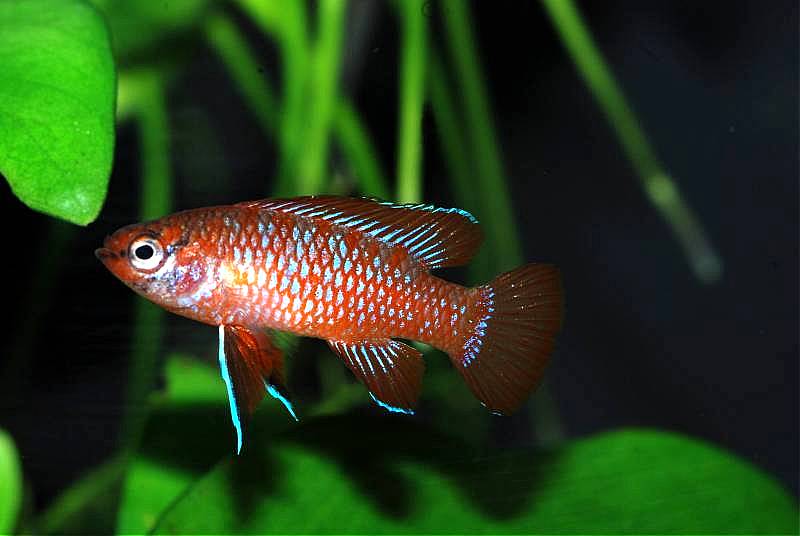
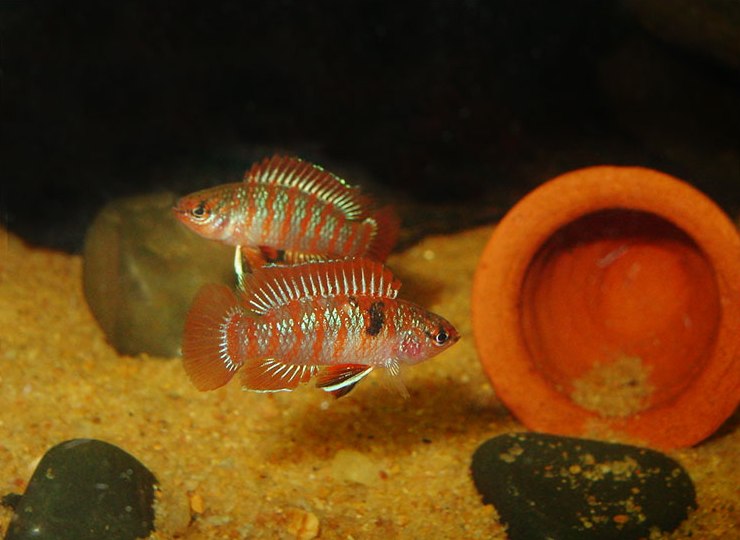
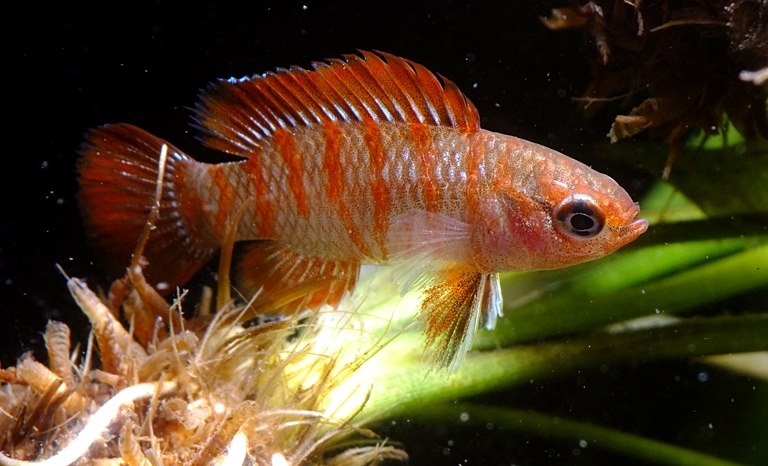
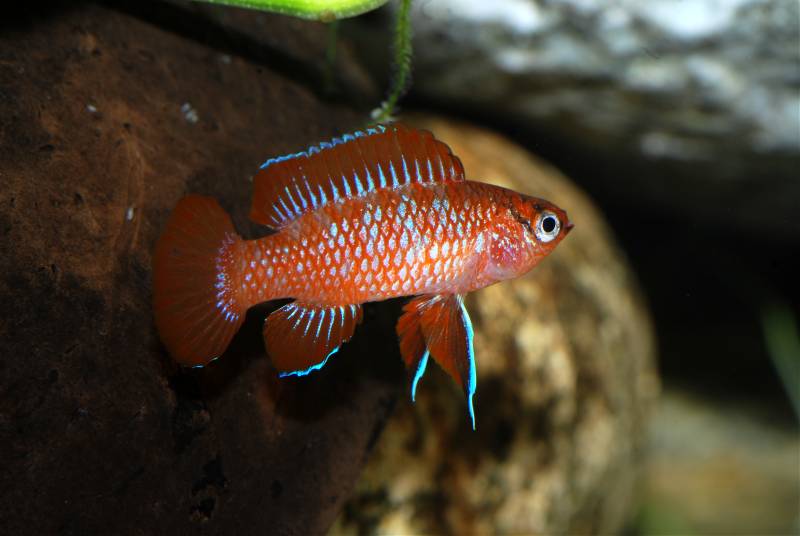
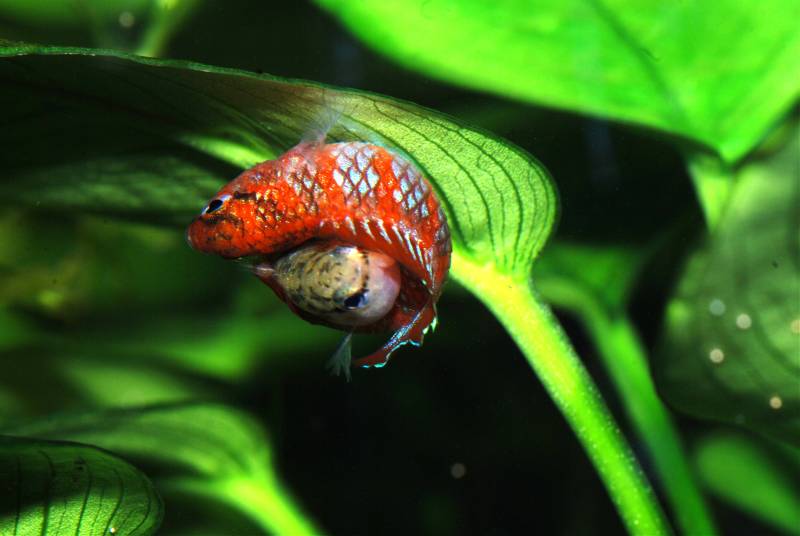
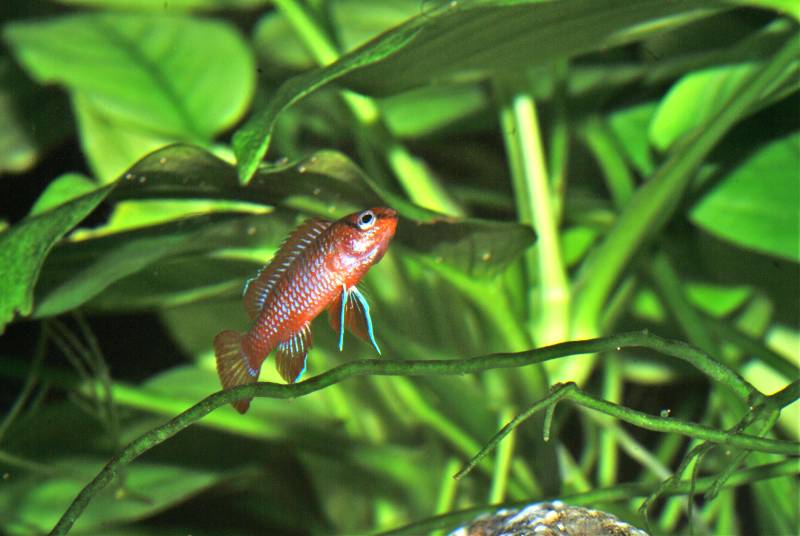
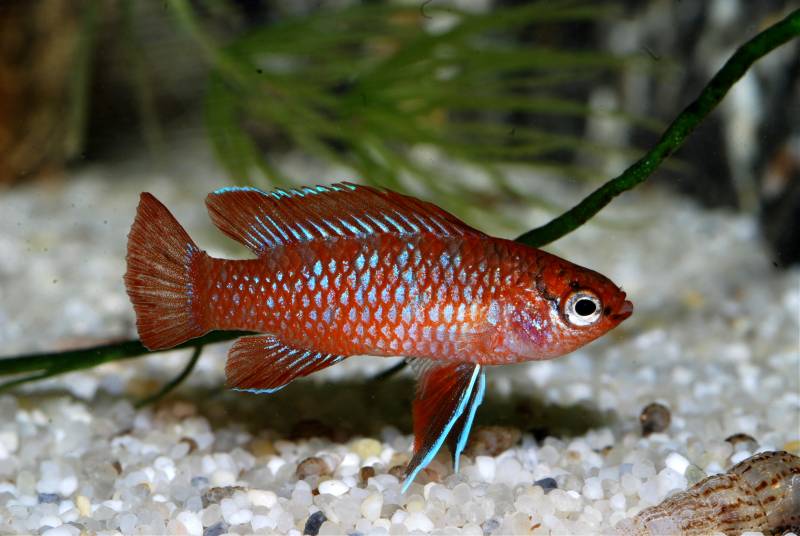
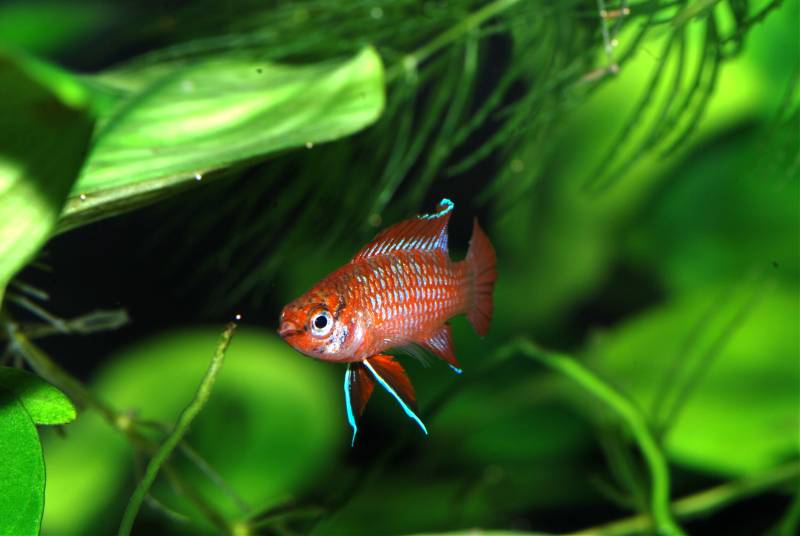
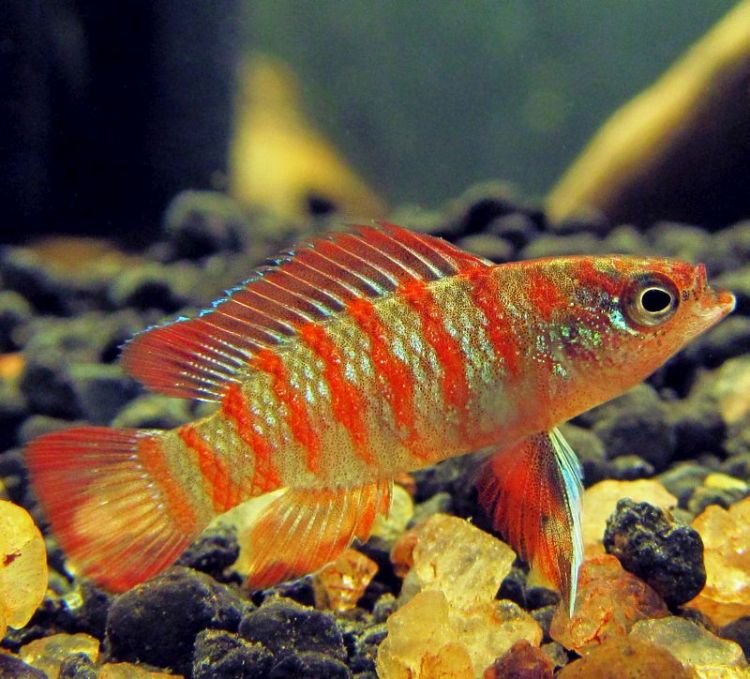
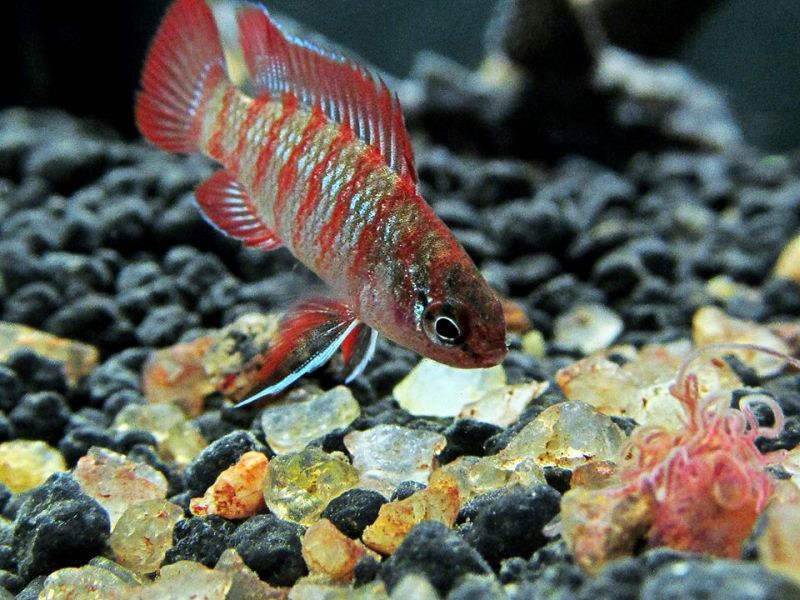
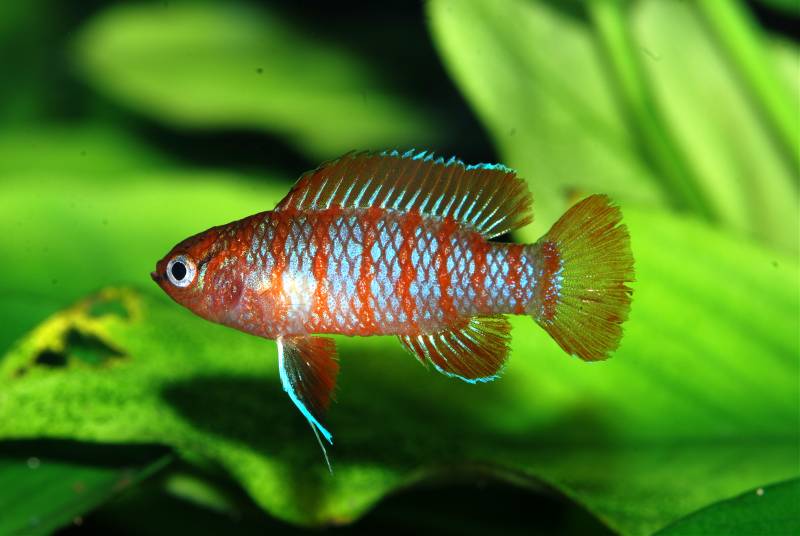
火焰变色龙(Dario dario)是微型变色鲈,雄鱼红色体侧有七条带虹彩的蓝色竖纹。体形小不代表可以忽略领地:多个雄鱼在局促环境里可能激烈争斗,也容易被大型或强势伙伴压制进食。
分布与栖息地
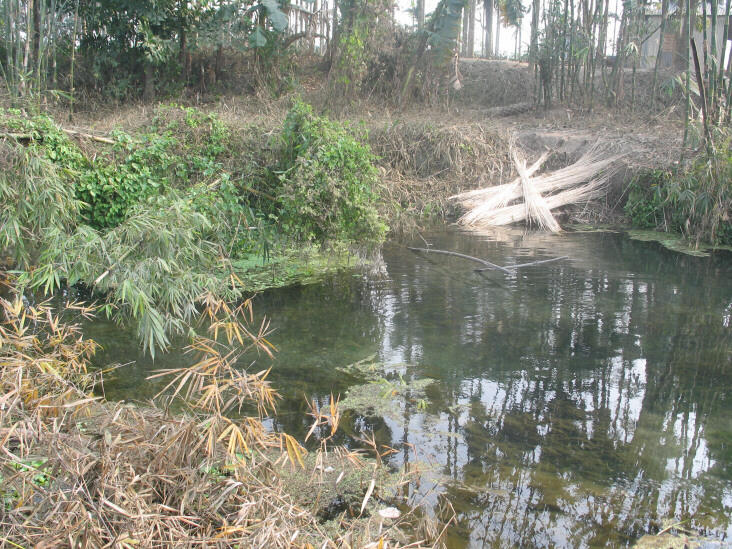
主要分布在印度西孟加拉和阿萨姆境内汇入布拉马普特拉河的支流,可能延伸到不丹,但后者仍是可能性。新模式产地为阿萨姆 Raimana 一带 Janali 河。
常见于浅而清的溪流,沙或砾石底,岸边和水下植物浓密。模式地与其他变色鲈共栖,但人工混养仍需考虑有限空间里的冲突。
饲养环境
提供细软底床或细砾石,配密植水草与大量遮蔽。隐棒花以及附生 Microsorum、Anubias、Taxiphyllum 均可,莫丝也能提供产卵表面;枝条、浮水植物、落叶可进一步分隔空间。
一对或一雄数雌可从 45 cm 长缸开始。多雄需要更大底面积和独立领域,潜在产卵点应分散,不能集中在一角。
食性与喂食
Dario 属捕食小型水生甲壳类、蠕虫、昆虫幼体和浮游动物。人工应提供微小活、冻饵,例如丰年虾无节幼体、小水蚤、微虫和香蕉虫。
进食慢,要确认食物能被吞下且没有全被伙伴抢走。红虫和颤蚓存在导致肥胖与健康问题的风险,宜从菜单排除。
习性与混养
优先专养,或只选择小型中上层伙伴。它胆怯、动作慢,较大或强势鱼容易抢食、造成长期压制。
雄鱼有明显领地,小缸以单雄组合为宜。宽敞、遮挡充分的环境中可多雄共处,但不应期待每条都会参与繁殖,优势雄鱼通常占主要机会。
雌雄区分
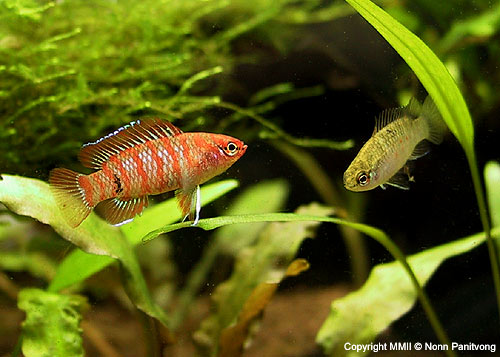
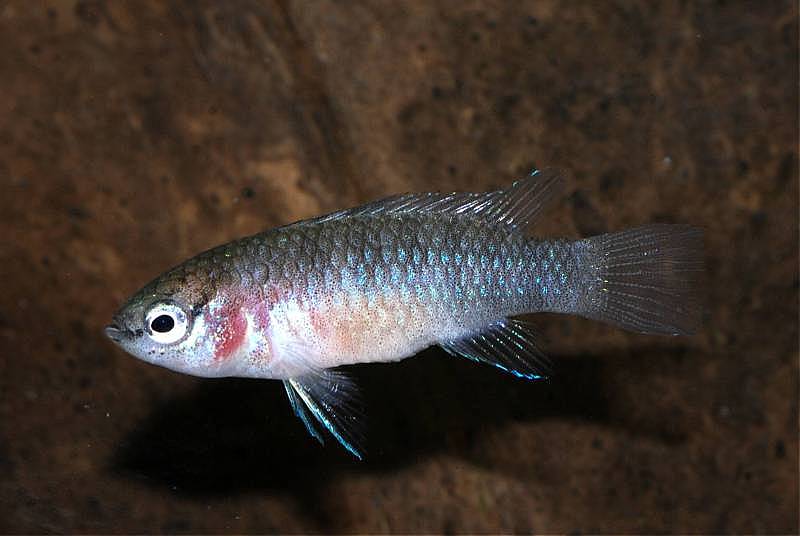
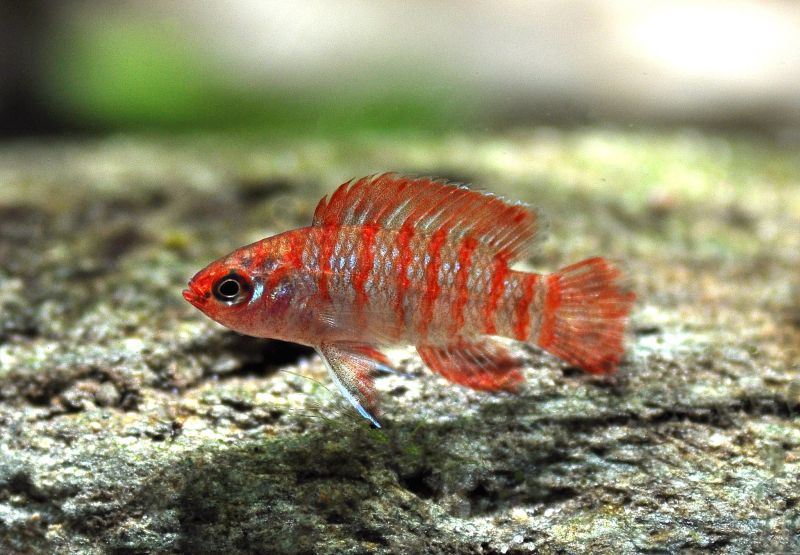
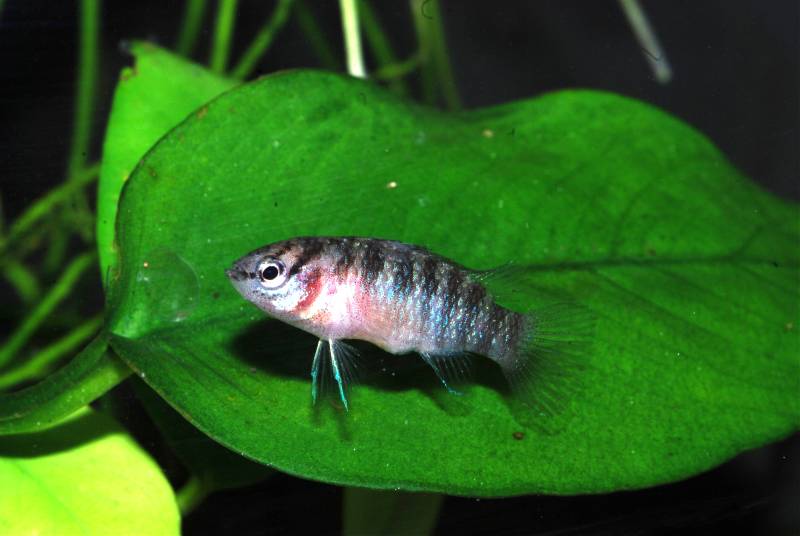
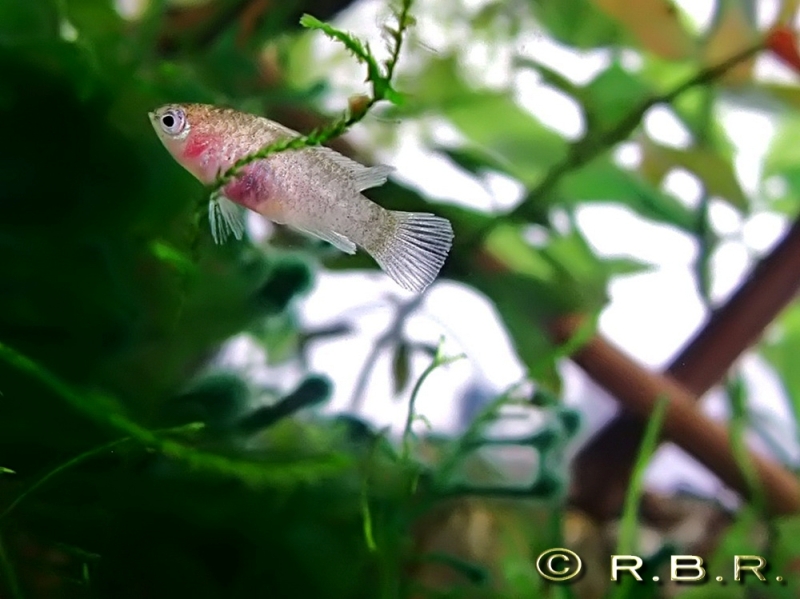
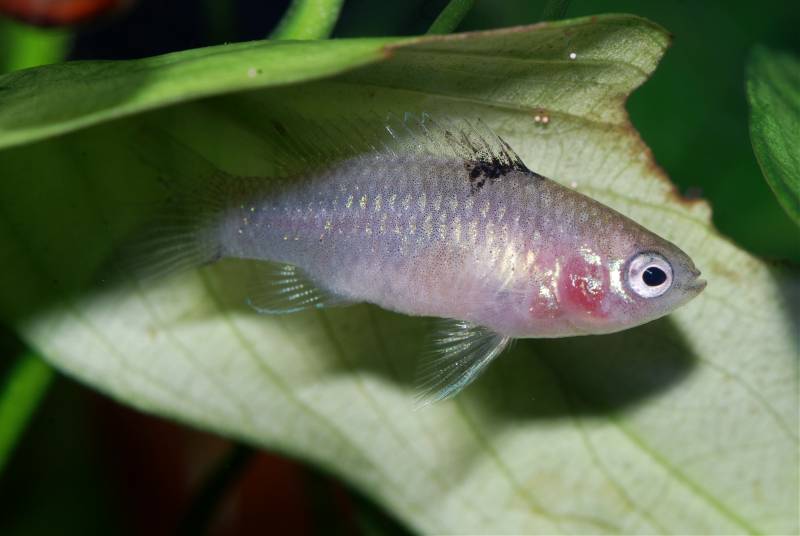
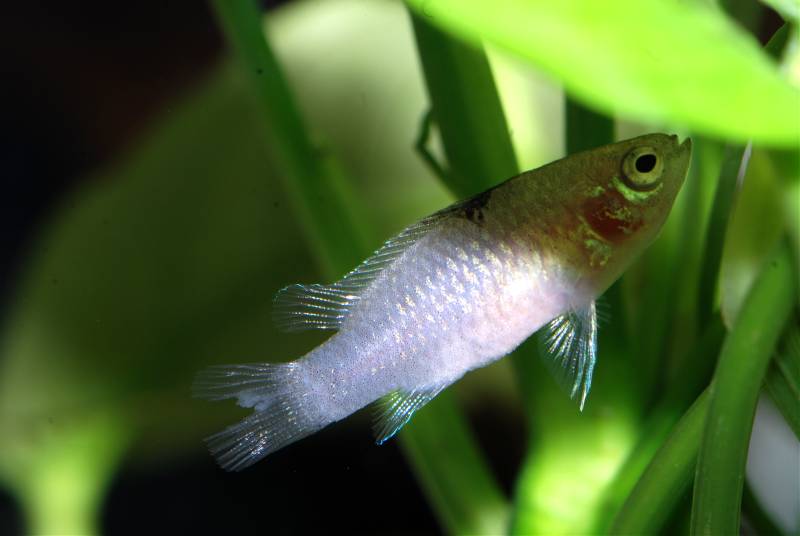
雌鱼更小、短圆,体侧缺少红蓝色,暗纹也淡或不明显。雄鱼成熟后腹鳍、背鳍和臀鳍延长,蓝色竖纹鲜明。销售批次可能几乎全是雄鱼,组对时应直接核对。
繁殖
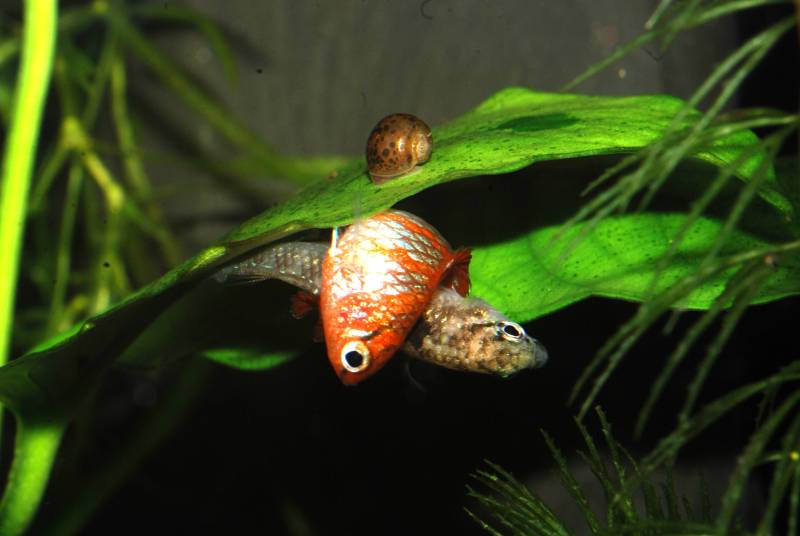
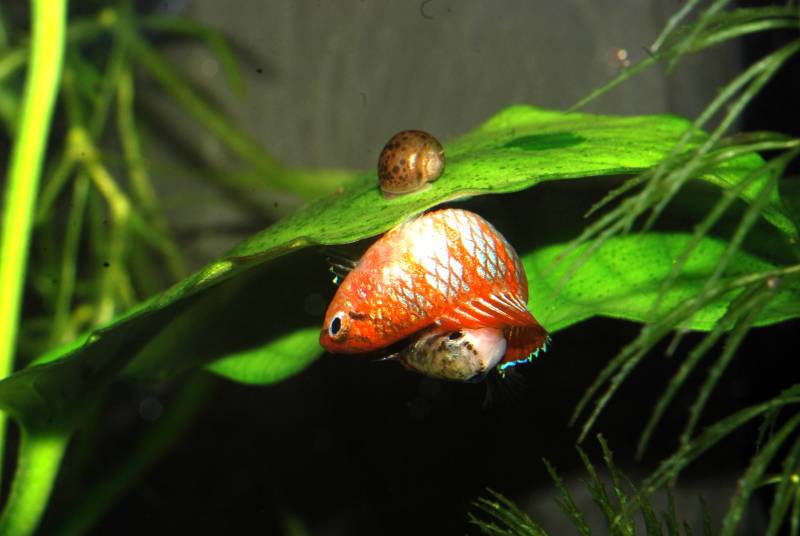
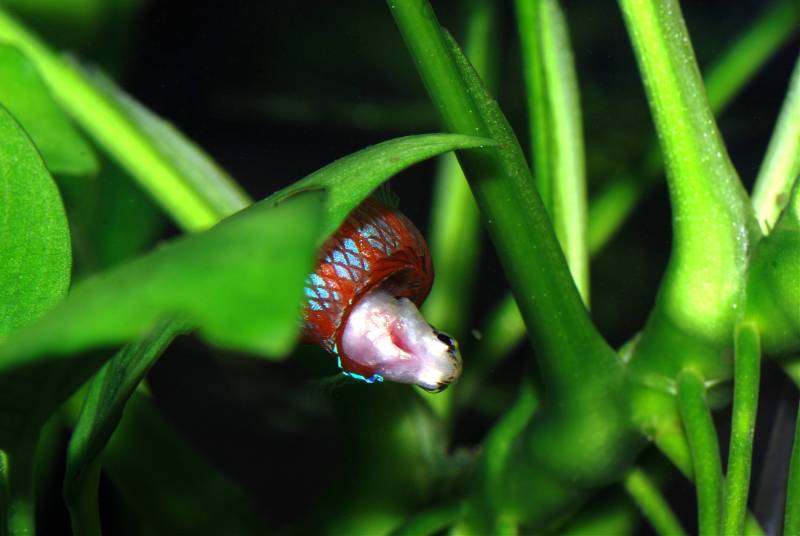
在固体表面产卵,形成短期配对。以育苗为目标宜排除其他种,用活、冻饵调养并为每条雄鱼保留独立空间。求偶可能持续数日,雌鱼被赶走后不久又受邀进入领域,雄鱼显色也会增强。
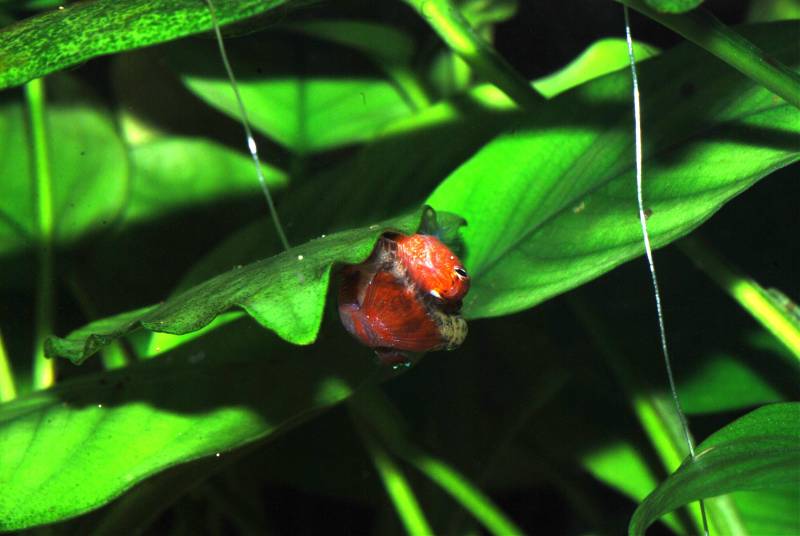
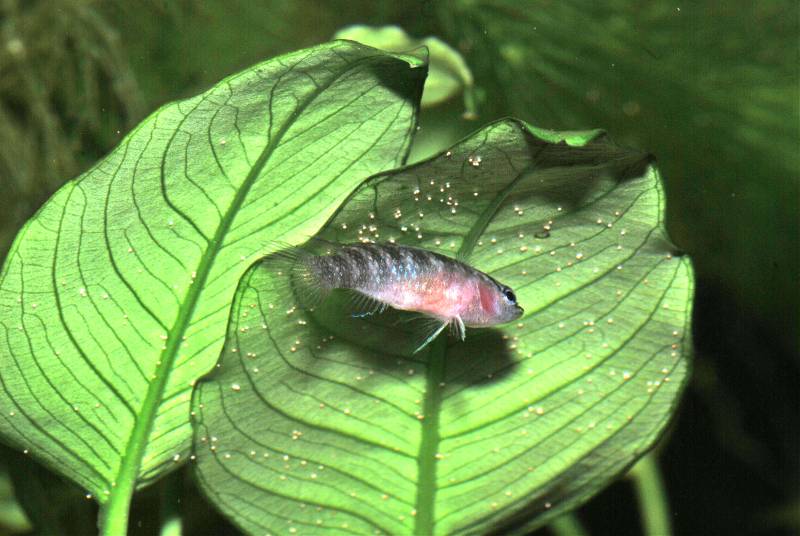
真正产卵过程很短,卵散布在叶片等固体表面的下侧。之后雌鱼被驱离,雄鱼守领域;若要尽量保存鱼苗,可将带卵介质移到装有原缸水的容器,或移出成鱼,因为孵化后的幼鱼可能被吃掉。
卵约两三天孵化,幼体可能还需约一周吸收卵黄。开口必须用纤毛虫级微小食物,长到能吞下时再逐步加入微虫和丰年虾无节幼体。
补充说明
七条蓝色竖纹是雄鱼很有用的辨识特征。旧名称 Badis dario 及与 bengalensis 有关的叫法可能出现在历史资料中;现今属名与旧商品标签不同,不应只按标签判断。
图片
图片来自 SeriouslyFish,版权归各摄影者所有。
English
Overview
Male Dario dario carries seven iridescent blue bars against a red flank. This miniature badid may fit a small aquarium, but male territoriality remains significant: confined rivals can fight intensely, while larger or assertive companions can prevent feeding.
Distribution & habitat
The main range is in tributaries of the Brahmaputra in West Bengal and Assam, India. Extension into Bhutan has been suggested but remains uncertain. The replacement type locality is the Janali near Raimana in Assam.
It usually inhabits shallow clear streams over sand or gravel with dense bankside and submerged vegetation. Other badids occur at the type locality, but natural coexistence does not remove compatibility problems in limited aquarium space.
Aquarium setup
Provide soft substrate or fine gravel and extensive planted cover. Cryptocoryne, attached Microsorum, Anubias, and Taxiphyllum are useful; moss also supplies spawning surfaces. Branches, floating cover, and leaves help subdivide the layout.
A pair or one male with several females can start in a tank 45 cm long. Several males need greater floor area and independent territories. Distribute potential spawning sites rather than putting them all in one corner.
Diet & feeding
The genus consumes small aquatic crustaceans, worms, insect larvae, and zooplankton. Offer minute live or frozen foods such as Artemia nauplii, small Daphnia, microworms, and banana worms.
Check that slow feeders can swallow the food and obtain it before companions do. Bloodworms and Tubifex are associated with obesity and health problems and are best excluded.
Behaviour & compatibility
A species aquarium is preferable, with small upper-water fishes the more plausible companions. Larger or aggressive species readily intimidate this slow, retiring fish and outcompete it at meals.
Males maintain territories. A single-male arrangement suits restricted space; several can coexist where room and cover permit. Do not expect equal participation in breeding, as a dominant male usually gains most opportunities.
Sexual dimorphism
Females are smaller and rounder, lack red and blue flank pigmentation, and have weak or absent bars. Mature males develop extended pelvic, dorsal, and anal fins with conspicuous blue flank bars. Commercial groups can consist almost entirely of males, so inspect individuals when assembling breeders.
Breeding
It spawns on solid surfaces and forms temporary pairs. For fry production, omit other species, condition adults with live and frozen foods, and give each male separate space. Courtship may continue for days, alternating rejection and renewed invitations toward the male's territory as his colors intensify.
Egg deposition itself is brief, with eggs distributed beneath a leaf or another solid surface. The female is then excluded while the male retains the territory. To maximize survival, move the egg-bearing material into a container with spawning-tank water or remove the adults, since hatched fry can be eaten.
Eggs hatch in roughly two to three days. Larvae may take another week to exhaust the yolk. Their first foods must be infusoria-sized, progressing to microworms and Artemia nauplii only when large enough.
Notes
Seven blue vertical bars are a useful male identification feature. Historical literature may use Badis dario or names involving bengalensis. Old commercial labels and the modern generic placement differ, so labels alone should not settle identity.
来源
- https://www.seriouslyfish.com/species/dario-dario(抓取于 2026-10-10)
dario-dario · 文件: data/species/dario-dario.md · 状态: 草稿