蓝茉莉 · Malawi Blue Dolphin
概要
| 字段 | 值 |
|---|---|
| 类别 | 鱼 |
| 学名 | Cyrtocara moorii |
| 别名 | 穋尔氏朴丽鱼、藍隆背麗鯛、穋爾氏樸麗魚、蓝隆背丽鲷 |
| 分类 | 慈鲷目 Cichliformes › 慈鲷科 Cichlidae › Cyrtocara |
| 水体 | 淡水 |
| 成体体长 | 25 cm |
| 饲养难度 | 中等 |
| 最小水体 | 257 L |
| 最小缸长 | 150 cm |
| 群居方式 | 群游 |
| 性情 | 温和 |
| 外部数据 | seriouslyfish cyrtocara-moorii;fishbase 2221 |
| 原产地 | 马拉维湖 |
| 食性 | 肉食 |
| 繁殖方式 | 口孵 |
| 特征 | 翻底砂: 是 |
水质参数
| 参数 | 耐受范围 | 最适范围 | 单位 |
|---|---|---|---|
| 水温 | 25–29 | — | °C |
| pH | 7.5–8.8 | — | — |
| 总硬度 | 10–25 | — | dGH |
概述
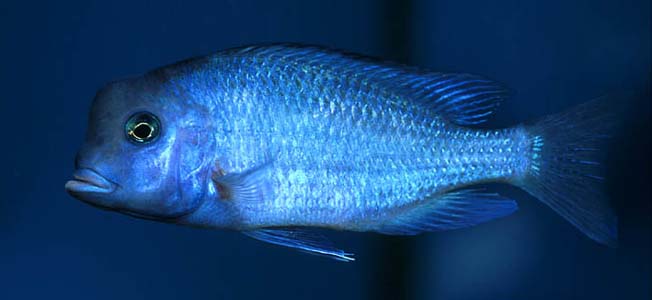
蓝茉莉(Cyrtocara moorii)是体形大而性情较温和的马拉维湖慈鲷,雌雄都有额部隆起。它需要开阔砂地和游泳空间,受惊时容易急游,不适合密集岩堆或强势岩栖鱼混养环境。
分布与栖息地
马拉维湖特有,分布较广但并非到处常见,主要利用浅水砂底。野外常跟随翻砂鱼群,吃被扰动砂土中露出的食物。
饲养环境
铺砂并留出大量开放空间,除非鱼缸特别大,岩石尽量布置在周边。过多硬物会增加受惊游动时撞伤的机会;繁殖时可另外提供平坦岩面及空旷砂地。
食性与喂食
自然以小型动物为食,活饵和冷冻饵料应占较大比例。红虫、丰年虾、切碎蚯蚓与虾肉都可使用,干粮也会接受,但不宜成为唯一食物。
习性与混养
总体温和,但体形本身会压迫很小的伙伴。选择体型合适、性情温和的大型慈鲷或鲶类较合理,避免粗猛岩栖鱼。应群养,日常可每雄配两三雌;雄鱼繁殖时会防守领域。
雌雄区分
外形判断较困难,雌雄都有相近体色与额瘤。雄鱼通常更大,但体形差异可能要经过数年才明显。
繁殖
属于雌性口孵鱼,繁殖并不特别容易。可从八至十条幼鱼养起,成熟后安排一雄配三至六雌,亲鱼成长需要耐心。雄鱼选择平石或在砂中挖坑,展示吸引雌鱼;雌鱼先产卵受精,再收入口中。
每窝约二十至九十粒卵,口孵可达三周,雌鱼期间不吃食,口部膨大并出现深色育幼斑纹。它受到惊扰时尤其容易提前吐出后代,因此没有持续骚扰便不宜急于搬动,长期离群也可能影响重新归群。人工提前取苗并非必要步骤。
自然出嘴鱼苗可以吃丰年虾无节幼体和细碎薄片,生长很慢。若雌鱼继续与鱼苗一起生活,数周内夜间或遇险时还会把鱼苗收入口中保护。
补充说明
额瘤不是可靠的单一性别指标。其跟随其他鱼翻砂觅食的行为有助于理解自然食性,但不表示必须购买特定伴养鱼才能进食。
图片
图片来自 SeriouslyFish,版权归各摄影者所有。
English
Overview
Cyrtocara moorii is a large, generally mild Lake Malawi cichlid with a forehead hump in both sexes. It needs open sand and generous swimming room. Sudden flight responses make crowded rock layouts and aggressive rock-dwelling companions poor choices.
Distribution & habitat
Endemic to Lake Malawi, it has a broad but apparently sparse distribution over shallow sandy areas. Wild groups follow substrate-sifting fishes and take food exposed by their activity.
Aquarium setup
Use sand and preserve extensive open space. Unless the tank is exceptionally large, place rocks around the perimeter to reduce collision hazards when fish are startled. Flat stones and clear sand can provide breeding sites.
Diet & feeding
It naturally takes small animal prey, so live and frozen foods should form a substantial part of the menu. Bloodworms, Artemia, chopped earthworms, and shrimp are accepted. Prepared foods are useful but should not be the only food.
Behaviour & compatibility
Despite a peaceful disposition, its size can intimidate tiny companions. Robust but mild larger fishes are more appropriate, while boisterous Mbuna should be avoided. Keep a group, with two or three females per male a useful maintenance arrangement. Males defend areas during spawning.
Sexual dimorphism
Sexing by appearance is difficult because both sexes have similar color and humps. Males generally become larger, but that difference can take several years to develop.
Breeding
This maternal mouthbrooder is not especially easy to breed. Raising eight to ten juveniles can yield a group of one male and three to six females, though maturity requires patience. A male selects a flat rock or digs a hollow, then displays to females. Eggs are fertilized before the female gathers them into her mouth.
Broods of around twenty to ninety eggs may be carried for three weeks without feeding. The mouth enlarges and dark brooding markings develop. Females are particularly prone to releasing young early when stressed, so avoid unnecessary moves unless harassment demands action. Long separation can also affect reintegration. Artificial stripping is optional specialist practice.
Released fry eat Artemia nauplii and finely crushed flakes but grow slowly. A female left with them can continue taking them into her mouth at night or during danger for several weeks.
Notes
A forehead hump alone is not a dependable sexing character. Following sand-sifters explains its natural feeding behavior without making a particular companion species necessary in captivity.
来源
- https://www.seriouslyfish.com/species/cyrtocara-moorii(抓取于 2026-10-10)
cyrtocara-moorii · 文件: data/species/cyrtocara-moorii.md · 状态: 草稿