犬齿非鲫 · Dogtooth Cichlid
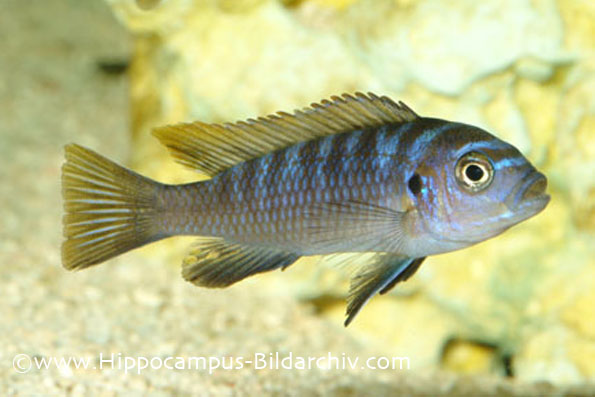
概要
| 字段 | 值 |
|---|---|
| 类别 | 鱼 |
| 学名 | Cynotilapia afra |
| 别名 | 犬齒非鯽 |
| 分类 | 慈鲷目 Cichliformes › 慈鲷科 Cichlidae › Cynotilapia |
| 水体 | 淡水 |
| 成体体长 | 10 cm |
| 饲养难度 | 中等 |
| 最小水体 | 90 L |
| 最小缸长 | 100 cm |
| 领地性 | 是 |
| 外部数据 | seriouslyfish cynotilapia-afra;fishbase 2323 |
| 原产地 | 马拉维湖 |
| 性情 | 攻击性 |
| 特征 | 翻底砂: 是 |
| 繁殖方式 | 口孵 |
水质参数
| 参数 | 耐受范围 | 最适范围 | 单位 |
|---|---|---|---|
| 水温 | 25–29 | — | °C |
| pH | 7.5–8.5 | — | — |
| 总硬度 | 10–25 | — | dGH |
概述
犬齿非鲫(Cynotilapia afra)是马拉维湖岩栖慈鲷,体侧黑色条带延伸到背鳍,具有多种产地色型。它强健,但对同种攻击明显;适合已经理解岩栖慈鲷群体管理的饲养者,不能把耐养等同于随意混养。
分布与栖息地
马拉维湖特有,分布于湖西北岸、部分东岸以及奇祖穆卢岛和利科马岛等地。主要与沿岸岩石环境关联,也会在岩壁外的开放水层形成大群。
饲养环境
用较多岩石布置洞穴,岩堆之间留下可游动空间,底床以砂为宜。它经常挖掘,水草容易被掀起,造景需要考虑这种习性。
食性与喂食
通常接受多种饲料,但人工食谱应包含较高比例的植物成分,例如螺旋藻薄片和焯软菠菜,再以活饵或冷冻饵料补充。
习性与混养
好斗且领地意识强,尤其不容忍同种竞争者。不宜与温和的孔雀类或开放水域马拉维慈鲷共养,可考虑性情相当的岩栖伙伴,但不能保证没有冲突。每雄配多雌有助于分散持续追逐。不同产地色型应分开,避免混繁。
雌雄区分
雄鱼颜色远比雌鱼鲜明,受惊或受压时体色可迅速变化。
繁殖
繁殖群可用一雄配三至六雌。雄鱼选择岩隙或在大石下挖坑,并在入口处展示求偶。雌鱼产卵后立即含入口中,雄鱼臀鳍卵斑参与受精。雌鱼一般携带约十五至三十粒卵,口孵可持续约三周,其间不进食。
过度惊扰可能使雌鱼提前吐卵或吞卵,若未被持续骚扰,应避免急于搬动;长时间离群可能影响其归群位置。人工提前取苗不是自然繁殖的必要步骤。出嘴鱼苗若仍带卵黄囊,先等卵黄吸收;没有卵黄时即可开始喂丰年虾无节幼体。
补充说明
颜色相似不代表同一种或同一产地,单尖齿及黑条延伸到背鳍等特征可帮助辨认。色型之间能杂交,繁殖记录应尽量明确来源。
图片
图片来自 SeriouslyFish,版权归各摄影者所有。
English
Overview
Cynotilapia afra is a Lake Malawi rock-dwelling cichlid with dark flank bars continuing into the dorsal fin and numerous locality forms. It is hardy but highly intolerant of conspecific rivals. Robustness should not be confused with easy community compatibility.
Distribution & habitat
It is endemic to Lake Malawi, with records along the northwest shore, parts of the eastern coast, and around Chizumulu and Likoma. Rocky shore habitats are typical, though large groups also occupy open water just beyond the rock walls.
Aquarium setup
Build numerous caves among rock piles, leaving swimming areas between them. Sand is suitable. Frequent digging can uproot plants and should be anticipated in the layout.
Diet & feeding
Most foods are accepted, but vegetable ingredients should make up a substantial part of the captive menu. Spirulina flakes and softened spinach can be supplemented with live or frozen items.
Behaviour & compatibility
This territorial fish is belligerent, especially toward its own species. Peaceful peacocks and open-water Malawi cichlids are unsuitable companions. Comparable Mbuna may be considered, though conflicts remain possible. Several females per male spread courtship pressure. Keep locality forms separate to prevent unwanted crosses.
Sexual dimorphism
Males are much more colorful. Disturbance or stress can produce rapid color changes.
Breeding
Use one male with three to six females. The male selects a rocky shelter or digs beneath a large stone, then displays at its entrance. Eggs are collected by the female immediately after laying; the male's anal-fin egg spots participate in fertilization. Broods of roughly fifteen to thirty eggs may be carried for about three weeks without feeding.
Stress risks premature release or consumption of the brood. Avoid moving an unharassed female unnecessarily, and remember that prolonged isolation can affect her position on return. Artificial stripping is not required for natural breeding. Released fry with remaining yolk should wait until it is absorbed before feeding; those without yolk can immediately take Artemia nauplii.
Notes
Similar colors do not ensure identical species or locality. Single-cusped teeth and bars extending into the dorsal fin aid identification. Locality forms interbreed, making origin records useful for breeding stock.
来源
- https://www.seriouslyfish.com/species/cynotilapia-afra(抓取于 2026-10-10)
cynotilapia-afra · 文件: data/species/cynotilapia-afra.md · 状态: 草稿