叉杯咽丽鱼 · Featherfin Cichlid
概要
| 字段 | 值 |
|---|---|
| 类别 | 鱼 |
| 学名 | Cyathopharynx furcifer |
| 别名 | 叉杯咽麗魚 |
| 分类 | 慈鲷目 Cichliformes › 慈鲷科 Cichlidae › Cyathopharynx |
| 水体 | 淡水 |
| 成体体长 | 20 cm |
| 饲养难度 | 困难 |
| 最小水体 | 365 L |
| 最小缸长 | 180 cm |
| 外部数据 | seriouslyfish cyathopharynx-furcifer;fishbase 8570 |
| 原产地 | 坦噶尼喀湖 |
| 繁殖方式 | 口孵 |
| 特征 | 翻底砂: 是 |
水质参数
| 参数 | 耐受范围 | 最适范围 | 单位 |
|---|---|---|---|
| 水温 | 24–27 | — | °C |
| pH | 8–9 | — | — |
| 总硬度 | 8–25 | — | dGH |
概述
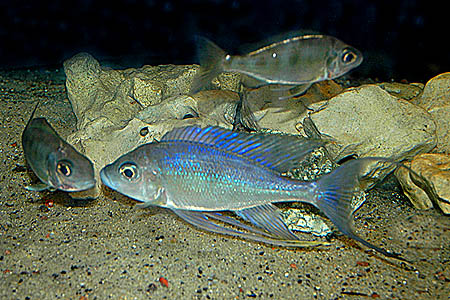
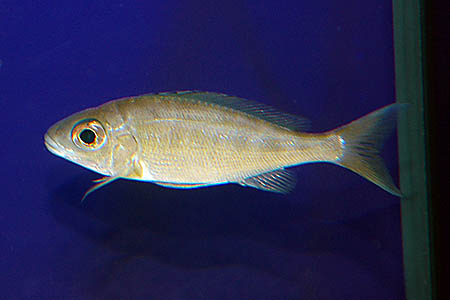
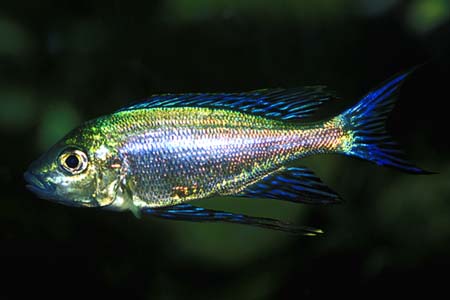
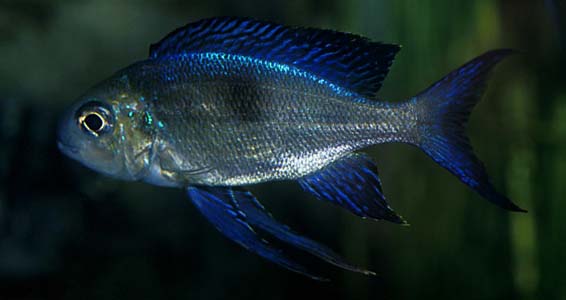
叉杯咽丽鱼(Cyathopharynx furcifer)雄鱼鳍条修长、成鱼色彩绚丽,但体质较敏感,需要优良水质和宽裕空间。幼鱼不会立即展现成年雄鱼的颜色,只有长到一定体形并处于良好状态后,发色才逐渐完整。
分布与栖息地
坦噶尼喀湖特有,在湖内分布较广,主要利用散布岩石与砂底相间的过渡地带。
饲养环境
用分散岩堆形成少量洞穴,大部分空间留给游泳与开放砂地。砂底和成熟有效的生物过滤都很重要,尤其繁殖雄鱼需要大片可整理底砂的区域。一般不伤害水草,可选择能适应硬水的植物。
食性与喂食
虽然接受多种食物,人工食谱应以植物性成分为基础,避免高蛋白肉食型饲料。可搭配焯软菠菜、无人工添加的原味紫菜,以及优质螺旋藻薄片或颗粒。
习性与混养
活动和争夺行为较强,空间需求相对体形很大,但若被更强势伙伴压制,又可能退缩,雄鱼也会褪色。适合温和但能自保的伙伴,不宜与强势岩栖慈鲷共养。不同近缘种和色型不要混在一起,以免杂交。
雌雄区分
雄鱼更大、颜色更鲜艳,鳍明显更长,腹鳍尤其突出。
繁殖
采用雌性口孵,每雄配多雌可分散求偶追逐。雄鱼会在砂中挖出直径可达约六十厘米的产卵凹坑,有时也把砂搬到平石上堆筑。雌鱼响应展示后产卵并立即含入口中,雄鱼腹鳍末端的卵状结构参与诱导受精。
每窝约十至四十粒卵,雌鱼可含卵约三周,其间不吃食。过度紧张可能造成提前吐卵或吞食后代,除非被持续骚扰,通常至少等两周再考虑移动;隔离太久也可能影响归群。自然放出的鱼苗能吃丰年虾无节幼体和压碎螺旋藻薄片。
补充说明
雄鱼的完整发色高度依赖水质与成长阶段。饲养记录应保留准确种名及产地色型,避免因幼年外观相近而混养或混繁。
图片
图片来自 SeriouslyFish,版权归各摄影者所有。
English
Overview
The long fins and adult colors of male Cyathopharynx furcifer come with demanding maintenance requirements. It is relatively delicate and needs excellent water quality and considerable space. Juveniles take time to develop the full male display.
Distribution & habitat
This Lake Tanganyika endemic occurs widely in transitional areas combining scattered rocks with sandy bottoms.
Aquarium setup
Use a few separated rock piles for caves while preserving extensive open swimming space and sand. A sandy floor and effective biological filtration are essential, especially because breeding males manipulate large areas of substrate. Hard-water-tolerant plants can be included and are generally unharmed.
Diet & feeding
Acceptance of many foods should not lead to a meat-heavy diet. Plant material should form the basis, using softened spinach, plain additive-free nori, and quality spirulina flakes or pellets. Avoid concentrated high-protein meaty foods.
Behaviour & compatibility
This active, relatively boisterous species needs more room than its size alone suggests. Yet stronger companions can intimidate it, causing withdrawal and loss of male color. Choose peaceful fishes able to hold their own, and avoid aggressive Mbuna. Separate related species and locality forms to prevent hybridization.
Sexual dimorphism
Males grow larger, show stronger colors, and have much longer fins, particularly the pelvic fins.
Breeding
Females mouthbrood, and several females per male help distribute pursuit. A male excavates a crater that may reach about sixty centimeters across, or carries sand onto a flat stone to build there. The female collects eggs immediately after laying. Egg-like structures at the ends of the male's pelvic fins contribute to the fertilization sequence.
Broods contain around ten to forty eggs and may be carried for roughly three weeks without feeding. Stress can cause early release or loss. Unless a female is being harassed, waiting at least two weeks before considering a move is advisable; long separation can also complicate her return. Released fry accept Artemia nauplii and finely crushed spirulina flakes.
Notes
Full male coloration depends strongly on growth and water quality. Preserve species and locality information instead of mixing young fish that initially appear similar.
来源
- https://www.seriouslyfish.com/species/cyathopharynx-furcifer(抓取于 2026-10-10)
cyathopharynx-furcifer · 文件: data/species/cyathopharynx-furcifer.md · 状态: 草稿