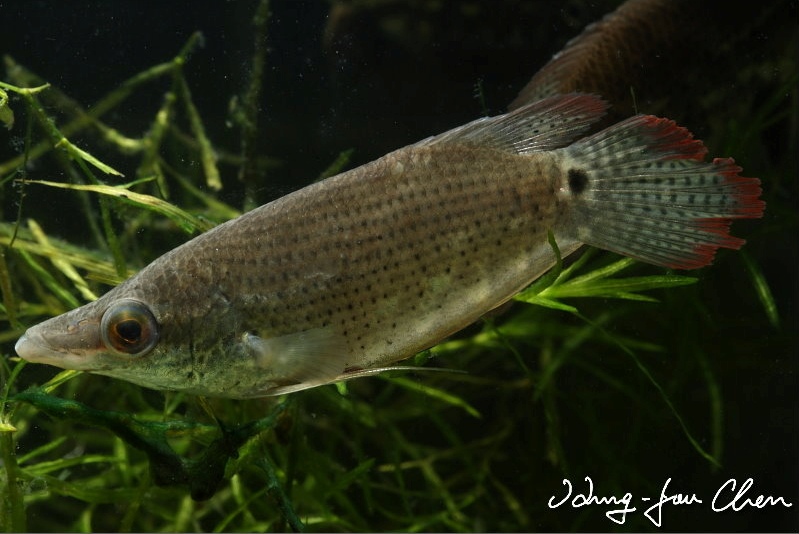
拟篦斗鱼 · Frail Gourami
概要
| 字段 | 值 |
|---|---|
| 类别 | 鱼 |
| 学名 | Ctenops nobilis |
| 别名 | 擬篦鬥魚 |
| 分类 | 攀鲈目 Anabantiformes › 丝足鲈科 Osphronemidae › Ctenops |
| 水体 | 淡水 |
| 原产地 | 孟加拉国、印度、尼泊尔 |
| 成体体长 | 10 cm |
| 饲养难度 | 中等 |
| 最小水体 | 108 L |
| 最小缸长 | 120 cm |
| 群居方式 | 群游 |
| 水流偏好 | 低 |
| 特征 | 会跳缸: 是 |
| 外部数据 | seriouslyfish ctenops-nobilis;fishbase 12076 |
| 食性 | 肉食 |
| 领地性 | 是 |
| 繁殖方式 | 口孵 |
水质参数
| 参数 | 耐受范围 | 最适范围 | 单位 |
|---|---|---|---|
| 水温 | 15–25 | — | °C |
| pH | 5–7.5 | — | — |
| 总硬度 | 2–12 | — | dGH |
概述
拟篦斗鱼(Ctenops nobilis)由雄鱼口孵,成鱼同种冲突可能相当强烈。它常因运输后衰弱而显得难养,真正稳定适应后有一定耐受性;购买时的体况、环境遮蔽和温度管理都很关键。
分布与栖息地
记录来自印度东北部的锡金、西孟加拉、比哈尔和阿萨姆,孟加拉国北部及尼泊尔,属于恒河与布拉马普特拉河汇合点以北水系。当地有明显季风,水深、水量和流速随季节大幅变化。
采集环境包括清澈浅缓流、沙和有机碎屑底的溪流,也有中等流速、无水草的河段,并非只存在于密植静水。
饲养环境
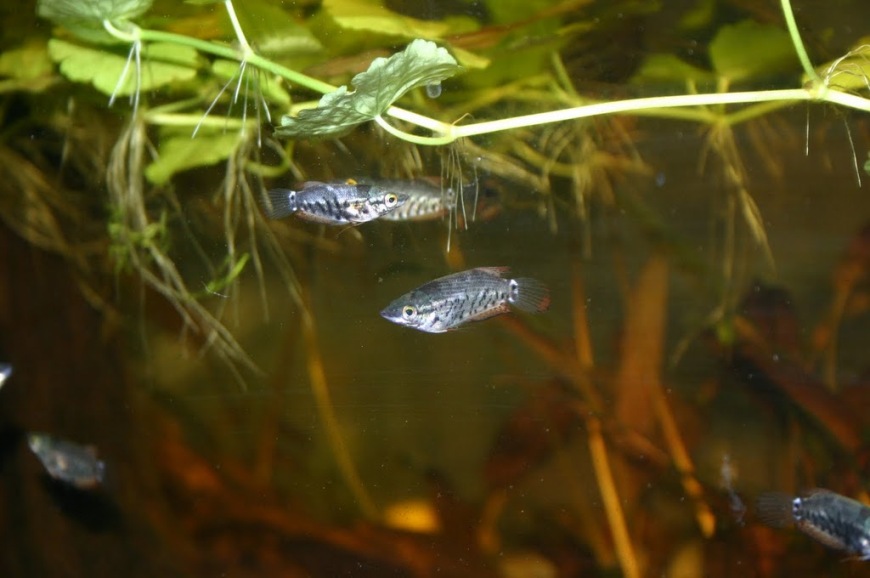
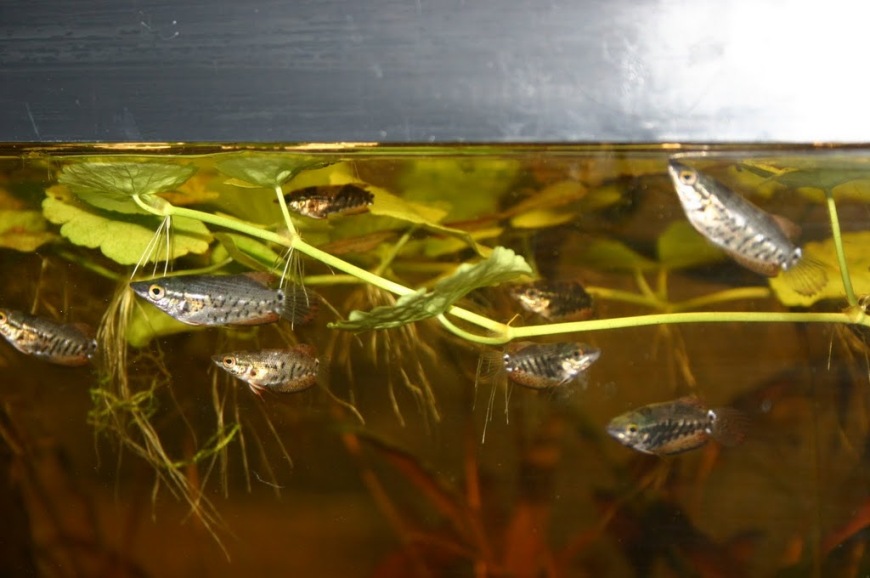
即使小群也需至少约 120 × 30 cm 底面积。软沙、沉木根枝、花盆和管道都能提供结构,茂密耐阴植物与浮水植物尤其有利于分隔视线、减轻同种冲突。
光线宜暗,水流不要过强,但水质必须很好。低密度饲养时,每周约 10%~15% 换水可作为维护方式,避免突然大换水。它很会跳,尤其新入缸时,缸盖必须贴合。
适应季节温度变化,长期恒温可选其范围中段。偏热时攻击性可能增加,甚至停食,不能把短时耐高温理解为长期适温。
食性与喂食
主要捕食微小动物,包括甲壳动物、蠕虫、昆虫幼体和其他浮游动物。刚入缸可能拒绝配合饵,多数可逐步适应,通常颗粒比薄片更容易接受。每日提供丰年虾、水蚤、白线虫或微虫等小型活饵或冻饵有助于恢复体况。
习性与混养
幼鱼较合群,成鱼则常公开敌视同种,甚至可能致死,攻击并非只发生在某一性别。繁殖状态或偏高温度下冲突可能加重。多鱼同养需要很大空间,或密植、遮挡充分的结构。
不适合普通混养缸,大缸中可考虑不以鱼为食的其他迷鳃鱼或温和群居鲤科鱼,避免太大的同伴。
雌雄区分
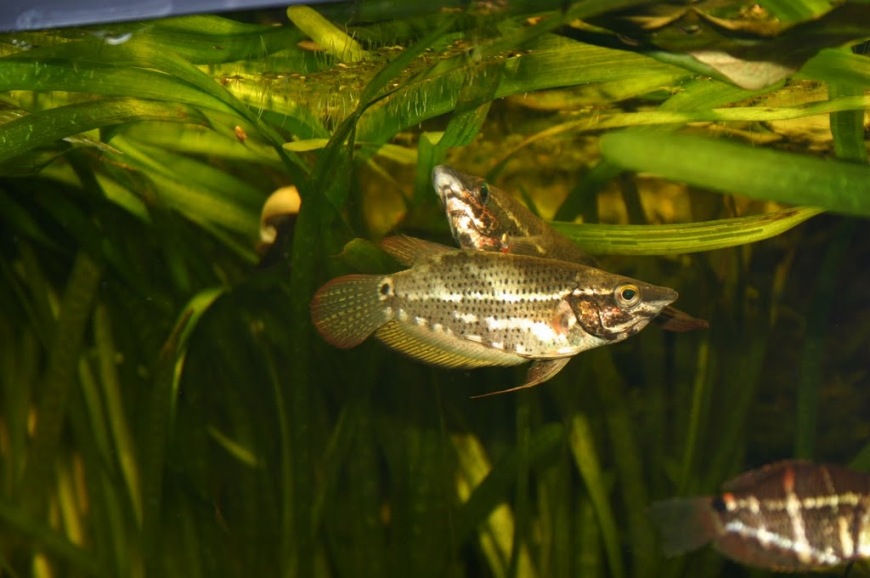
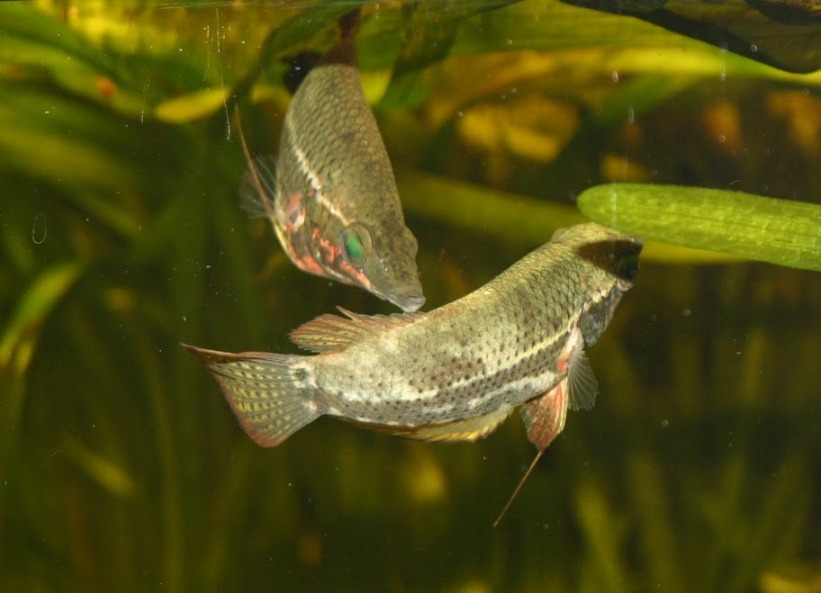
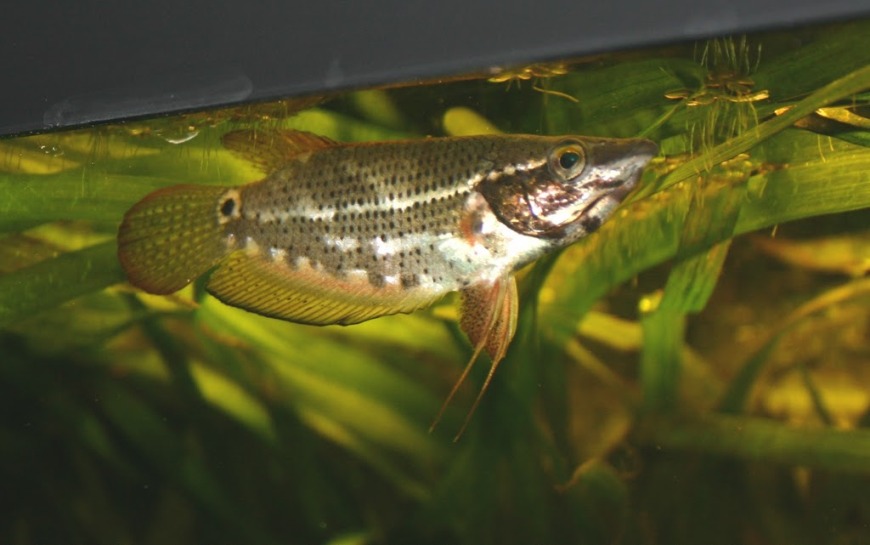
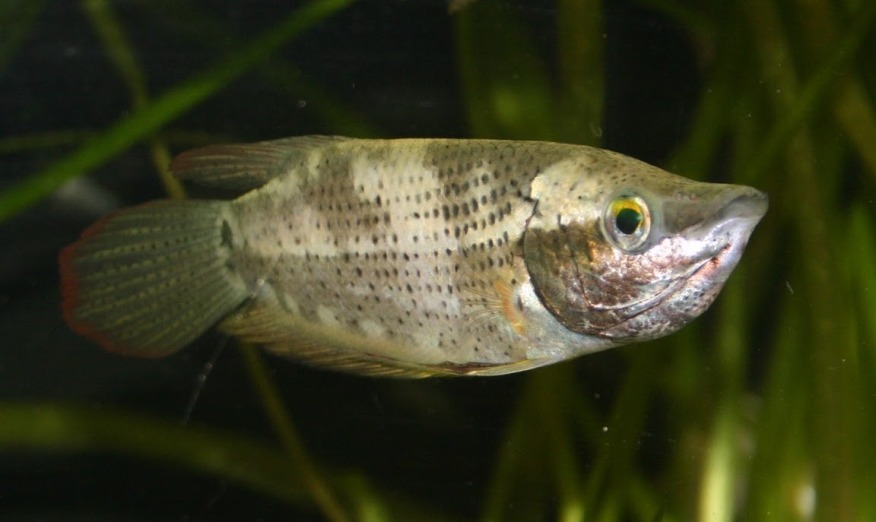
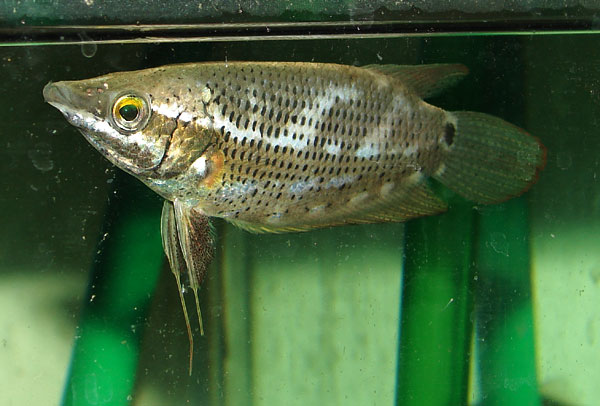
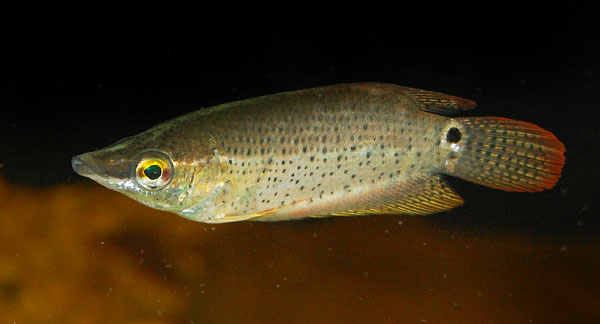
状态差或刚进口时较难判断。雌鱼下颌轮廓较直、头更尖;雄鱼下颌因可扩张的口孵皮肤而稍圆。
繁殖
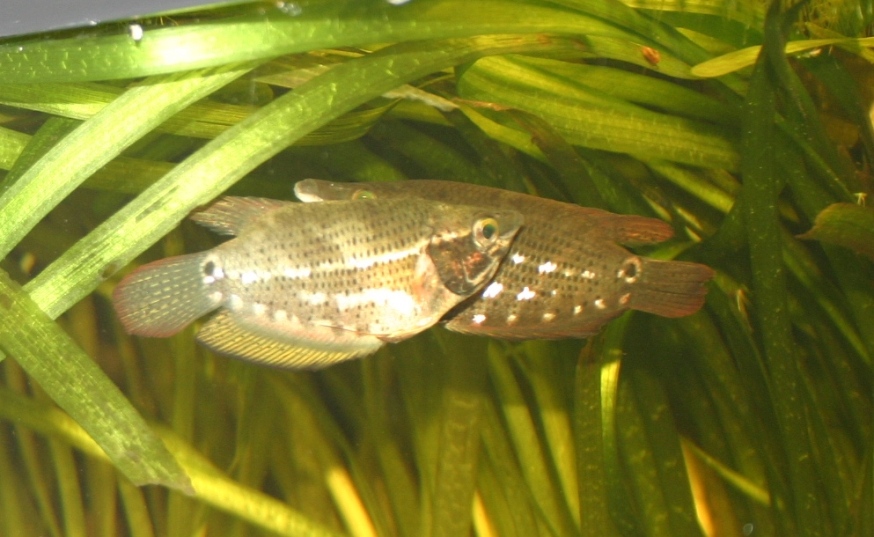
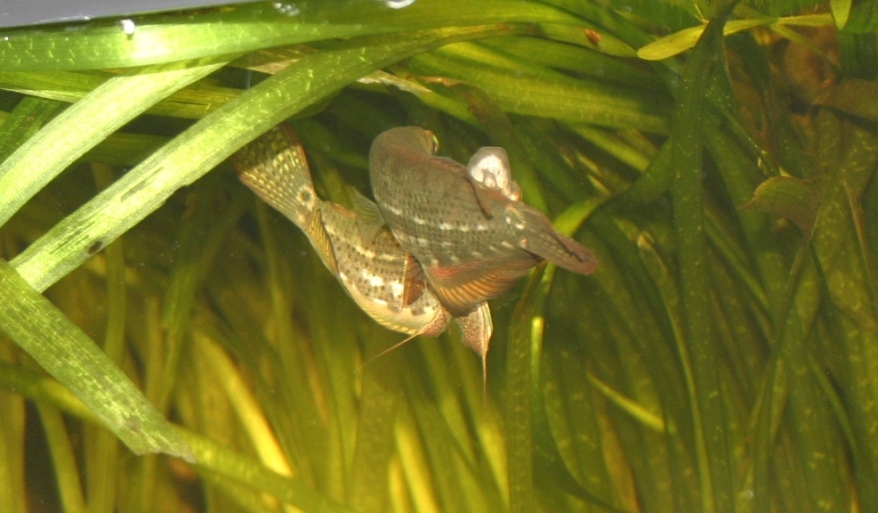
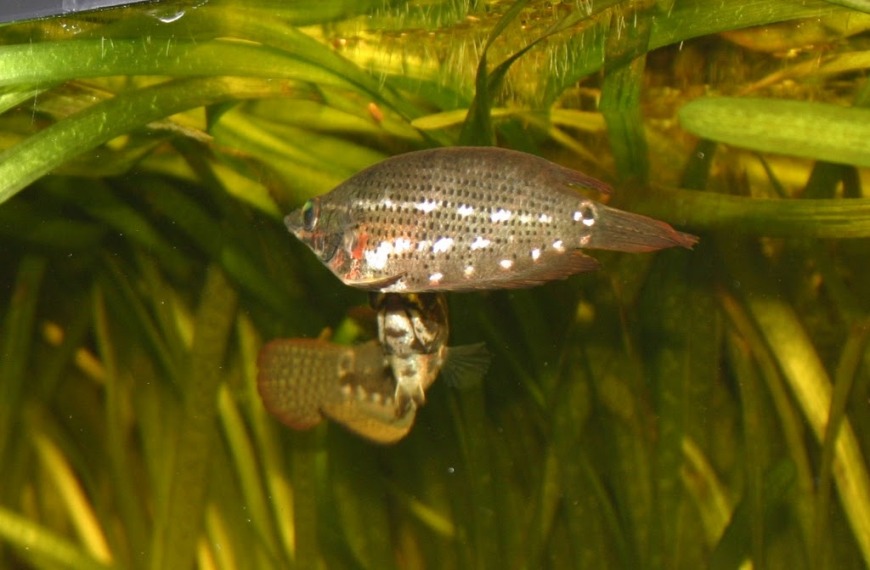
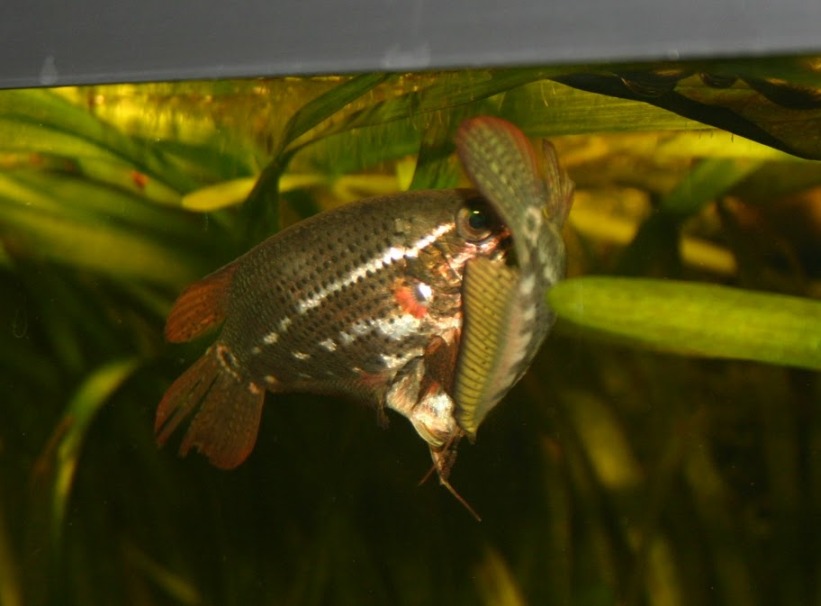
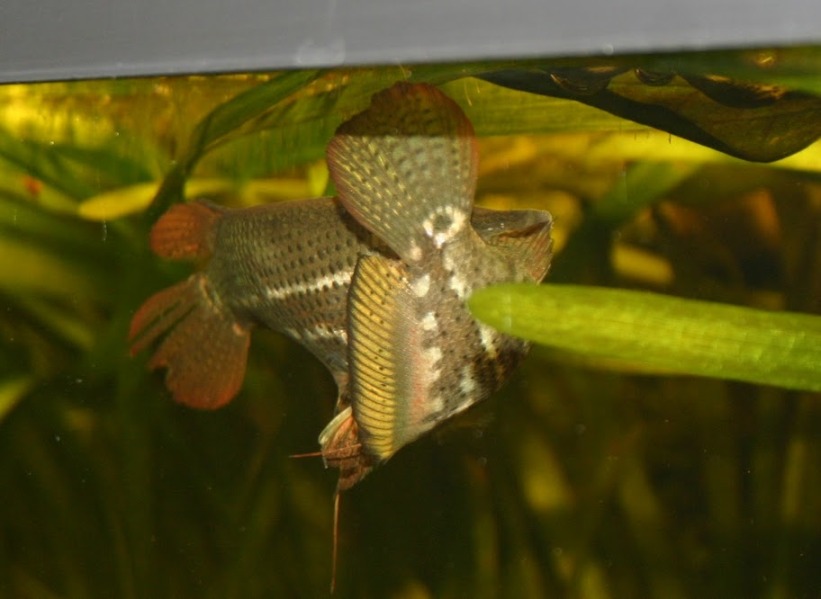
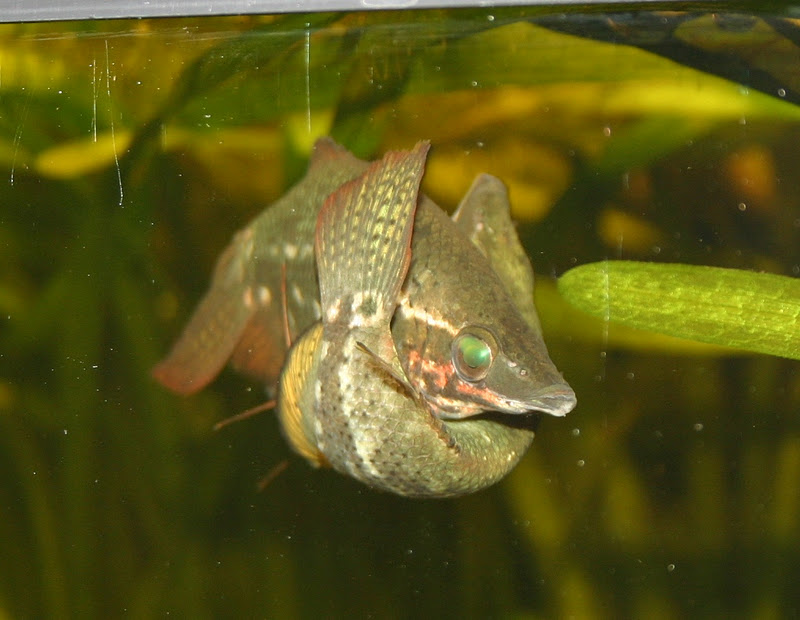
常由雌鱼或群体优势雌鱼发起求偶。环抱时双方近乎直立,雄鱼以臀鳍接卵,雌鱼拾起后吐给他;产卵可持续数小时,期间双方防守周围区域。
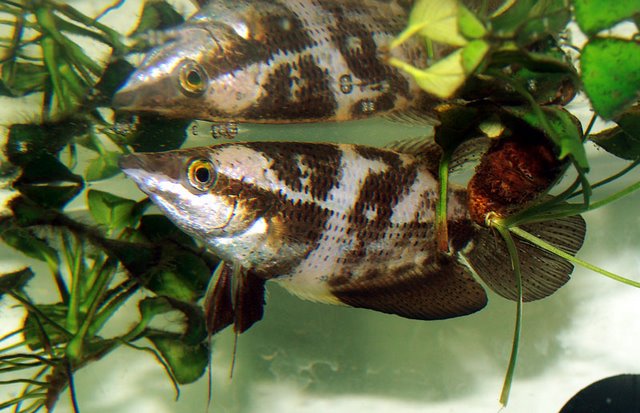
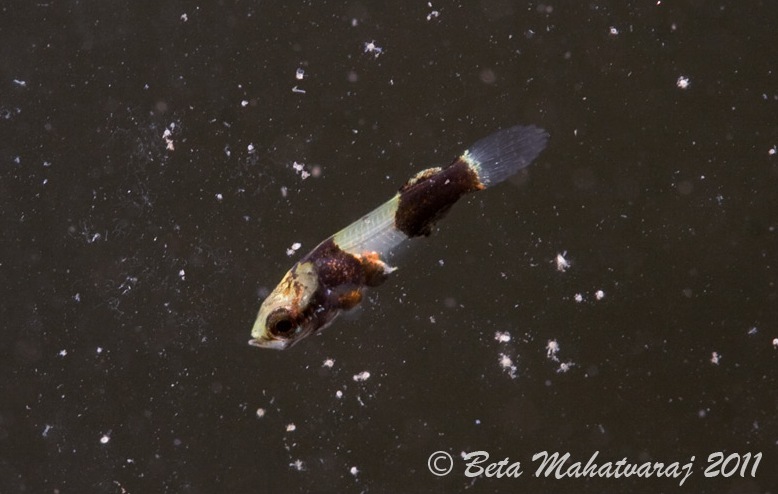
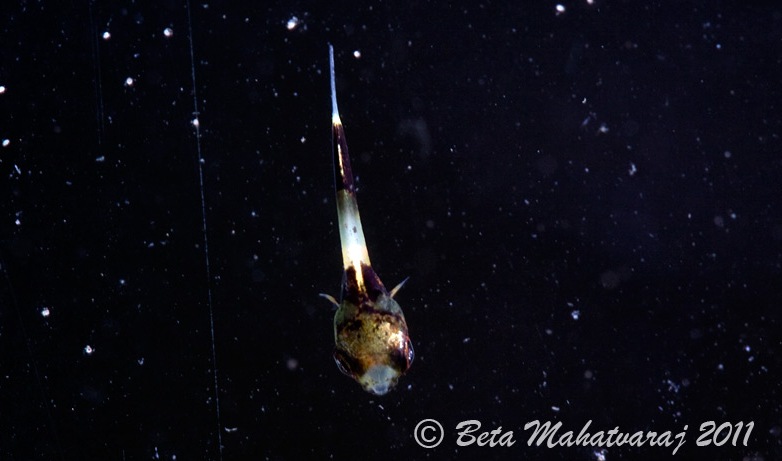
含卵雄鱼躲到安静处,体色呈隐蔽的大理石纹,少食或停食。口孵约 7~20 天后释放约 10~100 条鱼苗,无经验个体可能先经历数次吞卵。可在产后几天转移雄鱼减少鱼苗被捕食风险,或发现鱼苗后用同温同水质的育苗缸接走。
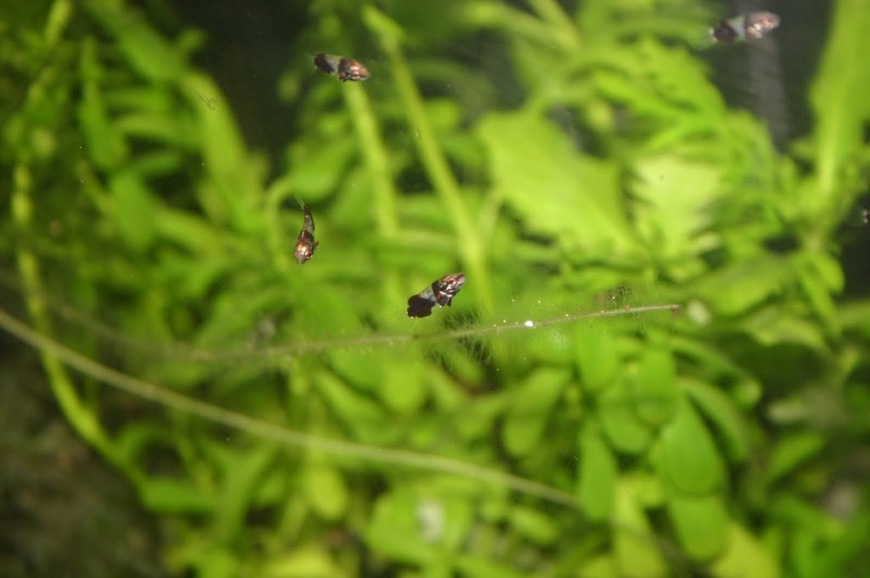
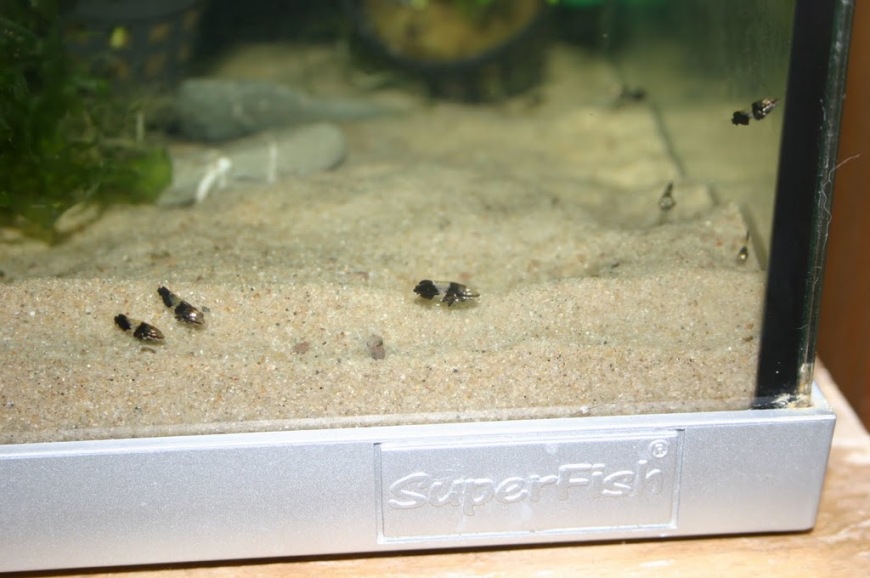
鱼苗虽能吃微虫、丰年虾无节幼体,早期却常静止,只在水面附近取食,要避免落底残饵积累。育苗可每天约 10% 小换水,并用贴合盖保留温暖湿润空气,支持迷鳃器官发育。
补充说明
运输后的个体易状态不佳,可能已有卵圆鞭毛虫等寄生问题,应重视入手体况与检疫观察。稳定适应后通常比“脆弱”的印象更容易维持。
图片
图片来自 SeriouslyFish,版权归各摄影者所有。
English
Overview
Ctenops nobilis combines paternal mouthbrooding with potentially severe adult conspecific aggression. Much of its difficult reputation reflects poor condition after transport; settled fish can be adaptable. Initial health, shelter, and temperature management are therefore central to success.
Distribution & habitat
Records cover northeastern Indian states including Sikkim, West Bengal, Bihar, and Assam, northern Bangladesh, and Nepal, within the Ganges and Brahmaputra systems above their confluence. Pronounced monsoons create substantial seasonal changes in depth, water volume, and flow.
Known habitats include shallow clear streams over sand and organic debris, as well as moderately flowing, unplanted river sections. Dense still-water vegetation is not the only natural setting.
Aquarium setup
Even a small group requires a footprint of at least approximately 120 × 30 cm. Sand, wood, roots, pots, and pipe create structure. Dense shade-tolerant plants and floating cover are particularly useful for breaking sight lines and reducing conflict.
Keep light subdued and current moderate to gentle, with excellent water quality. In a lightly stocked tank, weekly changes of around 10–15% are appropriate, avoiding abrupt large changes. A close-fitting lid is essential because jumping is especially likely after introduction.
The fish experiences seasonal temperature variation. For constant heating, the middle of its suitable range is preferable; warmer water may intensify aggression or suppress feeding. Brief tolerance of extremes does not establish a long-term target.
Diet & feeding
It chiefly hunts tiny animals, including crustaceans, worms, insect larvae, and zooplankton. Newly acquired fish may refuse prepared foods, but most learn to accept them, often preferring granules to flakes. Daily small live or frozen foods such as Artemia, Daphnia, grindal worms, and microworms support condition.
Behaviour & compatibility
Juveniles are more social than adults, which may attack or kill conspecifics. Conflict is not confined to one sex and can increase with breeding condition or warmth. Groups need very spacious accommodation or dense, carefully arranged cover.
An ordinary community is unsuitable. In larger aquaria, non-piscivorous labyrinth fishes or peaceful schooling cyprinids are possibilities, avoiding oversized companions.
Sexual dimorphism
Poor-condition imports can be difficult to sex. Females have a straighter lower-jaw outline and a more pointed head. Males show a rounded lower jaw from the expandable skin used during incubation.
Breeding
The female, or dominant female in a group, usually initiates courtship. Spawning embraces remain nearly upright. Eggs rest on the male's anal fin, are collected by the female, and are spat to him. Both defend the area through a spawning that can last several hours.
The brooding male retreats, takes on cryptic marbling, and eats little or nothing. After about 7–20 days he releases roughly 10–100 free-swimming young. Inexperienced males may consume several attempts before succeeding. He can be moved a few days after spawning to limit fry predation, or released fry can be transferred to water matching chemistry and temperature.
Young take microworms or Artemia nauplii but initially remain relatively motionless and feed only near the surface. Prevent uneaten food accumulating below. Daily changes of around 10% and a close-fitting cover preserving warm, humid air support rearing and labyrinth development.
Notes
Transported fish often arrive depleted and may carry Oodinium or other parasites. Initial condition and quarantine observation deserve attention. Once acclimated, the species can be more resilient than its common reputation suggests.
来源
- https://www.seriouslyfish.com/species/ctenops-nobilis(抓取于 2026-10-10)
ctenops-nobilis · 文件: data/species/ctenops-nobilis.md · 状态: 草稿