尖吻非洲攀鲈 · Mottled Bushfish
概要
| 字段 | 值 |
|---|---|
| 类别 | 鱼 |
| 学名 | Ctenopoma weeksii |
| 别名 | 尖吻非洲攀鱸 |
| 分类 | 攀鲈目 Anabantiformes › 攀鲈科 Anabantidae › Ctenopoma |
| 水体 | 淡水 |
| 成体体长 | 10 cm |
| 饲养难度 | 中等 |
| 特征 | 吃小鱼: 是;会跳缸: 是 |
| 外部数据 | seriouslyfish ctenopoma-weeksii;fishbase 10047 |
| 原产地 | 刚果共和国、刚果民主共和国 |
| 食性 | 肉食 |
| 领地性 | 是 |
| 繁殖方式 | 散卵 |
水质参数
| 参数 | 耐受范围 | 最适范围 | 单位 |
|---|---|---|---|
| 水温 | 24–28 | — | °C |
| pH | 6.2–7.2 | — | — |
| 总硬度 | 5–15 | — | dGH |
概述
尖吻非洲攀鲈(Ctenopoma weeksii)是性情较退缩的捕食鱼,最活跃的时段在晨昏。它平时不以主动争斗为主,却会吃小鱼,适合昏暗、遮蔽丰富的专门混养环境。
分布与栖息地
见于刚果共和国和刚果民主共和国境内部分刚果河水系。多生活于缓流或静止、常较缺氧的池塘、湖泊、潟湖和沼泽,通常在岸边植被最密集处活动,可能借此躲避捕食者。
饲养环境
单条可从约 75 × 30 × 30 cm、71 L 的缸起步,群养需更宽敞。光照柔和,或通过浮水植物减光;深色底床、沉木、水榕及蕨类可形成许多藏身处。缸盖不能留有逃逸缝隙。
食性与喂食
天然为捕食鱼,通常较容易转食非活体饵。可轮换虾、红虫、贻贝等冷冻饵,偶尔补蚯蚓或面包虫。多数不接受干粮,只有部分个体会逐渐学会。
习性与混养
会吞食小鱼,但不应把捕食等同于对所有同伴都好斗。可选择体型合适的脂鲤、鲤科鱼、鲶鱼或其他非洲鱼;避免明显更大或攻击性强的同伴,否则它可能长期躲藏。
足够大且布置充分的缸可养同种群体,最好同时引入。若分批加入,新旧个体可能因领地发生明显冲突。
雌雄区分
不容易可靠分辨。雄鱼鳃盖棘较多,尾柄基部有较粗糙区域,雌鱼缺少该特征。
繁殖
人工繁殖记录少,可从一群幼鱼开始,增加形成相容配对的机会。繁殖缸应宽敞并有丰富浮水植物。据观察,缠抱时同时排出卵和精子,卵浮入植物之间,亲鱼不照护后代,宜产后移走。
约 48 小时孵化,随后很快自由游动;最初几天用草履虫等微小食物,再转丰年虾无节幼体。连续繁殖数月后停歇可能反映季节性,但原因尚不明确;需数年才性成熟的说法也未确证。
补充说明
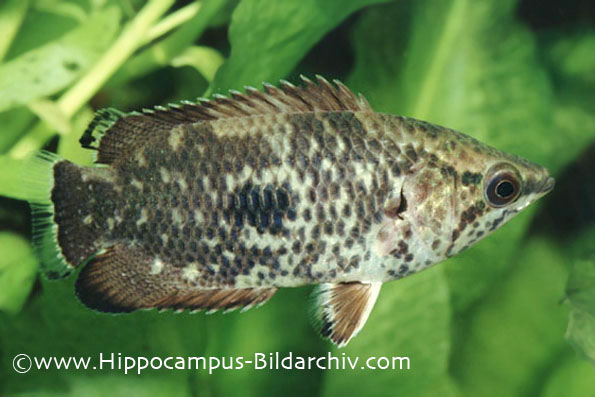
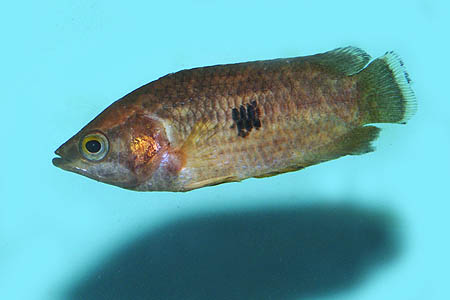
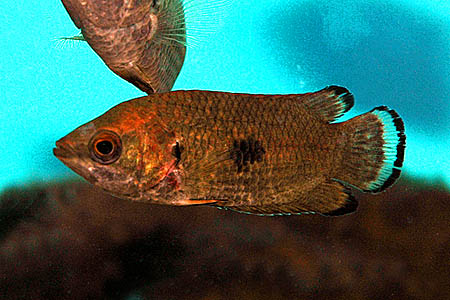
受惊时能很快变成斑驳体色,平时多为棕色、两侧各有一大斑。旧商品名可能写作 Ctenopoma oxyrhynchum,不应因此当成独立种购买。迷鳃使其能够利用空气中的氧,不能用这一能力代替正常过滤维护。
图片
图片来自 SeriouslyFish,版权归各摄影者所有。
English
Overview
A retiring predator, Ctenopoma weeksii is most active around twilight. It is not broadly combative, but small fishes remain prey. Dim lighting and substantial shelter suit its character.
Distribution & habitat
It occurs in parts of the Congo drainage in both the Republic of the Congo and Democratic Republic of the Congo. Slow or still pools, lakes, lagoons, and swamps are often oxygen-poor. Dense marginal vegetation is commonly used, presumably for protection.
Aquarium setup
A single fish can start with approximately 75 × 30 × 30 cm and 71 L, with more room for a group. Subdued lighting or floating shade, dark substrate, wood, Anubias, and aquatic ferns create concealed areas. Seal openings around the cover.
Diet & feeding
A natural predator, it usually converts readily to nonliving food. Rotate frozen shrimp, bloodworms, and mussels, with occasional earthworms or mealworms. Most individuals reject dry preparations, although some learn to accept them.
Behaviour & compatibility
Predation on small fish should not be confused with indiscriminate aggression. Suitable medium-sized characins, cyprinids, catfishes, and other African fishes may work. Avoid much larger or aggressive companions that cause persistent hiding.
A group is possible in spacious, well-furnished quarters, preferably with every fish introduced together. Later additions can trigger serious disputes over territories.
Sexual dimorphism
Sexing is difficult. Males have more gill-cover spines and a roughened area near the tail-stalk base, absent in females.
Breeding
Aquarium spawning reports are few. Raising a juvenile group may improve the chance of compatible pairing. Use a roomy aquarium with abundant floating plants. Reported embraces release eggs and sperm together; eggs rise into vegetation. Adults offer no care and should be removed.
Hatching takes about 48 hours, followed soon by free swimming. Begin with microscopic food, then introduce Artemia nauplii after the first few days. Runs of spawning followed by pauses may be seasonal, but the cause remains uncertain. Maturity delayed for several years is also suggested rather than established.
Notes
Startled fish rapidly develop a mottled appearance, while the usual coloration is brown with a large flank spot. The historical trade name Ctenopoma oxyrhynchum should not be mistaken for a separate species. The labyrinth organ allows air breathing, but does not replace routine filtration and maintenance.
来源
- https://www.seriouslyfish.com/species/ctenopoma-weeksii(抓取于 2026-10-10)
ctenopoma-weeksii · 文件: data/species/ctenopoma-weeksii.md · 状态: 草稿