尾点非洲攀鲈 · Tailspot Ctenopoma
概要
| 字段 | 值 |
|---|---|
| 类别 | 鱼 |
| 学名 | Ctenopoma kingsleyae |
| 别名 | 银腹非洲攀鲈、短腹非洲攀鲈、尾點非洲攀鱸、銀腹非洲攀鱸、短腹非洲攀鱸 |
| 分类 | 攀鲈目 Anabantiformes › 攀鲈科 Anabantidae › Ctenopoma |
| 水体 | 淡水 |
| 成体体长 | 25 cm |
| 饲养难度 | 中等 |
| 领地性 | 是 |
| 特征 | 会跳缸: 是;吃小鱼: 是 |
| 外部数据 | seriouslyfish ctenopoma-kingsleyae;fishbase 2496 |
| 原产地 | 毛里塔尼亚、塞内加尔、冈比亚、几内亚比绍、几内亚、塞拉利昂、利比里亚、科特迪瓦、加纳、多哥、贝宁、尼日利亚、喀麦隆、加蓬、刚果民主共和国 |
| 食性 | 肉食 |
| 性情 | 攻击性 |
| 繁殖方式 | 散卵 |
水质参数
| 参数 | 耐受范围 | 最适范围 | 单位 |
|---|---|---|---|
| 水温 | 25–28 | — | °C |
| pH | 6–8 | — | — |
| 总硬度 | 5–20 | — | dGH |
概述
尾点非洲攀鲈(Ctenopoma kingsleyae)是本属中较强势的成员,会吃小鱼,对同种也可能相当凶悍。它可能非常长寿,有人工饲养超过 30 年的记录,需按长期大型鱼养护来规划。
分布与栖息地
广布西非至中非,从毛里塔尼亚、塞内加尔、冈比亚,经几内亚地区、塞拉利昂、利比里亚、科特迪瓦、加纳、多哥、贝宁和尼日利亚,延至喀麦隆、加蓬及刚果民主共和国。主要见于沿海雨林地区。
饲养环境
单条可从约 120 × 30 × 30 cm、108 L 的缸起步;与其他鱼混养时需至少约 150 × 45 × 45 cm、304 L,并有充足遮蔽。
采用柔和灯光或浮水植物遮光,用密集水草、沉木及石块形成躲藏处,同时保留开阔游泳区。它活动性不低,也善跳,缸盖不能留有可逃出的空隙。
食性与喂食
天然为捕食鱼,需动物性食物,但没有必要投喂活鱼。虾、贻贝、蚯蚓等通常容易接受,多数个体拒绝干粮,不能假定换成颗粒就能满足喂食需求。
习性与混养
不适合普通混养缸,小鱼会成为食物。大缸中可考虑体型接近、足够强健的鲶鱼、脂鲤、鲤科鱼或适宜慈鲷,不能忽略性情和遮蔽需求。
同种之间尤其容易冲突,通常以单条饲养较妥;若确有相容配对,也可尝试成对,不宜把随意购入的两条自动视为一对。
雌雄区分
雄鱼鳃盖周围和眼下的棘较明显、较多。
繁殖
爱好者繁殖记录较少。繁殖缸应宽敞,浮水植物丰富;通常在夜间,雄鱼追逐后与雌鱼缠抱产卵,卵浮至表面植物间,此时宜移走亲鱼。
幼鱼先用草履虫等微小食物或液体鱼苗饵,几天后转刚孵化的丰年虾。连续数月繁殖后暂停的季节性,以及约 5~10 年才性成熟等解释仍属推测,不应当作确定的繁殖进度。
补充说明
种名纪念探险家 Mary Kingsley。它具有迷鳃,可利用空气中的氧,但并无像亚洲攀鲈那样跨越陆地的已知能力;名称中带“攀鲈”不等于习性相同。
图片
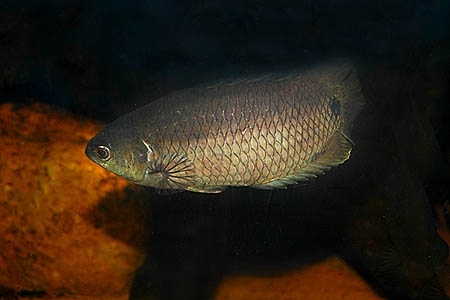
图片来自 SeriouslyFish,版权归各摄影者所有。
English
Overview
Among the more forceful bushfishes, Ctenopoma kingsleyae eats small fishes and can be especially hostile toward its own kind. Reports of individuals exceeding 30 years in captivity make this a potentially very long-term commitment.
Distribution & habitat
Its extensive western and central African range stretches from Mauritania, Senegal, and Gambia through Guinea-Bissau, Guinea, Sierra Leone, Liberia, Ivory Coast, Ghana, Togo, Benin, and Nigeria to Cameroon, Gabon, and the Democratic Republic of the Congo. Coastal rainforest regions are its main habitat.
Aquarium setup
A single fish can start with roughly 120 × 30 × 30 cm and 108 L. Housing it with other fishes calls for at least about 150 × 45 × 45 cm, or 304 L, with abundant cover.
Use subdued light or floating shade. Dense plants, wood, and rock formations provide retreats, while open areas accommodate its activity. Seal gaps around the lid because it is an effective jumper.
Diet & feeding
A natural predator, it requires animal foods but does not need live feeder fishes. Shrimp, mussels, and earthworms are readily taken. Most individuals refuse dry preparations, so do not assume pellets will become a dependable staple.
Behaviour & compatibility
Small community fishes will become prey. In a large furnished aquarium, robust companions of comparable size may include suitable catfishes, characins, cyprinids, or cichlids.
Conspecific aggression is particularly relevant. A single specimen is generally preferable, although an established compatible pair may be possible. Two arbitrarily purchased individuals are not necessarily a pair.
Sexual dimorphism
Males have more prominent spines around the gill covers and below the eyes.
Breeding
Aquarium records are scarce. Use a spacious aquarium with abundant floating plants. Spawning generally occurs at night, following pursuit and an embrace; eggs rise into surface vegetation. Remove the adults afterward.
Start young on infusoria-sized or liquid fry foods, adding newly hatched Artemia after several days. Seasonal runs of breeding and a proposed five-to-ten-year delay before maturity remain tentative explanations, not reliable schedules.
Notes
Named for explorer Mary Kingsley, it has a labyrinth organ for air breathing. It is not known to traverse land like the Asian climbing perch, despite similar common names.
来源
- https://www.seriouslyfish.com/species/ctenopoma-kingsleyae(抓取于 2026-10-10)
ctenopoma-kingsleyae · 文件: data/species/ctenopoma-kingsleyae.md · 状态: 草稿