巴拿马始丽鱼
概要
| 字段 | 值 |
|---|---|
| 类别 | 鱼 |
| 学名 | Cryptoheros nanoluteus |
| 别名 | 巴拿馬始麗魚、Archocentrus nanoluteus |
| 分类 | 慈鲷目 Cichliformes › 慈鲷科 Cichlidae › Cryptoheros |
| 水体 | 淡水 |
| 原产地 | 巴拿马 |
| 成体体长 | 6.5 cm |
| 饲养难度 | 中等 |
| 最小水体 | 81 L |
| 最小缸长 | 90 cm |
| 群居方式 | 成对 |
| 外部数据 | seriouslyfish cryptoheros-nanoluteus;fishbase 57854 |
| 繁殖方式 | 附着产卵 |
水质参数
| 参数 | 耐受范围 | 最适范围 | 单位 |
|---|---|---|---|
| 水温 | 23–26 | — | °C |
| pH | 5–7.5 | — | — |
| 总硬度 | 10–25 | — | dGH |
概述
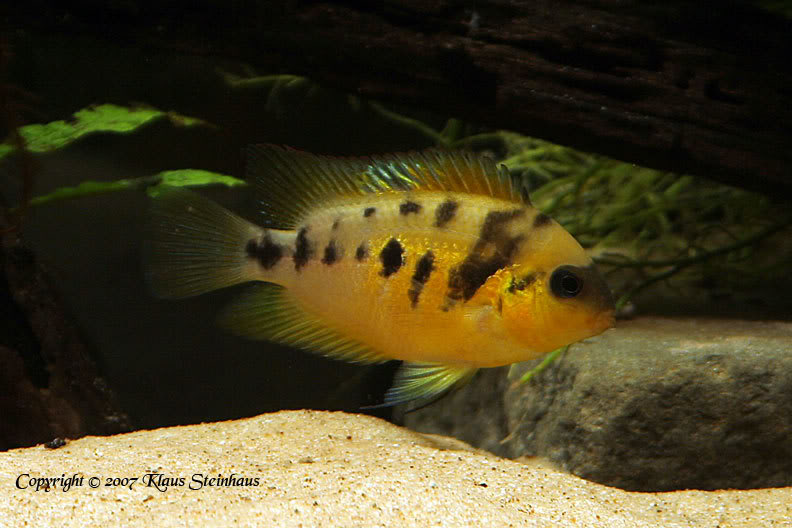
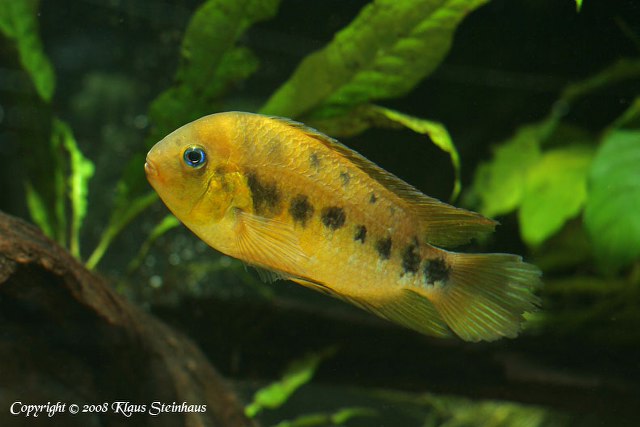
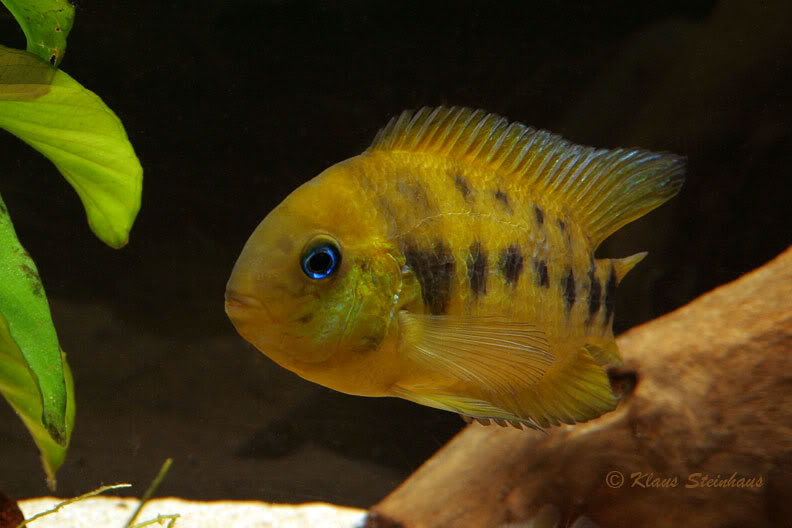
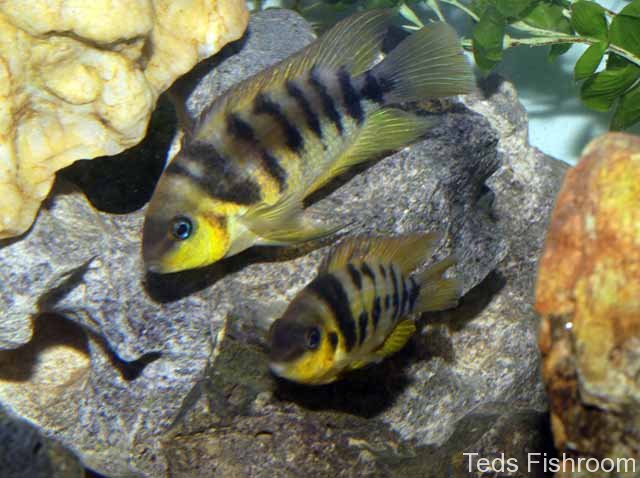
巴拿马始丽鱼(Cryptoheros nanoluteus)体型较小,求偶时雌雄都会转为鲜黄。它比同属一些鱼温和,但繁殖期仍有领域防卫;鱼对关系属于阶段性配对,不能默认一旦成对就始终和睦。
分布与栖息地
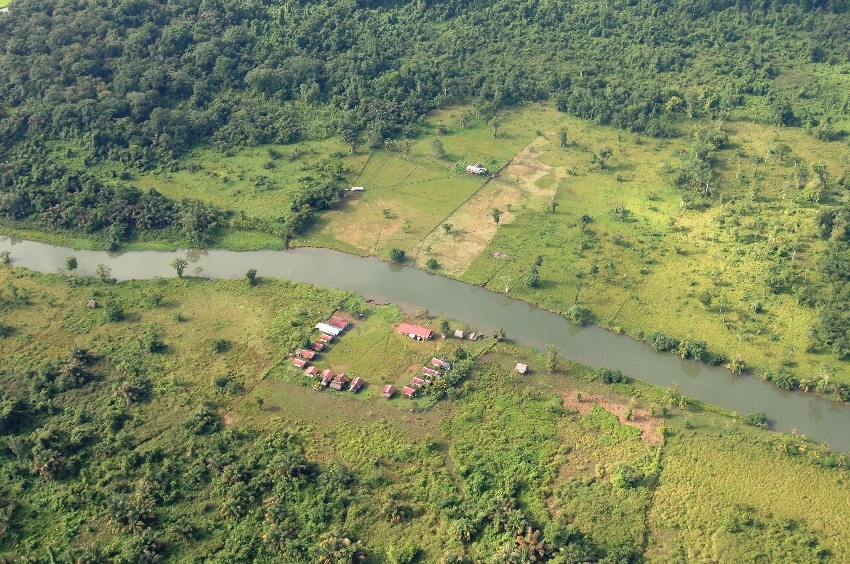
特有于巴拿马西北部瓜鲁莫河流域,生活在流速中等至较快、溶氧充足的低地溪河。不同地点可为泥底、砂底或散布巨石的河床,尚未在观察地点记录到水生植物。
饲养环境
造景形式不拘,但必须有充分遮蔽和结构。软砂、光滑岩石、沉木根及枝条可形成阴影与洞穴,花盆和短管也能使用。清洁稳定的水质极重要,不可放入生物过滤尚未成熟的缸。单对能利用相对有限空间,但较大鱼缸更适合处理同种及其他鱼的关系。
食性与喂食
一般接受多种食物,可用红虫、丰年虾、糠虾等活饵或冷冻饵料,配合优质干粮,并确保有螺旋藻等植物成分。不宜把人工食谱做成单一高蛋白配方。
习性与混养
避免体形大得多或明显更凶的鱼。若与其他小型中美洲慈鲷共养,必须让各方有足够领地;温和的上层群游鱼也是可考虑的伙伴。繁殖期不能因平时相对温和而忽略追逐。
雌雄区分
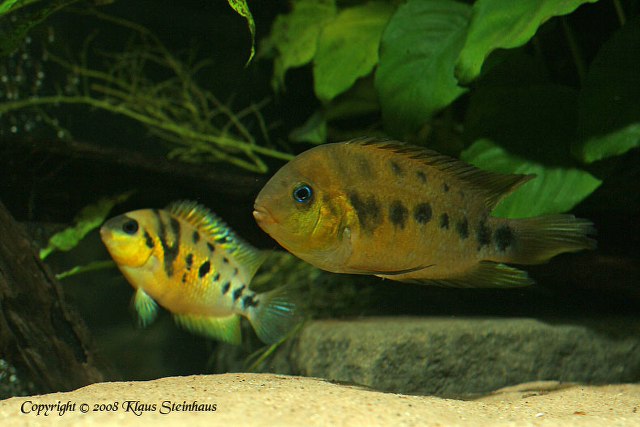
雄鱼更大,成熟后背鳍及臀鳍延长;雌鱼背鳍有特征性的深色眼状斑。
繁殖
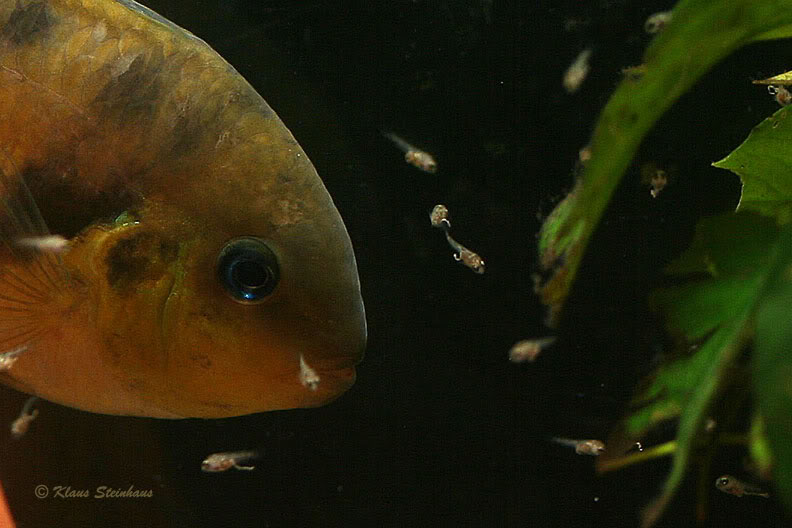
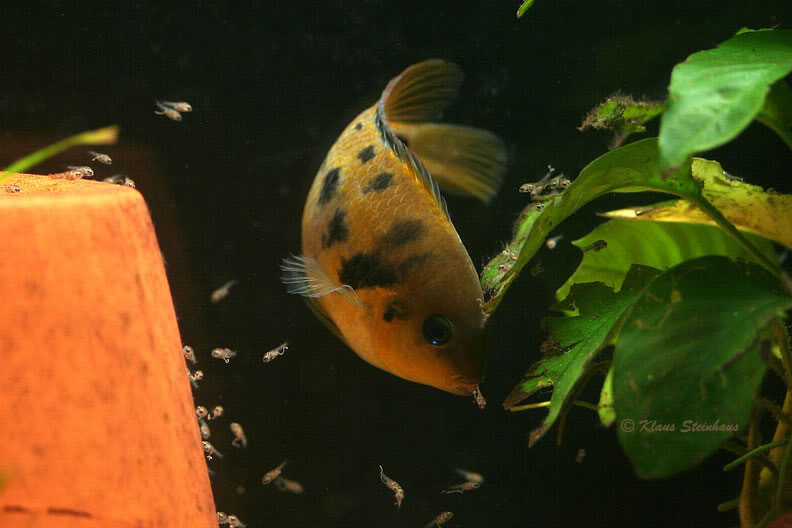
在基质上产卵,形成临时鱼对。从幼鱼群等待自然配对可能需要一年或更久。鱼对一旦形成,普通缸应移走多余个体。求偶期间双方变黄,整理洞穴、直立岩石或其他产卵表面,最多约产二百粒卵。雌鱼照顾卵,雄鱼守外围。
卵约三四天孵化,幼鱼再用四至七天吸收卵黄。自由游动后可喂丰年虾无节幼体与鱼苗专用细粮,也会自行啄食藻类和有机碎屑。亲鱼通常照顾数周;若需单独孵化,也可把附卵的产卵物移到另一环境。
补充说明
野外测得的温度及酸碱范围较宽,不宜把极端采集值直接当作长期饲养目标。
图片
图片来自 SeriouslyFish,版权归各摄影者所有。
English
Overview
Both sexes of Cryptoheros nanoluteus become bright yellow during courtship. This small cichlid is milder than some relatives, yet remains territorial when breeding. Pair bonds are temporary rather than a guarantee of permanent compatibility.
Distribution & habitat
It is endemic to the Guarúmo basin in northwestern Panama. Habitats are well-oxygenated lowland streams and rivers with moderate to fast flow. Beds vary from exposed mud or sand to scattered boulders; aquatic plants were not observed at the studied sites.
Aquarium setup
Provide substantial shelter and structure using soft sand, smooth rocks, roots, and branches. Pots and short pipes can also supply caves. Clean, stable water is essential, and a biologically immature aquarium is unsuitable. Larger quarters provide more room to manage interactions with its own species and other fishes.
Diet & feeding
It accepts a broad captive menu, including live or frozen bloodworms, Artemia, and Mysis alongside quality dry foods. Ensure that spirulina or another vegetable component is included. Avoid relying on a concentrated high-protein formula alone.
Behaviour & compatibility
Exclude much larger or more aggressive fishes. Other small Central American cichlids need sufficient room for separate territories, while peaceful upper-water schooling fishes are possible companions. Relative mildness outside breeding does not remove territorial pressure during reproduction.
Sexual dimorphism
Males grow larger and develop extended dorsal and anal fins. Females have a distinctive dark eyespot in the dorsal fin.
Breeding
This substrate spawner forms temporary pairs. Starting with juveniles and allowing a pair to emerge may take a year or more. Move surplus fish once pairing occurs unless the aquarium is very large. Both adults turn yellow and prepare a cave, upright rock, or other surface. Up to around two hundred eggs are laid; the female tends them and the male patrols outside.
Hatching takes three to four days, followed by four to seven days of yolk absorption. Free-swimming young accept Artemia nauplii and fine fry foods and graze on algae and detritus. Care continues for several weeks. The egg-bearing object can also be transferred for separate hatching if desired.
Notes
The broad range of measurements from wild habitats should not be treated as a set of routine maintenance targets.
来源
- https://www.seriouslyfish.com/species/cryptoheros-nanoluteus(抓取于 2026-10-10)
cryptoheros-nanoluteus · 文件: data/species/cryptoheros-nanoluteus.md · 状态: 草稿