剑尾脂鲤 · Swordtail Characin
概要
| 字段 | 值 |
|---|---|
| 类别 | 鱼 |
| 学名 | Corynopoma riisei |
| 别名 | 劍尾脂鯉 |
| 分类 | 脂鲤目 Characiformes › 脂鲤科 Characidae › Corynopoma |
| 水体 | 淡水 |
| 原产地 | 哥伦比亚、特立尼达和多巴哥、委内瑞拉 |
| 成体体长 | 6.5 cm |
| 饲养难度 | 中等 |
| 最小水体 | 86 L |
| 最小缸长 | 75 cm |
| 群居方式 | 群游 |
| 外部数据 | seriouslyfish corynopoma-riisei;fishbase 12349 |
| 游动层 | 上层 |
| 性情 | 温和 |
水质参数
| 参数 | 耐受范围 | 最适范围 | 单位 |
|---|---|---|---|
| 水温 | 22–28 | — | °C |
| pH | 6–7 | — | — |
| 总硬度 | 1–15 | — | dGH |
概述
剑尾脂鲤(Corynopoma riisei)是繁殖方式特殊的小型脂鲤,雄鱼能把精子传入雌鱼体内,再由雌鱼择时产卵。它主要在表层活动,雄鱼尾部和鳃盖附近的结构也使求偶行为颇有观察价值。
分布与栖息地
来自委内瑞拉北部、哥伦比亚比亚维森西奥一带及特立尼达岛。只生活于淡水,利用沿海河流及支流;特立尼达记录既有缓流含泥沙水域,也有较清澈的流动水体。
饲养环境
虽然体型不大,活动量却高,应留出宽阔的上层游动区。可种植水草并点缀浮水植物,再用细枝沉木及少量落叶营造遮蔽,避免把整个水面封死。偏软、微酸性的水较合适。
食性与喂食
上翘的口和体形提示它可能从水面取食小型无脊椎动物,但自然食谱仍属推断。缸中喜食水蚤、红虫、剑水蚤等活饵或冷冻饵料,多数个体经适应后也能接受干饲料。
习性与混养
总体温和,雄鱼之间偶有争执,建议至少六至八条成群。可与体型接近的脂鲤、鼠鱼、小型异型及短鲷混养,重点是同伴温和且环境需求接近。
雌雄区分
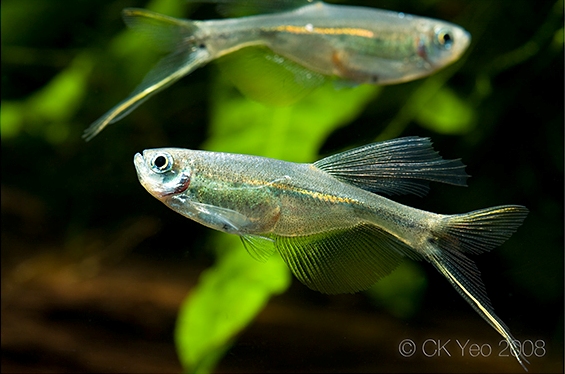
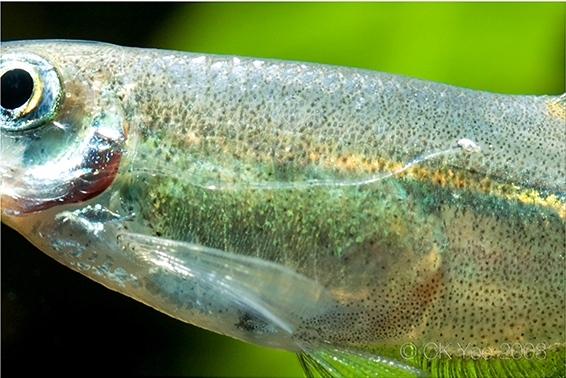
成熟雄鱼尾柄和尾鳍基部可见腺体组织,鳃盖附近还有向前伸出的桨状肉质附属物。尾鳍、背鳍、臀鳍及胸鳍会延长,臀鳍带细钩。雌鱼没有这些明显鳍延伸,腹部通常更圆。
繁殖
先把雌雄混群调养,投喂丰富的小型活饵和冷冻饵料。求偶时雄鱼会摆动鳃盖附属物,雌鱼可能靠近摩擦或轻咬;化学信号及臀鳍细钩在授精中的具体作用仍未完全确定。
育苗可另设暗光小缸,周围放细叶植物,中间留空,用亲鱼缸的水和轻柔海绵过滤。观察求偶数天后,可移入两条雌鱼等待产卵。雌鱼似乎能在环境不合适时暂缓释放已受精的卵,数周后仍可能产卵。卵约二十至三十六小时孵化,看到幼鱼后移出雌鱼。
鱼苗第一周左右先吃纤毛虫等微饵,随后可喂丰年虾无节幼体和微虫。每日少量换入亲鱼缸的水,有助于生长。产仔数量通常少于体外受精的小型脂鲤,原因可能与较高的受精效率有关。
补充说明
雄鱼尾部腺体可释放吸引雌鱼的化学物质,鳃部腺体可能进一步影响求偶。体内授精不等于卵胎生,本种仍将卵产出后孵化。
图片
图片来自 SeriouslyFish,版权归各摄影者所有。
English
Overview
Corynopoma riisei is a surface-oriented characid with an unusual reproductive system: males inseminate females, which later release eggs. Male fin extensions and specialized glands make courtship particularly interesting to observe.
Distribution & habitat
It occurs in northern Venezuela, around Villavicencio in Colombia, and on Trinidad. This exclusively freshwater fish inhabits coastal rivers and tributaries. Trinidad records span slow, silty water and clearer flowing habitats.
Aquarium setup
Reserve plenty of open space near the surface despite the fish's modest size. Plant the aquarium with patches of floating cover, adding slender branches and some leaf litter if desired. Soft, mildly acidic water is preferred.
Diet & feeding
The upward-facing mouth and body shape suggest feeding on small surface invertebrates in nature, rather than establishing a fully documented wild diet. Live or frozen water fleas, bloodworms, and copepods are favored in captivity. Most individuals also learn to take dry food.
Behaviour & compatibility
Keep at least six to eight. Males may quarrel occasionally, but the species is otherwise peaceful with suitable companions. Similar-sized characids, cory-type catfishes, small loricariids, and dwarf cichlids can work when their environmental needs match.
Sexual dimorphism
Males develop visible glandular tissue around the tail base, a forward-pointing paddle-shaped appendage near the gill cover, and elongated fins. Small hooks occur on the anal fin. Females lack the conspicuous fin extensions and generally have a rounder abdomen.
Breeding
Condition a mixed group with plentiful small live and frozen foods. Courtship includes movement of the male's gill-cover appendages; females may rub against or nip them. The exact roles of chemical signaling and fin hooks in insemination remain partly unresolved.
For rearing, prepare a separate dim aquarium using water from the adults' tank, fine plants around the edges, an open center, and gentle sponge filtration. After several days of courtship, transfer a couple of females and wait. Females apparently can delay releasing fertilized eggs for weeks until conditions suit them. Eggs hatch in about twenty to thirty-six hours. Remove females once young appear.
Feed microscopic foods for roughly a week, then introduce newly hatched brine shrimp and microworms. Small daily changes with water from the parent aquarium support growth. Broods are usually smaller than in externally fertilizing tetras, possibly because fertilization is more efficient.
Notes
Tail glands release chemicals attractive to females; additional gill glands may also influence courtship. Internal insemination should not be confused with livebearing: eggs are still released and hatch outside the female.
来源
- https://www.seriouslyfish.com/species/corynopoma-riisei(抓取于 2026-10-10)
corynopoma-riisei · 文件: data/species/corynopoma-riisei.md · 状态: 草稿