北兵鲶 · Northern Longnose Cory
概要
| 字段 | 值 |
|---|---|
| 类别 | 鱼 |
| 学名 | Corydoras septentrionalis |
| 别名 | 北兵鯰 |
| 分类 | 鲶形目 Siluriformes › 美鲶科 Callichthyidae › Corydoras |
| 水体 | 淡水 |
| 成体体长 | 6 cm |
| 饲养难度 | 入门 |
| 最小水体 | 68 L |
| 最小缸长 | 60 cm |
| 群居方式 | 群游 |
| 性情 | 温和 |
| 外部数据 | seriouslyfish corydoras-septentrionalis;fishbase 46227 |
| 原产地 | 委内瑞拉奥里诺科河,可能也见于哥伦比亚 |
水质参数
| 参数 | 耐受范围 | 最适范围 | 单位 |
|---|---|---|---|
| 水温 | 22–27 | — | °C |
| pH | 6–7.5 | — | — |
| 总硬度 | 2–15 | — | dGH |
概述
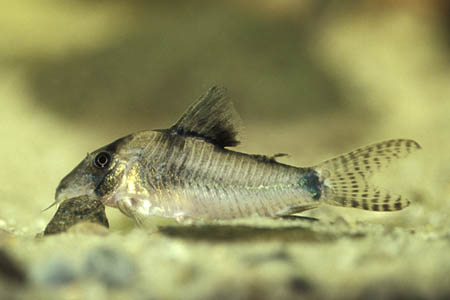
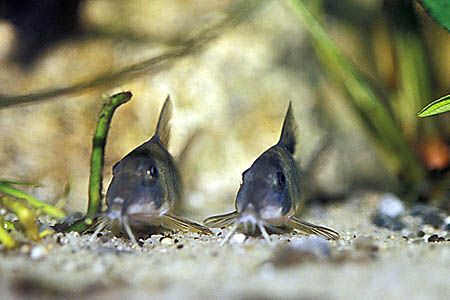
北兵鲶(Corydoras septentrionalis)是温和的长吻鼠鱼,尾鳍上明显的条纹有助于区分部分尾鳍透明的近似鱼。至少六条群养更容易安心活动。
分布与栖息地
记录来自委内瑞拉奥里诺科河,可能也分布于哥伦比亚,栖息在河流主河道及支流。
饲养环境
细砂、光滑石块和沉木可构成基本布景,再提供较密水草或浮水遮蔽。底部必须保持洁净,污浊底砂会造成口须问题;不宜采用底滤板过滤。
食性与喂食
可接受下沉干饲料,配合红虫、丰年虾和切碎蚯蚓等小型活饵或冷冻饵。经常更换食物种类,有助于维持状态。
习性与混养
适合多种温和小型鱼混养,包括小型灯鱼、鲤科鱼、迷鳃鱼、小型慈鲷及安静鲶鱼。不要与很大或攻击性强的鱼同养,保留至少六条同种伙伴。
雌雄区分
俯视时成熟雌鱼较宽圆,怀卵状态下差异尤其明显。
繁殖
尚无明确的人工繁殖记录,只能把常见鼠鱼方法当作尝试。可设独立缸,使用气动过滤和莫丝等附卵物,以多样饵料培育雄多雌少的组合,再在雌鱼怀卵时尝试较凉新水和增加充氧、水流。
可留意追逐、丁字形姿势和玻璃附卵。若产卵成功,隔开成鱼或将卵移入水质一致、供氧良好的容器,及时移走霉卵。通用鼠鱼育苗中约三四天孵化,卵黄吸收后以微虫或丰年虾无节幼体开口;本种必须以实际观察确认进度,不能保证照此操作就能繁殖。季节和成熟速度也可能影响反应。
补充说明
外观与其他长吻鼠鱼相近,尾鳍条纹是实用的观察点。购买时应综合外观和来源信息,不能只凭一个商品名称判断身份。
图片
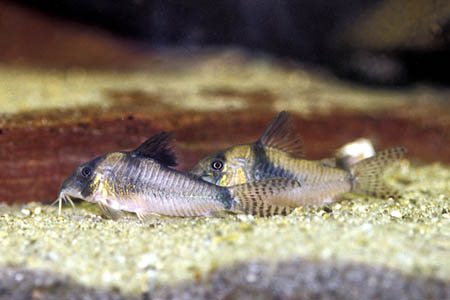
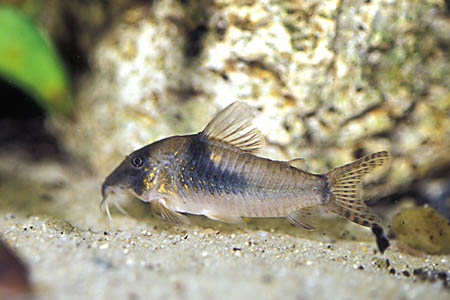
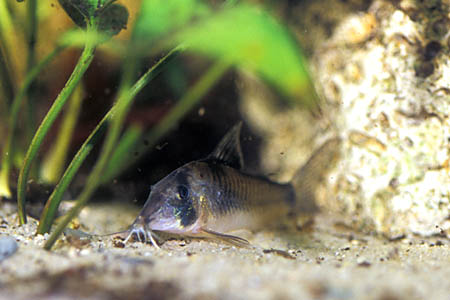
图片来自 SeriouslyFish,版权归各摄影者所有。
English
Overview
Corydoras septentrionalis is a peaceful long-snouted catfish whose barred tail helps distinguish it from some similar fishes with transparent caudal fins. Keep a group of at least six to encourage settled, active behavior.
Distribution & habitat
The range includes Venezuela's Orinoco and possibly Colombia. Fish occur in both the main river channel and tributaries.
Aquarium setup
Provide fine sand, smooth stones, and wood, with dense planting or floating cover for shelter. Substrate cleanliness is especially important because poor conditions can harm the barbels. Undergravel filtration is not recommended.
Diet & feeding
Sinking prepared foods can be combined with small live or frozen offerings. Bloodworms, brine shrimp, and chopped earthworms are suitable examples. Vary the menu to support condition rather than relying on one food.
Behaviour & compatibility
Small, gentle characins, cyprinids, labyrinth fishes, dwarf cichlids, and peaceful catfishes are possible partners. Exclude large or aggressive species. Its own group remains important even in a well-stocked community aquarium.
Sexual dimorphism
Females appear wider and rounder when viewed from above, particularly once they carry eggs.
Breeding
No confirmed captive breeding account is available. General cory techniques can be attempted, but should not be presented as an established method here. Prepare spawning cover and air-powered filtration, condition more males than females, and consider cooler replacement water with increased aeration and flow as a stimulus.
Watch for pursuit, T-shaped pairing, and eggs attached to glass. If eggs are obtained, separate them from adults and maintain matching, well-oxygenated incubation water. Remove fungused eggs promptly. Hatching after several days and tiny live foods following yolk absorption are generic cory expectations that require observation rather than assumption for this species. Season and maturity may also determine the response.
Notes
Identification should combine appearance and collection information. Tail bars are a useful feature, but an aquarium trade name alone is not sufficient to separate similar long-snouted fishes.
来源
- https://www.seriouslyfish.com/species/corydoras-septentrionalis(抓取于 2026-10-10)
corydoras-septentrionalis · 文件: data/species/corydoras-septentrionalis.md · 状态: 草稿