纳氏翘嘴脂鲤
概要
| 字段 | 值 |
|---|---|
| 类别 | 鱼 |
| 学名 | Copella nattereri |
| 别名 | 纳氏丝鳍脂鲤、納氏翹嘴脂鯉、納氏絲鰭脂鯉、Pyrrhulina nattereri |
| 分类 | 脂鲤目 Characiformes › 短嘴脂鲤科 Lebiasinidae › Copella |
| 水体 | 淡水 |
| 原产地 | 巴西、秘鲁 |
| 成体体长 | 4.5 cm |
| 饲养难度 | 中等 |
| 最小水体 | 54 L |
| 最小缸长 | 60 cm |
| 群居方式 | 群游 |
| 性情 | 温和 |
| 外部数据 | seriouslyfish copella-nattereri |
| 游动层 | 上层 |
| 繁殖方式 | 产卵 |
水质参数
| 参数 | 耐受范围 | 最适范围 | 单位 |
|---|---|---|---|
| 水温 | 20–28 | — | °C |
| pH | 4–7 | — | — |
| 总硬度 | 1–5 | — | dGH |
概述
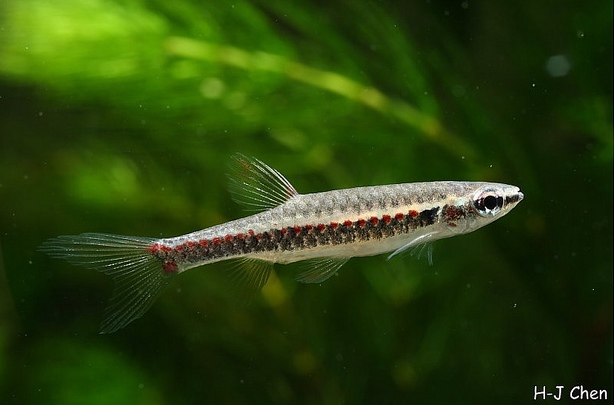
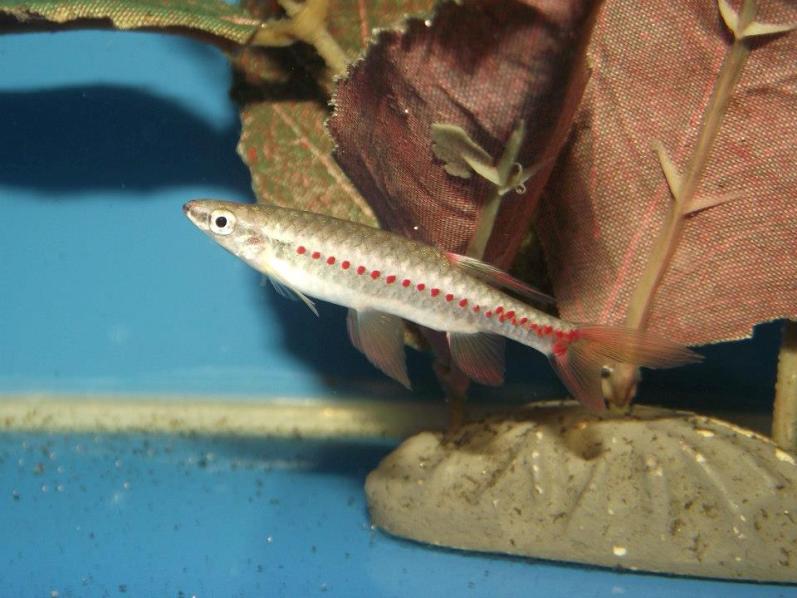
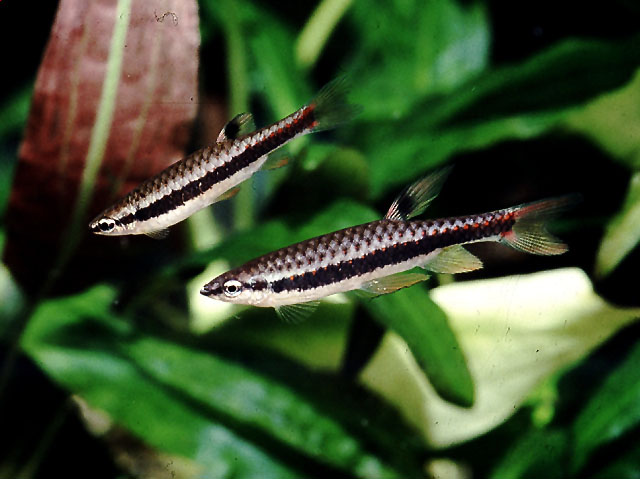
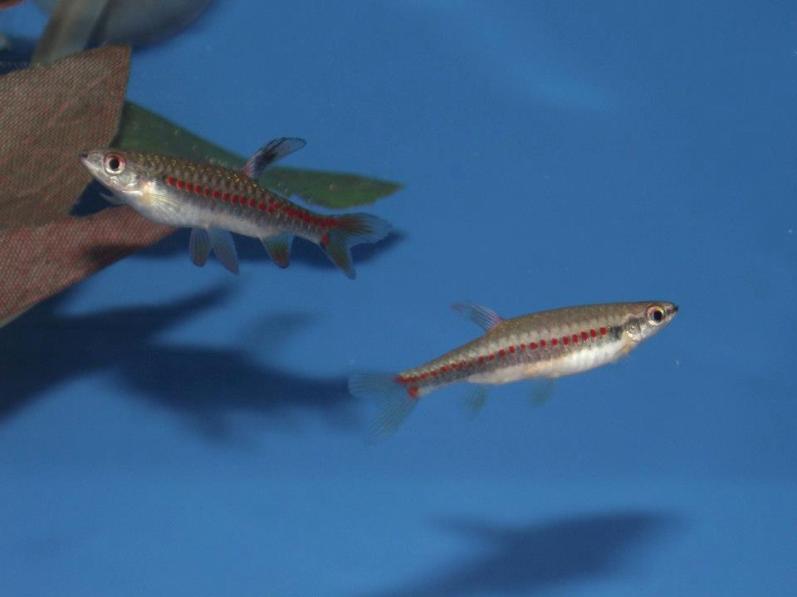
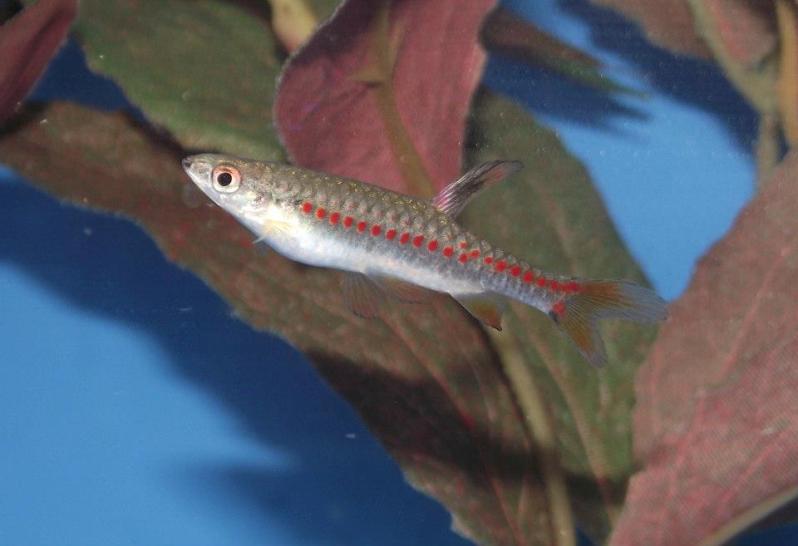
纳氏翘嘴脂鲤(Copella nattereri)平时有明显深色侧带和不超过三列红色斑点,繁殖雄鱼却会暂时失去侧带、整体变浅。它与数种丝鳍脂鲤在商品和历史资料中经常混淆,辨认时要注意状态与完整花纹。
分布与栖息地
广泛分布于巴西、秘鲁的亚马孙河中上游及主要支流。早期标本来自内格罗河口,以及巴西帕拉州奥比杜斯附近的亚马孙支流。
多生活在森林溪流和小支流,高水位时进入淹水森林。岸边悬垂植被发达,水通常因腐败有机物呈淡茶色。
饲养环境
长期水面面积至少约 60 × 30 cm。可用密植缸或水陆缸,配合浮水植物、根枝和柔和光照。它大部分时间在上层活动,布置时保留相应空间。
干落叶增加遮蔽,分解后形成的微生物可补充鱼苗食物。保持溶氧及轻微水面扰动,过滤充分成熟、水质稳定后再引入,避免水化学条件反复波动。
食性与喂食
野外可能摄食微小无脊椎动物和其他动物浮游生物。缸内可接受适口干粮,每日搭配丰年虾无节幼体、小型水蚤、白线虫等活饵或冷冻饵。小蟋蟀、果蝇也可用,先让昆虫吃鱼粮或植物性食物再投喂。
习性与混养
性情温和,但不适合不加选择的综合混养。可考虑体型相近的小型脂鲤、较小的底层鲶鱼和不捕食小鱼的矮小慈鲷,确保环境需求匹配。
建议至少 8~10 条雌雄混养,温和群游鱼也能增加安全感。雄鱼会争相展示以吸引雌鱼,繁殖时在产点周围建立小范围临时领地。
雌雄区分
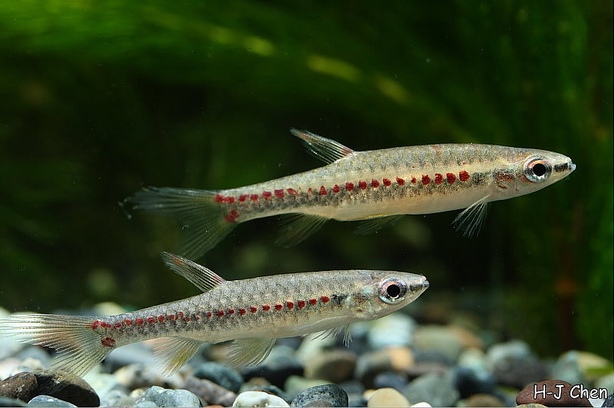
雄鱼较大,鳍延长更明显、颜色通常更鲜艳;雌鱼体形较圆,抱卵时更明显。繁殖雄鱼会失去平时的暗色侧带,整体色调转淡,不能因这时没有侧带就直接判成其他种。
繁殖
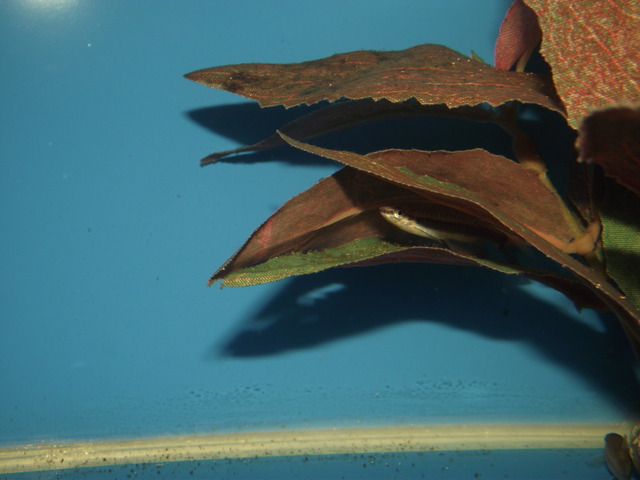
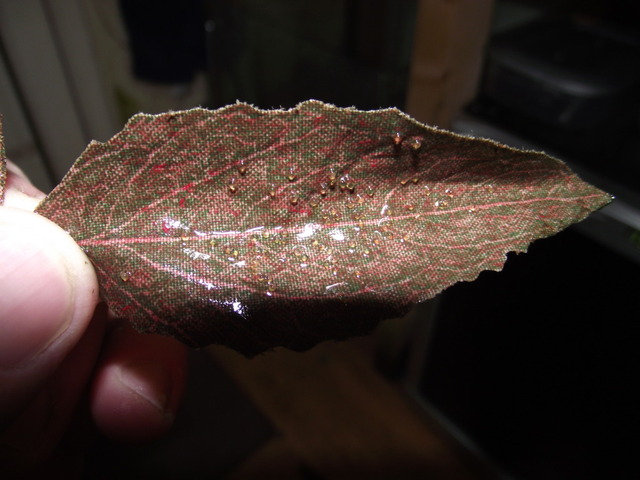
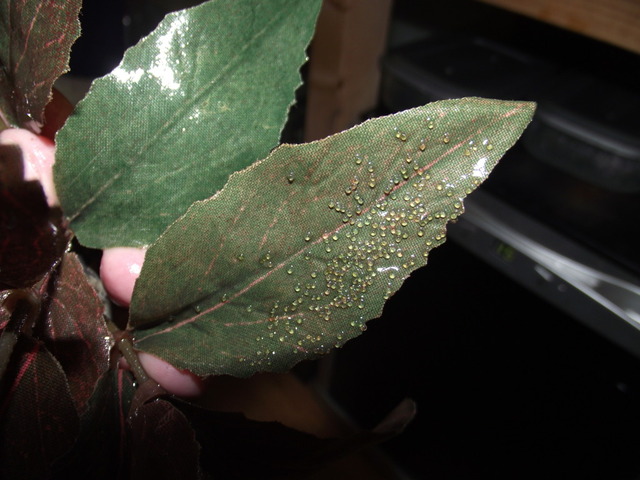
卵产在水中植物间,由雄鱼照护。成熟缸内可能自行出现少量鱼苗,若要提高数量,可另设繁殖缸,使用气动海绵过滤和浮水或伸至水面的植物,也可用人工替代材料。
卵可产在宽叶上,或散布在细叶植物间。产后移走雌鱼,雄鱼留守约 36~72 小时。开始孵化后护幼结束,雄鱼可能吃苗,也应移走。开口用草履虫或粒径约 5~50 μm 的微细饲料,随后按鱼苗大小转喂丰年虾无节幼体、微虫等;生长较慢。
补充说明
本种有时以“红线”等商品名,或误用 Copella nigrofasciata 的学名出售。后者有五六列红点,本种只有一至三列。Copella callolepis 与 Copella meinkeni 曾长期被当成本种,但通常缺少本种的明显暗色侧带;本种尾鳍下叶还具有黑色三角形标记。
图片
图片来自 SeriouslyFish,版权归各摄影者所有。
English
Overview
Normally marked with a prominent dark flank stripe and no more than three rows of red spots, Copella nattereri changes appearance when breeding males become paler and lose the stripe. Historical and trade confusion with other species makes condition and the complete pattern important for identification.
Distribution & habitat
It occurs widely through the middle and upper Amazon and major tributaries in Peru and Brazil. Early material came from the Rio Negro mouth and an Amazon tributary near Óbidos in Pará.
Forest streams and small tributaries are typical habitats, extending into flooded forest at high water. Overhanging vegetation is extensive, and decomposing organic matter often stains the water a light tea color.
Aquarium setup
Allow surface dimensions of at least around 60 × 30 cm. Dense planting or a paludarium with floating cover, roots, branches, and subdued lighting suits the species. Retain space in the upper water, where it spends much of its time.
Dry leaves add cover and microorganisms that can supplement fry food. Maintain oxygen with mild surface agitation. Wait for filtration and water chemistry to stabilize before introduction, avoiding repeated chemical swings.
Diet & feeding
Tiny invertebrates and other zooplankton are probable natural foods. Captive fish accept appropriate-sized preparations but should also receive daily small live or frozen fare such as Artemia nauplii, small water fleas, and grindal worms. Small crickets or fruit flies can be offered after feeding them flakes or plant material.
Behaviour & compatibility
Peaceful behavior does not make every community suitable. Similarly sized small characins, smaller bottom-dwelling catfishes, and diminutive nonpredatory cichlids are possible where requirements match.
Keep at least eight to ten in a mixed-sex group. Peaceful schooling companions can improve confidence. Males compete through displays and form small temporary territories around spawning sites.
Sexual dimorphism
Males are larger, longer-finned, and usually more colorful. Females have a rounder outline, particularly when carrying eggs. Breeding males become paler and lose the usual dark lateral stripe, so stripe absence at that stage should not alone determine species identity.
Breeding
Eggs are deposited among submerged plants and tended by the male. A mature aquarium may yield occasional fry; a separate tank improves control. Use air-driven sponge filtration with floating or surface-reaching plants, or artificial substitutes.
Eggs can be placed on broad leaves or scattered among finer vegetation. Remove females after spawning and leave the male to guard them for roughly 36–72 hours. Once hatching begins, care ends and he may eat fry, so remove him too. Start fry on Paramecium or fine foods around 5–50 μm, adding Artemia nauplii or microworms as they grow. Development is slow.
Notes
Trade labels include red line and the misapplied name Copella nigrofasciata. That species has five or six red spot rows, compared with one to three here. Copella callolepis and Copella meinkeni were also widely confused with this fish but normally lack its strong lateral stripe. A black triangle in the lower tail lobe is another identification feature.
来源
- https://www.seriouslyfish.com/species/copella-nattereri(抓取于 2026-10-10)
copella-nattereri · 文件: data/species/copella-nattereri.md · 状态: 草稿