阿氏丝鳍脂鲤 · Splash Tetra
概要
| 字段 | 值 |
|---|---|
| 类别 | 鱼 |
| 学名 | Copella arnoldi |
| 别名 | 圭亚那丝鳍脂鲤、阿氏短颌鮰脂鲤、阿氏絲鰭脂鯉、圭亞那絲鰭脂鯉、阿氏短頜鮰脂鯉、Copeina arnoldi |
| 分类 | 脂鲤目 Characiformes › 短嘴脂鲤科 Lebiasinidae › Copella |
| 水体 | 淡水 |
| 原产地 | 巴西 |
| 成体体长 | 5.5 cm |
| 饲养难度 | 中等 |
| 最小水体 | 81 L |
| 最小缸长 | 90 cm |
| 群居方式 | 群游 |
| 性情 | 温和 |
| 外部数据 | seriouslyfish copella-arnoldi;fishbase 10741 |
| 食性 | 肉食 |
| 游动层 | 上层 |
| 特征 | 会跳缸: 是 |
| 繁殖方式 | 产卵 |
水质参数
| 参数 | 耐受范围 | 最适范围 | 单位 |
|---|---|---|---|
| 水温 | 20–28 | — | °C |
| pH | 4–7.5 | — | — |
| 总硬度 | 1–8 | — | dGH |
概述
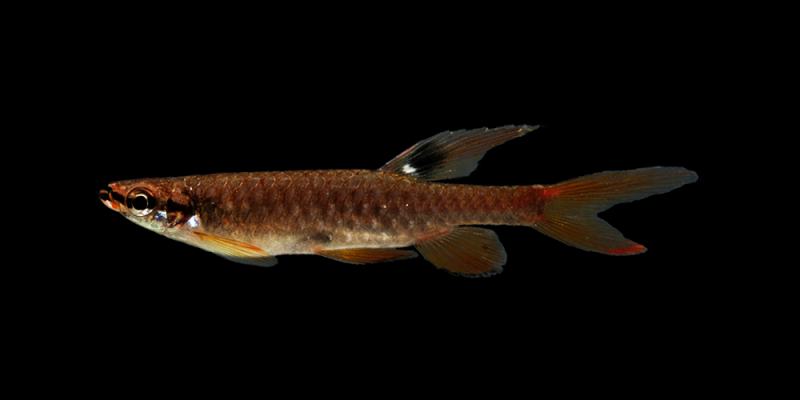
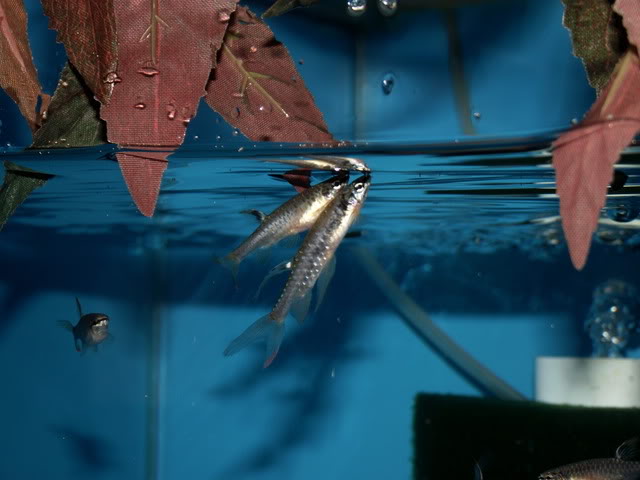
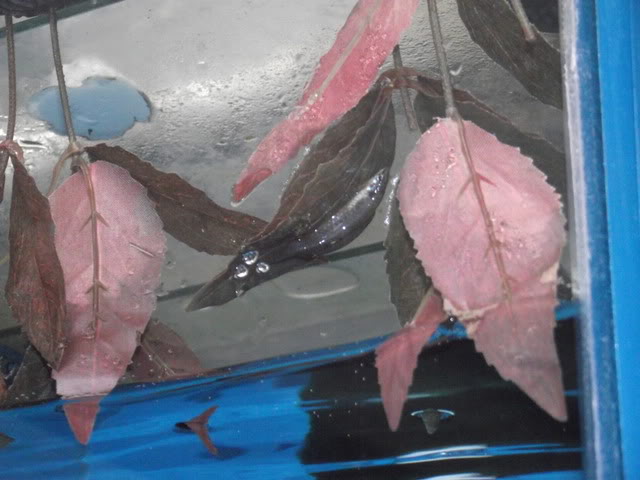
阿氏丝鳍脂鲤(Copella arnoldi)最特别的是在水面以上产卵:雌雄同时跃出水面,把卵留在悬垂叶片或其他合适表面,之后由雄鱼反复泼水保持湿润。它常活动于上层,需要成熟的植物缸及合适的水上空间。
分布与栖息地
狭义的本种主要指巴西亚马孙河下游群体。历史上也把圭亚那、苏里南和法属圭亚那沿海水系的相似鱼列入本种,但一些分类处理将那些群体分为 Copella carsevennensis,两者界限仍有争议。
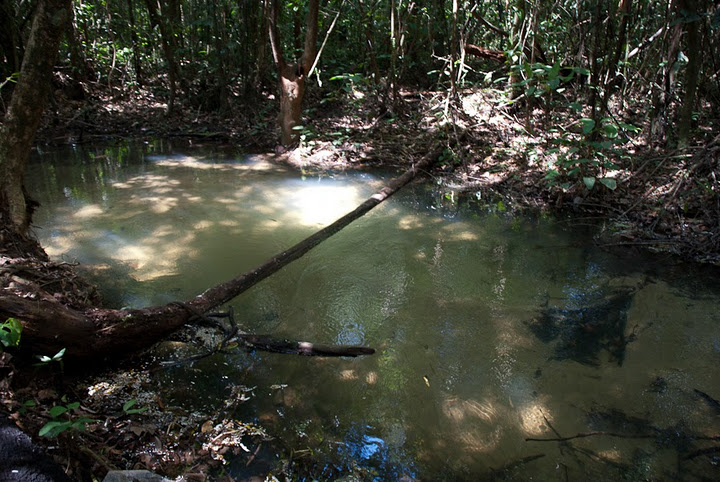
多生活在溪流和小支流,高水位时也进入淹水森林。岸边常有大量悬垂植被,腐败有机物可使水呈淡茶色。
饲养环境
长期饲养水面面积至少约 90 × 30 cm。密植缸或水陆缸较适合,浮水植物能减弱光线;悬垂叶片、根或枝条对观察繁殖尤其有用。它大部分时间待在上层,应为上方活动和产卵留出空间。
干落叶可增加遮蔽,分解时滋生的微生物也可成为鱼苗的辅助食物。保持溶氧,水面有轻微扰动即可。水质变化对它有影响,应在生物过滤和水化学条件稳定后引入。
食性与喂食
野外摄食微小无脊椎动物和其他动物浮游生物,尤其在水面取食。缸内可接受合适大小的干粮,每日仍应补充丰年虾无节幼体、小型水蚤、白线虫等小型活饵或冷冻饵。
小蟋蟀和果蝇也可作为食物,投喂前先让昆虫吃鱼粮或植物性食物,能增加其携带的营养。
习性与混养
性情温和,但不适合随意放入综合混养缸。可考虑体型相近的小型脂鲤、较小的底层鲶鱼及不捕食小鱼的矮小慈鲷,前提是环境需求匹配。
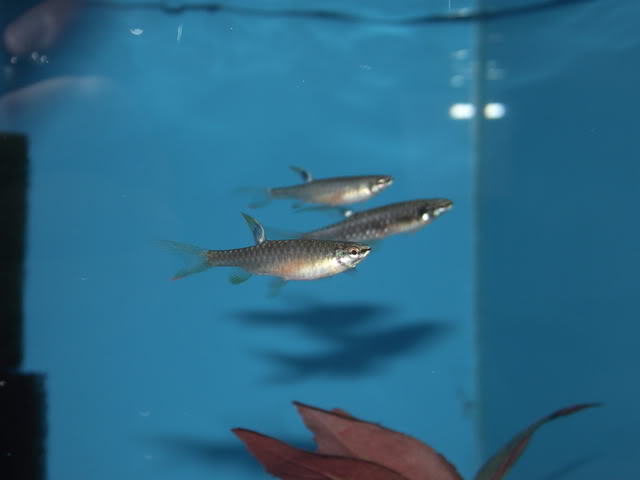
建议雌雄混合至少 8~10 条,并可搭配温和群游鱼增加安全感。雄鱼会为吸引雌鱼而展示体色与行为,群体能让这些互动更明显。
雌雄区分
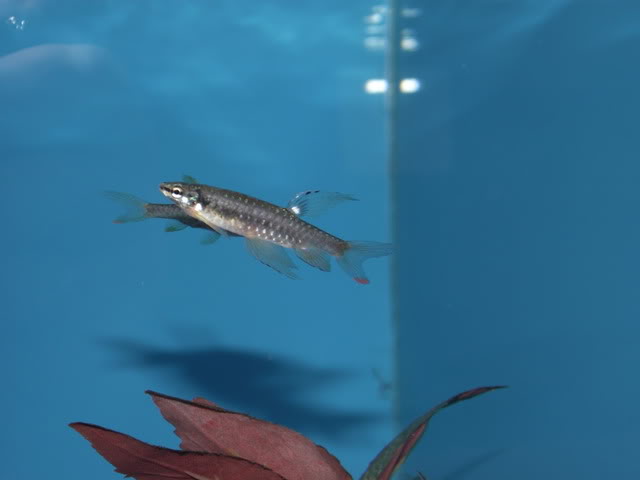
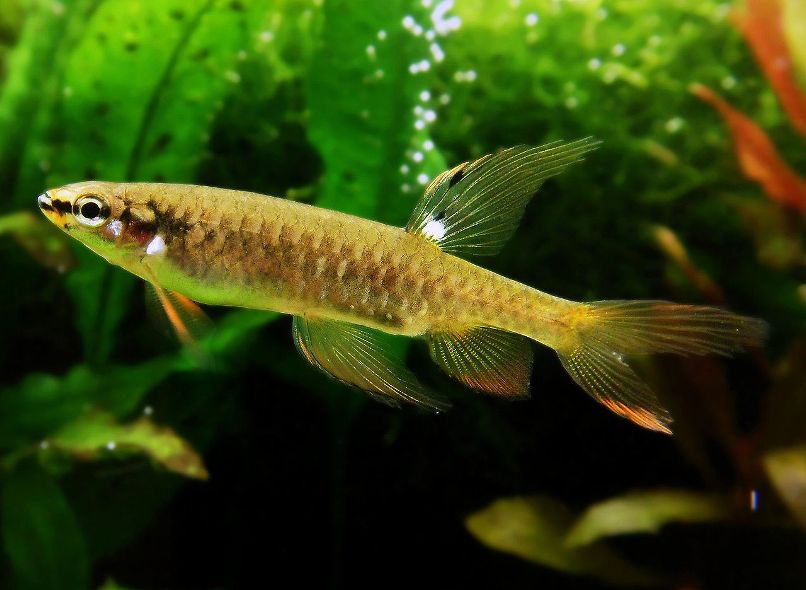
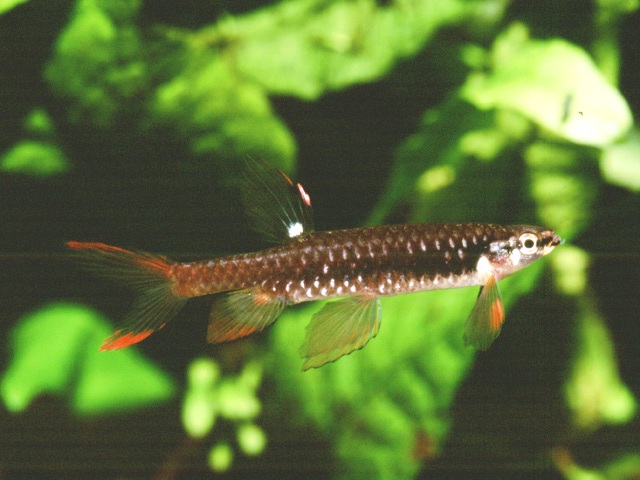
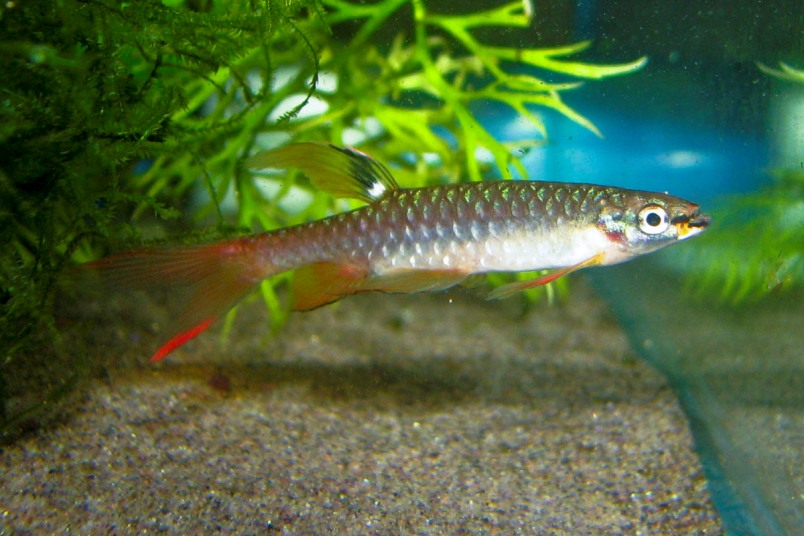
雄鱼明显更大,鳍更延长,颜色也更鲜艳。繁殖状态的雄鱼可从鳃盖后方沿体侧出现一条宽暗带。
繁殖
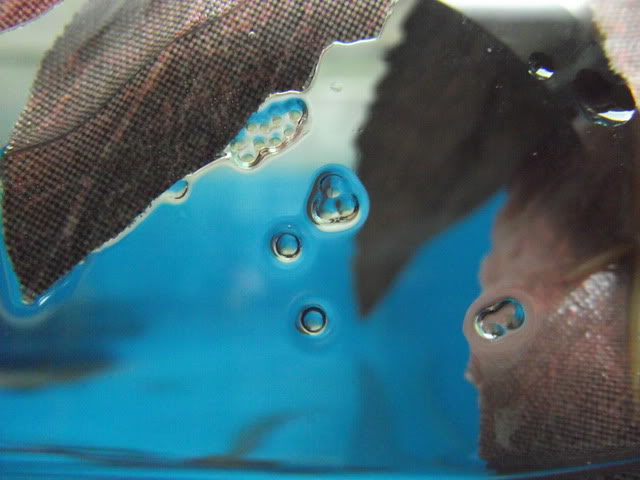
成熟缸内可能自行出现少量鱼苗,若希望提高成活数量,可另设繁殖缸,使用气动海绵过滤、丰富浮水植物,并在水面与缸盖间留约 10 cm 空隙。除露水植物外,鱼也可能选择缸壁或盖玻璃等表面。
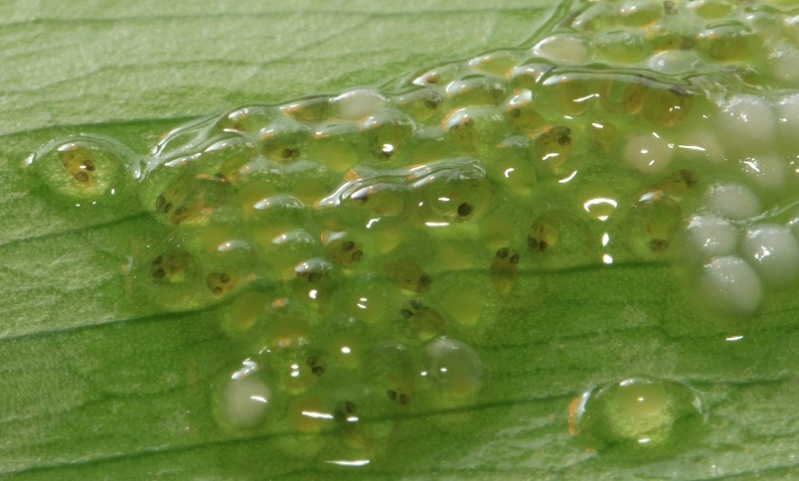
雄鱼会反复跃起寻找产点,再吸引雌鱼;配对后两鱼同时跳起,以腹鳍附着,停留可达约 10 秒。每次通常产 10~12 粒卵,反复进行,总量一般约 100~200 粒。产后可移走雌鱼,雄鱼留守,以尾鳍约每分钟泼水一次,夜间暂停;一个雄鱼有时会照顾不同位置、甚至来自多条雌鱼的卵。
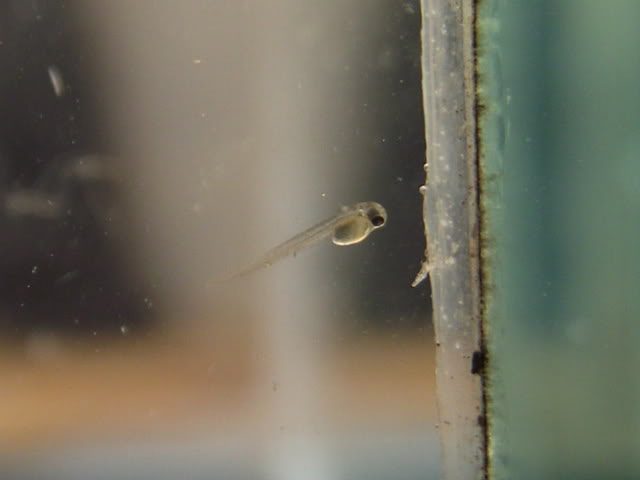
卵通常在 36~72 小时后孵化,鱼苗落入水中,雄鱼照护随即结束。此时应分开成鱼和鱼苗,减少捕食。开口用草履虫或粒径约 5~50 μm 的微细饲料,长大后再转丰年虾无节幼体、微虫等,生长较慢。
补充说明
与 Copella carsevennensis 的区分涉及雄鱼鳞片中央白斑、繁殖暗带、部分鳍缘黑线,以及水上或水下产卵。历史分类存在不同意见,不能将所有商品“喷水灯”的鱼都视为同一种,也不能把本种水上产卵行为套给所有同属鱼。
图片
图片来自 SeriouslyFish,版权归各摄影者所有。
English
Overview
Copella arnoldi is remarkable for spawning above the water. A pair jumps together onto a suitable overhanging surface, and the male subsequently splashes the eggs to keep them moist. This upper-level fish suits a mature planted aquarium with appropriate space above the surface.
Distribution & habitat
In the narrower taxonomic interpretation, the species is associated with Brazil's lower Amazon. Similar populations from coastal Guyana, Suriname, and French Guiana have historically been included, but some treatments recognize them as Copella carsevennensis. The boundary remains disputed.
Habitats include streams and small tributaries, extending into flooded forest at high water. Overhanging vegetation is abundant, and decomposing organic matter often gives the water a pale tea color.
Aquarium setup
For long-term care, allow surface dimensions of at least approximately 90 × 30 cm. Dense planting or a paludarium works well. Floating plants provide shade, while overhanging leaves, roots, or branches are useful for observing reproduction. Much of its time is spent near the top, so leave room for surface activity and spawning.
Dry leaves add cover and support microorganisms that can supplement fry food. Maintain oxygen with gentle surface movement. Introduce fish only once filtration and water chemistry are stable.
Diet & feeding
In nature it eats tiny invertebrates and other zooplankton, particularly at the surface. Suitable-sized prepared foods are accepted, but daily small live or frozen foods should accompany them. Artemia nauplii, small water fleas, and grindal worms are useful choices.
Small crickets and fruit flies are also suitable. Feeding the insects fish flakes or plant material before offering them improves the nutritional contents they carry.
Behaviour & compatibility
Peaceful temperament does not make it suitable for every community. Consider similarly sized characins, small bottom-dwelling catfishes, or diminutive nonpredatory cichlids only where environmental needs match.
Keep a mixed-sex group of at least eight to ten. Other peaceful schooling fishes can improve confidence. Males display strong colors and distinctive behavior while competing for female attention.
Sexual dimorphism
Males become considerably larger, more colorful, and longer-finned. Breeding males may develop a broad dark band extending backward from behind the gill cover.
Breeding
A mature aquarium may yield occasional fry, but a separate setup allows better control. Use air-driven sponge filtration, abundant floating plants, and approximately 10 cm between the water and lid. Emergent leaves are useful, although glass sides or the cover may also be chosen.
The male tests sites with repeated jumps before courting a female. The pair leaps together and grips the chosen surface with the pelvic fins, sometimes remaining for about ten seconds. Around 10–12 eggs are laid per event, with repeated jumps producing roughly 100–200 overall. Remove the female afterward if desired. The male splashes the clutch with his tail about once a minute, pausing in darkness; he may tend several sites and eggs from more than one female.
Hatching usually takes 36–72 hours, after which fry fall into the water and paternal care ends. Separate adults and fry to reduce predation. Start with Paramecium or very fine foods around 5–50 μm, adding Artemia nauplii or microworms when the fry can manage them. Growth is slow.
Notes
Proposed differences from Copella carsevennensis include white centers on some male scales, a breeding band, dark edges on certain fins, and deposition above rather than below water. Taxonomic opinions differ. Neither a splash-tetra trade label nor membership in Copella guarantees this particular aerial spawning behavior.
来源
- https://www.seriouslyfish.com/species/copella-arnoldi(抓取于 2026-10-10)
copella-arnoldi · 文件: data/species/copella-arnoldi.md · 状态: 草稿