Copadichromis ilesi
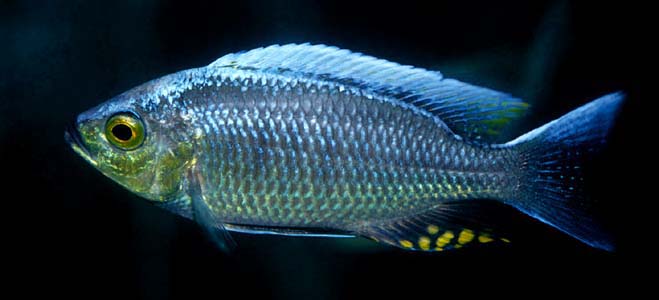
概要
| 字段 | 值 |
|---|---|
| 类别 | 鱼 |
| 学名 | Copadichromis ilesi |
| 分类 | 慈鲷目 Cichliformes › 慈鲷科 Cichlidae › Copadichromis |
| 水体 | 淡水 |
| 原产地 | 马拉维 |
| 成体体长 | 17.5 cm |
| 饲养难度 | 中等 |
| 最小水体 | 304 L |
| 最小缸长 | 150 cm |
| 群居方式 | 群游 |
| 性情 | 温和 |
| 外部数据 | seriouslyfish copadichromis-ilesi;fishbase 60339 |
| 特征 | 翻底砂: 是;啃水草: 否 |
| 领地性 | 是 |
| 繁殖方式 | 口孵 |
水质参数
| 参数 | 耐受范围 | 最适范围 | 单位 |
|---|---|---|---|
| 水温 | 25–29 | — | °C |
| pH | 7.5–8.5 | — | — |
| 总硬度 | 10–25 | — | dGH |
概述
Copadichromis ilesi 是马拉维湖的开阔水域群居慈鲷,平时较温和,但雄鱼繁殖时会划分领地并修整砂地。它活动量大,需要宽敞泳道,不能与过于凶猛的岩栖鱼随意拼缸。
分布与栖息地
特有于马拉维湖,采集地点包括戈梅、恩卡塔湾和猴子湾。常在较浅的岩岸、礁区附近活动,大群游于开阔水域,有时与其他鱼混群。
饲养环境
至少 150 × 45 × 45 cm,保留大片游泳空间。底砂是雄鱼筑巢的需要,石堆则提供变化及躲藏位置。可以种植耐硬水水草,本种不会损伤植物。
食性与喂食
同属鱼专门取食浮游动物,但在缸中一般接受多种食物。建议混合小型活饵、冷冻饵及干粮,丰年虾无节幼体尤为适用,同时补充少量烫软菠菜或含螺旋藻的薄片。
习性与混养
避免强势、喧闹的伙伴,尤其不宜与岩栖啃藻慈鲷同养。颜色过于相近的鱼可能引发争斗,其他同属鱼也有杂交风险,不宜混养繁殖。
多数缸安排一雄配至少三雌,分散雄鱼关注。多雄需要更大的空间和相应数量的雌鱼,不能把野外群居理解成雄鱼没有领域需求。
雌雄区分
雄鱼比雌鱼更大、颜色鲜艳,鱼鳍也更长。雌鱼主要呈砂褐色。
繁殖
人工繁殖已有反复成功记录,为雌鱼口孵。专门繁殖可一雄配三四雌,维持 25–26.5 °C、pH 8–8.5,充分调养,并提供岩石下方的遮蔽产卵位置。
雄鱼常在岩檐下清除粗粒底材,形成浅凹处并展示。雌鱼分批产卵、立即收入口中,随后靠近雄鱼臀鳍卵斑完成口中受精。
雌鱼约含卵 3–4 周,期间不进食。搬动或过度干扰可能导致失卵,过久离群也影响回群地位。释放鱼苗后可直接喂丰年虾无节幼体及细碎干粮。
补充说明
本种曾以其他暂定商品名销售,与近缘鱼有相似外观。雄鱼背鳍缺少某些近缘鱼的红色条纹,雌鱼的砂褐色也可辅助识别。
图片
图片来自 SeriouslyFish,版权归各摄影者所有。
English
Overview
An open-water shoaling cichlid from Lake Malawi, Copadichromis ilesi is generally peaceful but breeding males establish territories and prepare sites in sand. Its activity calls for ample swimming room and companions that will not overwhelm it.
Distribution & habitat
The species is endemic to Lake Malawi, with collections at Gome, Nkata Bay, and Monkey Bay. Large groups occupy open water near relatively shallow rocky shores and reefs, sometimes mixing with other species.
Aquarium setup
Allow at least 150 by 45 by 45 cm. Keep substantial open space above a sandy bottom used for nest construction. Rock piles provide refuges and variety. Suitable hard-water plants can be included because the fish does not damage them.
Diet & feeding
Specialized zooplankton feeding is described for the genus, although captive fish normally accept a broad menu. Combine small live, frozen, and dry foods, with brine-shrimp nauplii particularly useful. Include some softened spinach or spirulina-containing flakes.
Behaviour & compatibility
Avoid belligerent companions, especially mbuna. Similar coloration can provoke conflict, and other members of the genus present hybridization concerns.
Most aquariums are best arranged for one male with at least three females. Multiple males need more room and a correspondingly larger female group. Natural shoaling does not remove the need for individual male territories.
Sexual dimorphism
Males become larger, brighter, and longer-finned. Females are predominantly sandy brown.
Breeding
Repeated captive success is known, with females incubating eggs in the mouth. A dedicated group of one male and three or four females can be conditioned at 25–26.5 °C and pH 8–8.5, with sheltered rocky overhangs available.
Males remove coarse particles to create a shallow depression and display nearby. Females deposit eggs in batches, immediately collect them, and approach anal-fin egg spots as fertilization occurs in the mouth.
Incubation takes about three to four weeks without feeding. Transfer or disturbance can cause brood loss, while prolonged separation may affect later reintegration. Released fry accept brine-shrimp nauplii and finely crushed prepared foods.
Notes
Earlier trade names linked it to similar relatives. Lack of a red dorsal stripe in males and the sandy-brown female coloration are useful identification clues.
来源
- https://www.seriouslyfish.com/species/copadichromis-ilesi(抓取于 2026-10-10)
copadichromis-ilesi · 文件: data/species/copadichromis-ilesi.md · 状态: 草稿