阿祖桨鳍丽鱼
概要
| 字段 | 值 |
|---|---|
| 类别 | 鱼 |
| 学名 | Copadichromis azureus |
| 别名 | 阿祖槳鰭麗魚 |
| 分类 | 慈鲷目 Cichliformes › 慈鲷科 Cichlidae › Copadichromis |
| 水体 | 淡水 |
| 原产地 | 马拉维 |
| 成体体长 | 16 cm |
| 饲养难度 | 中等 |
| 最小水体 | 304 L |
| 最小缸长 | 150 cm |
| 群居方式 | 群游 |
| 性情 | 温和 |
| 外部数据 | seriouslyfish copadichromis-azureus;fishbase 8164 |
| 食性 | 浮游生物食性 |
| 繁殖方式 | 口孵 |
| 特征 | 翻底砂: 是 |
水质参数
| 参数 | 耐受范围 | 最适范围 | 单位 |
|---|---|---|---|
| 水温 | 26–28 | — | °C |
| pH | 7.5–8.5 | — | — |
| 总硬度 | 10–25 | — | dGH |
概述
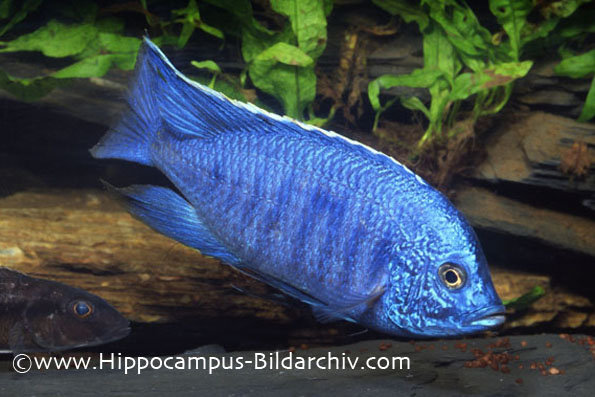
阿祖桨鳍丽鱼(Copadichromis azureus)是马拉维湖的开放水域群游慈鲷,雄鱼颜色鲜艳,性情在同属中也较温和。它需要宽阔游泳区,不能用岩石堆把鱼缸完全填满,也不适合与强势岩栖慈鲷混养。
分布与栖息地
马拉维湖特有,主要记录位于湖泊南部的岛屿及礁区。常在岩岸或礁石附近二十至三十米深处活动,在开阔水层形成大群,也会与其他鱼同群。
饲养环境
保留大量开阔游泳空间,铺设砂质底床供雄鱼营造产卵凹坑,再用部分岩石提供藏身处。一般不损坏水草,可加入能适应硬水的植物,但不要影响群体游动。
食性与喂食
本属专门摄食浮游动物,缸中通常不挑食。投喂小型活饵、冷冻饵料和干饲料的组合,丰年虾无节幼体尤其适用;同时提供少量焯软蔬菜或优质螺旋藻薄片,保持人工食谱多样。
习性与混养
避免凶猛或过度活跃的伙伴,尤其不宜与强势岩栖慈鲷共养。相似体色的鱼可能引发攻击,同属其他种则有杂交风险。普通饲养环境以一雄配至少三雌更合适,减少雄鱼持续追逐某一雌鱼;多雄需要更大空间及相应更多雌鱼,让雄鱼各自建立领域。
雌雄区分
雄鱼更大,颜色远比雌鱼鲜明,鳍也更长。
繁殖
雌鱼口孵。专门繁殖可用一雄配三四雌,提供岩石旁或下方的裸露砂地与平石,亲鱼状态良好时通常能自行启动。雄鱼清理砂中较粗材料,形成浅坑,再发色展示吸引雌鱼。雌鱼分批产卵并立即含入口中,受精过程与雄鱼臀鳍上的卵斑展示有关。
雌鱼通常含卵育幼三至四周,其间不进食,口部膨大。惊扰可能导致提前吐卵或吞食后代;若非持续遭到骚扰,不宜急于搬离,隔离太久也可能使它失去原群体中的位置。专业繁殖者有提前人工取苗的做法,普通饲养以自然放苗为宜。出嘴鱼苗能吃丰年虾无节幼体和压碎干粮。
补充说明
不同产地有多种色型,购买时保留产地标签比只记颜色更有价值。历史上误用的商品学名曾与同属另一种混淆,因此应核对完整学名与来源。
图片
图片来自 SeriouslyFish,版权归各摄影者所有。
English
Overview
Copadichromis azureus is an open-water schooling cichlid from Lake Malawi, with striking males and a relatively mild disposition even within its genus. Swimming room is essential, and aggressive rock-dwelling Malawi cichlids are unsuitable partners.
Distribution & habitat
This Lake Malawi endemic occurs around southern islands and reefs. Large groups occupy open water near rocky shores and reef structures, often at depths of twenty to thirty meters and sometimes alongside other species.
Aquarium setup
Leave extensive unobstructed swimming space. Sand is important because males prepare spawning hollows in it; limited rockwork adds retreats without filling the aquarium. Plants are normally left unharmed, so hard-water-tolerant species can be included.
Diet & feeding
The genus specializes in zooplankton but usually accepts a broad captive menu. Combine small live, frozen, and prepared foods, with Artemia nauplii particularly useful. Include some vegetable material or quality spirulina flakes as part of the aquarium diet.
Behaviour & compatibility
Avoid rowdy or aggressive fish, especially Mbuna. Similarly colored fishes may trigger hostility, and other members of the genus present a hybridization risk. Most tanks are best arranged for one male with at least three females to distribute courtship pressure. Multiple males need much greater space, separate territories, and correspondingly more females.
Sexual dimorphism
Males grow larger, carry much stronger color, and develop longer fins.
Breeding
The female broods in her mouth. A dedicated group of one male and three or four females can breed among rocks and open sand once well conditioned. The male removes coarse particles to form a shallow nest, often beside or beneath a stone, then displays to females. Eggs are laid in batches and collected immediately; the male's anal-fin egg spots participate in the fertilization sequence.
Brooding usually lasts three to four weeks without feeding. The female's mouth becomes visibly enlarged. Stress can cause early release or loss of the brood. Unless harassment requires intervention, avoid moving her too soon; prolonged isolation can also disrupt her position when returned. Artificial removal of young is a specialist technique. Naturally released fry can take Artemia nauplii and finely crushed dry food.
Notes
Many locality forms exist, making collection labels useful information to retain. An invalid older trade name has also caused confusion with another species, so complete scientific identification matters.
来源
- https://www.seriouslyfish.com/species/copadichromis-azureus(抓取于 2026-10-10)
copadichromis-azureus · 文件: data/species/copadichromis-azureus.md · 状态: 草稿