Congochromis sabinae
概要
| 字段 | 值 |
|---|---|
| 类别 | 鱼 |
| 学名 | Congochromis sabinae |
| 分类 | 慈鲷目 Cichliformes › 慈鲷科 Cichlidae › Congochromis |
| 水体 | 淡水 |
| 原产地 | 刚果民主共和国、加蓬、刚果共和国 |
| 成体体长 | 7 cm |
| 饲养难度 | 中等 |
| 最小水体 | 54 L |
| 最小缸长 | 60 cm |
| 群居方式 | 成对 |
| 领地性 | 是 |
| 外部数据 | seriouslyfish congochromis-sabinae;fishbase 62150 |
| 游动层 | 底层 |
水质参数
| 参数 | 耐受范围 | 最适范围 | 单位 |
|---|---|---|---|
| 水温 | 24–27 | — | °C |
| pH | 4–6 | — | — |
| 总硬度 | 0–3 | — | dGH |
概述
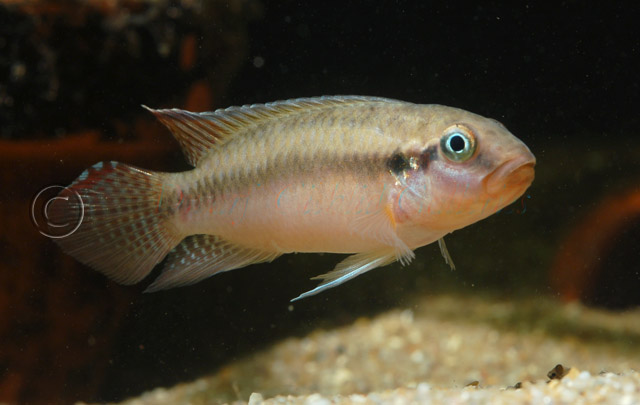
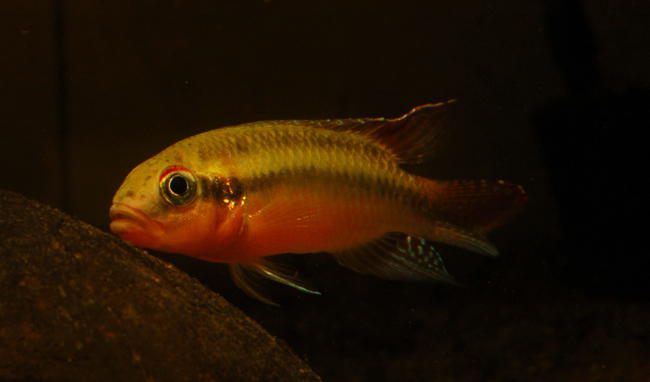
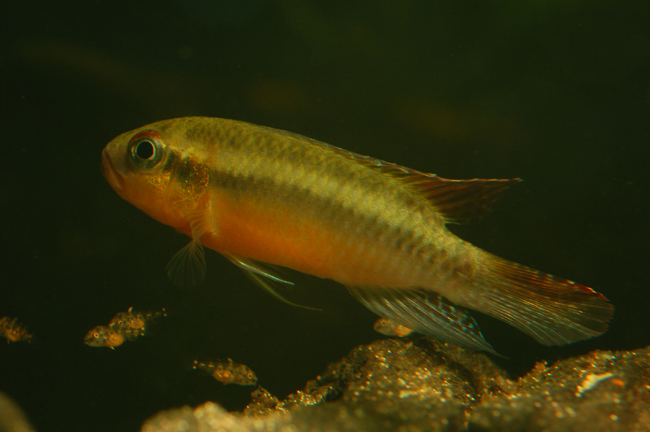
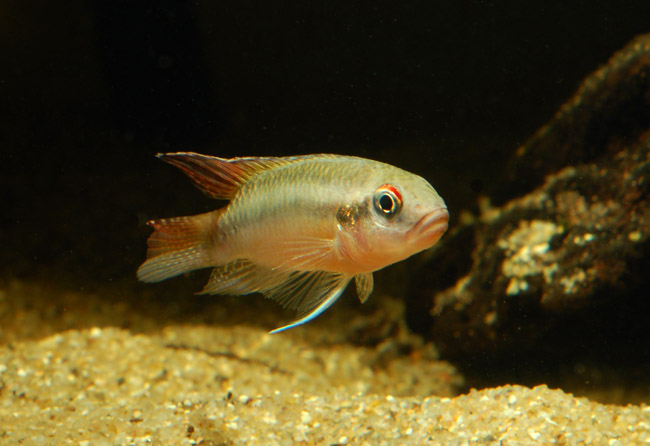
Congochromis sabinae 是中非雨林溪流中的小型慈鲷,主要在底部活动,适合软而偏酸、遮蔽充足的环境。体侧深色纵纹不进入尾鳍,雌鱼繁殖时腹部会出现鲜明色彩。
分布与栖息地
记录来自刚果共和国中北部、加蓬东北部及刚果民主共和国北部。模式产地为刚果共和国卢比河,商品附带的某些采集地标签并不总可靠。
典型地点是林荫下的小河或支流,植被茂密,水呈红褐色。模式地点水温 24–25 °C、pH 4,符合柔软、偏酸的雨林水体背景。
饲养环境
一对至少需要 60 × 30 cm 的底面积,多对必须明显扩大。细砂适合底部活动,沉木、花盆、椰壳或管道可形成洞穴和阴影。落叶层能增加掩护,表面微生物也可供鱼苗取食。
使用弱光、耐阴水草及浮水植物,过滤轻缓并稍微扰动水面。只在成熟稳定的系统中入鱼。
食性与喂食
同属鱼主要取食底部植物物质与有机碎屑,也会摄入部分无脊椎动物。喂养建议以细粒、富含植物成分的配合饲料为基础,偶尔补充红虫、水蚤、丰年虾等活饵或冷冻饵。
也有使用干粮、贝肉和新鲜果蔬混合凝胶食物的经验,切成适口小块即可。
习性与混养
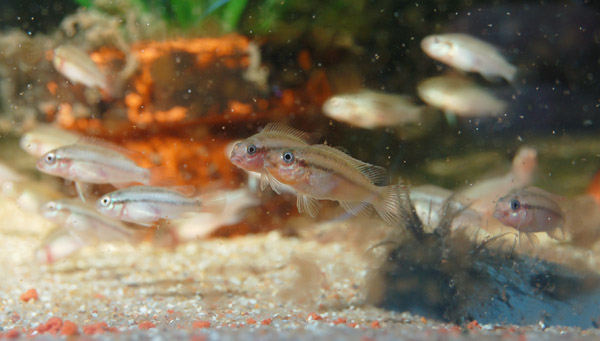
普通缸以一对为宜。可谨慎选择小型、温和、活动在开阔水域的陪游鱼,避免大型底栖鱼争夺食物与领地。其他慈鲷仅在空间很大时考虑。
繁殖时单种饲养或搭配小嘴、不捕食鱼苗的陪游鱼较利于育苗。即使平时不特别凶猛,也不能忽视配对后的领域需求。
雌雄区分
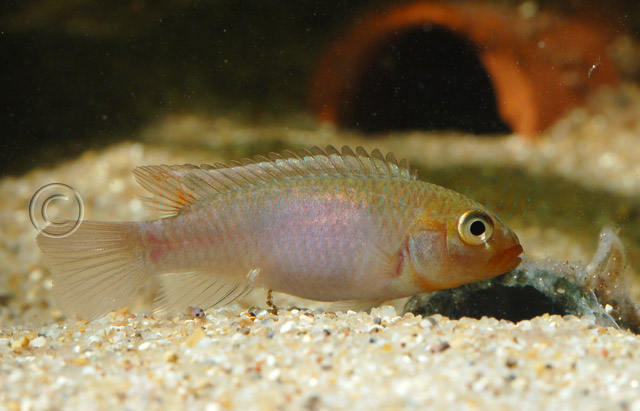
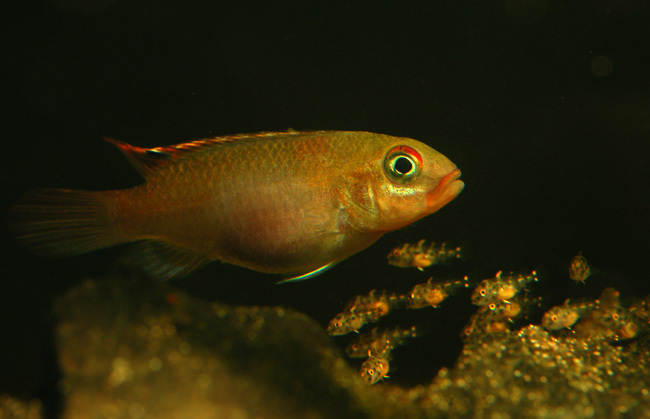
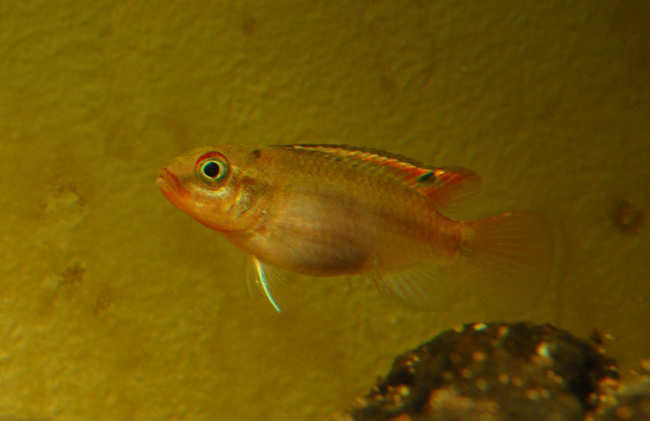
雄鱼背鳍后段有白色边,部分还带细红色次边,尾鳍及其他鳍上可见红、浅蓝色点列。雌鱼背鳍边缘较暗,下方有白银色带;成熟抱卵雌鱼腹部及体侧泛粉紫色,求偶时加深,生殖乳突两侧有少量银色鳞片。
繁殖
同属的繁殖方式是成对洞穴产卵、双亲分工照护。卵和胚胎发育要求硬度极低,不能把成年鱼能暂时耐受稍硬水等同于能在其中成功育苗。
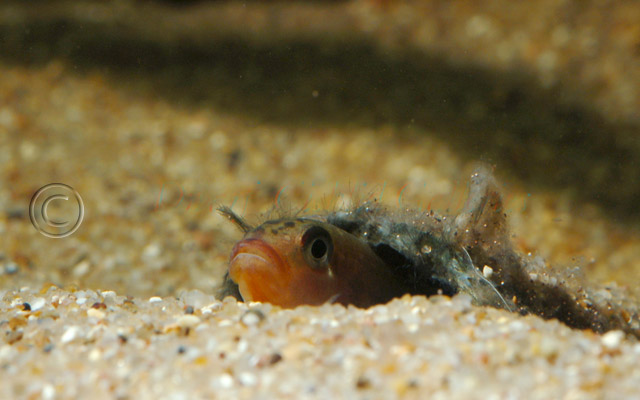
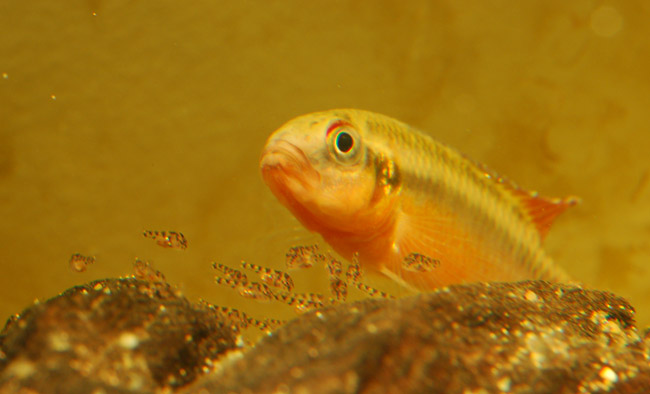
繁殖环境沿用细砂、洞穴和轻缓海绵过滤。雌鱼以弯成 U 形的身体展示紫色腹部,配对后选择隐蔽位置,可能自行挖开入口。产卵后雌鱼在洞内照顾,雄鱼守卫外围。
通常约三天孵化,产卵后约 8–9 天起游。鱼苗开始出洞觅食时可喂丰年虾无节幼体、微虫等。照护可持续 5–6 周,但年轻配对中雄鱼偶尔会转而驱赶雌鱼,需要及时分隔。
补充说明
贸易历史中有多个暂定名和误标名,应结合侧纹是否进入尾鳍及雌鱼银鳞小斑核对,不能只按商品地名认定身份。
图片
图片来自 SeriouslyFish,版权归各摄影者所有。
English
Overview
A small Central African forest-stream cichlid, Congochromis sabinae spends most of its time near the bottom. Soft acidic water, shelter, and stable conditions suit its needs. The dark side stripe ends before the tail fin, while breeding females develop striking ventral color.
Distribution & habitat
Records cover central and northern Republic of Congo, northeastern Gabon, and northern Democratic Republic of Congo. The type site is the Loubi River. Some locality labels attached to traded fish are unreliable.
Shaded forest streams with dense bankside growth and reddish-brown water are typical. The type site measured 24–25 °C and pH 4, consistent with a very soft, acidic setting.
Aquarium setup
One pair needs at least a 60 by 30 cm footprint; multiple pairs require considerably more. Use fine sand with roots, pots, coconut shells, or pipes forming caves. Leaves add cover and support microorganisms useful to fry.
Subdued light, shade-tolerant plants, floating cover, and gentle filtration with slight surface movement are appropriate. Introduce fish only to a mature, stable system.
Diet & feeding
The genus is described as feeding mainly on bottom-associated plant material and organic debris, with some invertebrates also consumed. Recommended captive feeding emphasizes fine prepared foods rich in plant ingredients, supplemented occasionally with live or frozen bloodworms, water fleas, or brine shrimp.
Gel foods combining dry preparations, shellfish, fruit, and vegetables have also been used; offer suitably small pieces.
Behaviour & compatibility
A pair is the usual arrangement. Small, peaceful open-water companions may work, while large bottom dwellers create excessive competition. Other cichlids require much larger accommodation.
Breeding groups benefit from species-only housing or small-mouthed, nonpredatory companion fish. Modest everyday aggression does not eliminate the pair's need for defended space.
Sexual dimorphism
Males have a white edge on the rear dorsal fin, sometimes with a fine red band beneath, and red or pale blue spotting on several fins. Females have a darker dorsal edge with a pale submarginal band. Gravid females develop a pink-purple abdomen and flank flush that intensifies during courtship, plus a few silvery scales beside the genital papilla.
Breeding
Members of the genus form cave-spawning pairs with divided parental duties. Successful egg development requires extremely low hardness; adult tolerance of somewhat harder water does not establish its suitability for embryos.
Use sheltered sites, sand, and gentle sponge filtration. Females bend into a U-shaped display, presenting the colored belly. Pairs select a concealed site and may excavate its entrance. The female tends the brood inside as the male guards outside.
Hatching normally takes about three days, with swimming around eight to nine days after spawning. Fry foraging outside the cave can take brine-shrimp nauplii and microworms. Care may last five to six weeks, although some young males eventually drive the female away, requiring separation.
Notes
Several provisional and mistaken trade names have been used. Stripe termination and the small female silver-scale patch are more informative than an unverified locality label.
来源
- https://www.seriouslyfish.com/species/congochromis-sabinae(抓取于 2026-10-10)
congochromis-sabinae · 文件: data/species/congochromis-sabinae.md · 状态: 草稿