黑盖巨脂鲤 · Black Pacu
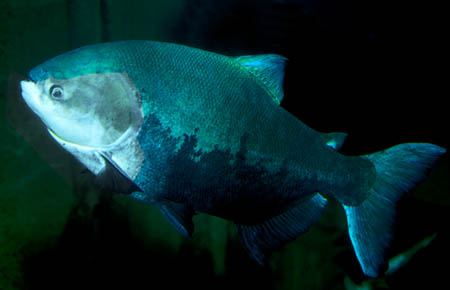
概要
| 字段 | 值 |
|---|---|
| 类别 | 鱼 |
| 学名 | Colossoma macropomum |
| 别名 | 大盖巨脂鲤、黑蓋巨脂鯉、大蓋巨脂鯉 |
| 分类 | 脂鲤目 Characiformes › 锯鲑脂鲤科 Serrasalmidae › Colossoma |
| 水体 | 淡水 |
| 原产地 | 哥伦比亚、委内瑞拉、秘鲁、玻利维亚和巴西的奥里诺科河、亚马孙河流域 |
| 成体体长 | 60 cm |
| 饲养难度 | 中等 |
| 最小水体 | 2430 L |
| 最小缸长 | 300 cm |
| 群居方式 | 群游 |
| 性情 | 温和 |
| 外部数据 | seriouslyfish colossoma-macropomum;fishbase 263 |
| 食性 | 草食 |
| 特征 | 啃水草: 是;吃小鱼: 是 |
水质参数
| 参数 | 耐受范围 | 最适范围 | 单位 |
|---|---|---|---|
| 水温 | 22–28 | — | °C |
| pH | 5.5–7.5 | — | — |
| 总硬度 | 1–15 | — | dGH |
概述
黑盖巨脂鲤(Colossoma macropomum)又常以帕库类商品名出现,是体形极大的脂鲤类。幼鱼容易让人低估所需空间;即使主要吃植物性食物,也不适合按普通小型群游鱼来购买和饲养。
分布与栖息地
原生于哥伦比亚、委内瑞拉、秘鲁、玻利维亚和巴西的奥里诺科河、亚马孙河流域,另有多地引入种群。生活在主河道及洪泛平原,雨季进入被淹森林,偏好浅而缓流、有悬垂或浮水植物的地段。幼鱼早期常留在食物丰富的洪泛区。
饲养环境
长期饲养需要底面积约 300 × 90 cm 或更大的设施。空间和过滤远比造景复杂程度重要,避免占据太多游动区域。它会吃水草;少量大圆石、沉木须固定或重到不能被鱼推动。
需要高效、大容量生物过滤,可用底滤将设备移到主缸外,减少大型个体撞坏玻璃加热棒、温度计的风险,并安排规律的大量换水。幼鱼生长快,小缸不会让它健康地永久保持小体形。
食性与喂食
胃内容物显示以植物性食物为主,包括果实、坚果和种子,也会机会性摄食昆虫、浮游动物和小鱼。缸内以优质颗粒搭配大量蔬果,菠菜、生菜、黄瓜类、豌豆、胡萝卜、苹果、香蕉等均可用于多样化菜单。
习性与混养
与较大的鱼通常温和,但持续活动会干扰胆小或安静的缸友。小鱼有被摄食的风险;大型混养必须有极其充足的空间。
幼鱼群居,成熟后更偏独立。空间足够可群养,但成鱼在局促环境中会追逐并咬同种或其他鱼的鳍。
雌雄区分
成熟雌鱼腹部通常较圆。
繁殖
食用鱼养殖中已有规模化繁殖,常借助激素催产;观赏鱼家庭缸中并无成熟的繁殖实践,不能直接将商业产量理解为家庭繁殖容易。
补充说明
强壮颌部和臼齿状牙齿能压碎坚果种子,维护时需防止被咬。部分种子可完整通过消化道,因此它可能参与洪泛森林植物的种子传播。成年设施需求应在购鱼前解决,不能把放入河流池塘当成鱼长大后的处理办法。
图片
图片来自 SeriouslyFish,版权归各摄影者所有。
English
Overview
Colossoma macropomum, commonly grouped under pacu trade names, is an exceptionally large serrasalmid. Small juveniles conceal major future housing demands. A predominantly plant-based diet does not make it comparable to an ordinary little schooling fish.
Distribution & habitat
It is native to the Orinoco and Amazon systems in Colombia, Venezuela, Peru, Bolivia, and Brazil, with introduced populations elsewhere. Main channels and floodplains are used, and fish enter flooded forest during the rains. Shallow, slow water with overhanging or floating vegetation is favored. Young spend their early months in food-rich floodplain habitats.
Aquarium setup
Long-term housing requires a footprint around 300 × 90 cm or larger. Swimming room and filtration outweigh decorative detail. Plants are eaten, and the few large stones or pieces of wood used should be secured or too heavy to move.
Large, efficient biological filtration is essential. A sump can keep equipment outside the main aquarium, reducing damage to glass heaters or thermometers by a powerful fish. Perform substantial, regular water changes. Juveniles grow rapidly; a small tank does not make an adult remain healthily miniature.
Diet & feeding
Stomach studies indicate a mainly herbivorous diet of fruits, nuts, and seeds, supplemented opportunistically by insects, zooplankton, and small fishes. In captivity, combine quality pellets with plenty of vegetables and fruit. Greens, squash, peas, carrots, apples, and bananas provide options for variety.
Behaviour & compatibility
It is generally peaceful with larger species, but constant activity can disturb shy or sedentary companions. Small fish are at risk of consumption. A mixed community requires truly extensive accommodation.
Juveniles gather in groups, becoming more independent with age. Adult groups remain possible with sufficient space, but crowding can result in chasing and fin biting toward both conspecifics and other fishes.
Sexual dimorphism
Mature females usually have a rounder abdomen.
Breeding
Commercial food production includes large-scale breeding, often with hormone induction. This should not be confused with established or straightforward breeding in a home aquarium.
Notes
Powerful jaws and molar-like teeth crush hard fruits and seeds, so take care during maintenance. Some seeds pass intact through the digestive tract, suggesting a role in dispersing floodplain plants. Adult accommodation should be resolved before purchase; releasing an outgrown fish into open waters is not a housing solution.
来源
- https://www.seriouslyfish.com/species/colossoma-macropomum(抓取于 2026-10-10)
colossoma-macropomum · 文件: data/species/colossoma-macropomum.md · 状态: 草稿