Cleithracara maronii · Keyhole Cichlid
概要
| 字段 | 值 |
|---|---|
| 类别 | 鱼 |
| 学名 | Cleithracara maronii |
| 别名 | Acara maronii、Aequidens maronii |
| 分类 | 慈鲷目 Cichliformes › 慈鲷科 Cichlidae › Cleithracara |
| 水体 | 淡水 |
| 原产地 | 法属圭亚那、圭亚那、苏里南、特立尼达和多巴哥、委内瑞拉 |
| 成体体长 | 11 cm |
| 饲养难度 | 中等 |
| 最小水体 | 81 L |
| 最小缸长 | 90 cm |
| 群居方式 | 成对 |
| 外部数据 | seriouslyfish cleithracara-maronii;fishbase 11136 |
| 性情 | 温和 |
| 领地性 | 是 |
| 繁殖方式 | 附着产卵 |
水质参数
| 参数 | 耐受范围 | 最适范围 | 单位 |
|---|---|---|---|
| 水温 | 21–28 | — | °C |
| pH | 4–7.5 | — | — |
| 总硬度 | 2–15 | — | dGH |
概述
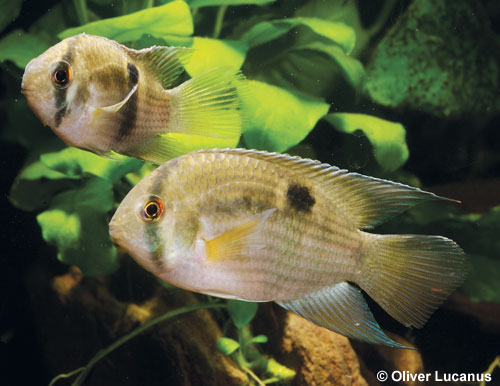
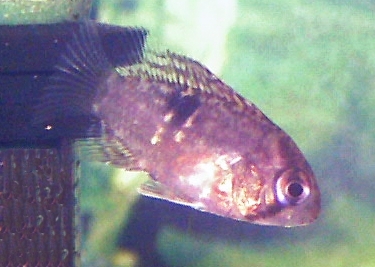
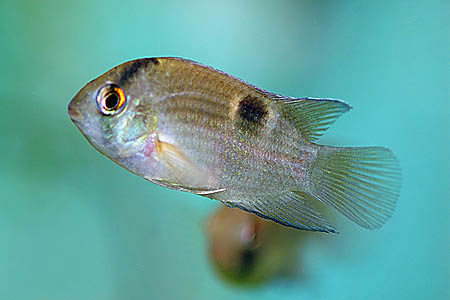
Cleithracara maronii 体侧有钥匙孔状深色斑纹,是较胆怯、通常温和的慈鲷。良好遮蔽、成熟稳定的水质及合适的陪游鱼,能帮助它更自然地活动。
分布与栖息地
分布涉及法属圭亚那、圭亚那、苏里南、委内瑞拉奥里诺科河三角洲及特立尼达岛。特立尼达的记录较旧,不能据此假定现在仍容易发现。
生活在低海拔、缓流或近静水的黑水溪流与支流,腐殖质使水呈褐色,矿物质含量低。落叶、枝条和沉水根系提供遮蔽,部分地点有水草。
饲养环境
缸底至少 90 × 30 cm。只要躲藏点和空间结构充足,花盆、管道等也可使用;较自然的布景可用细砂、根枝、落叶以及一两块平石。它通常不太挖掘,适合不少水草缸。
过滤必须成熟,避免强水流和水质恶化。维护或饮食不足会增加健康及生长问题,不能只依靠它性情温和而降低照料要求。
食性与喂食
自然可能为杂食性,寻找底栖无脊椎动物和有机碎屑。人工环境下接受多数配合饲料,仍应轮换优质干粮、红虫、水蚤、丰年虾等活饵或冷冻饵。也有使用含贝肉、水果蔬菜及干粮的凝胶食物的经验。
习性与混养
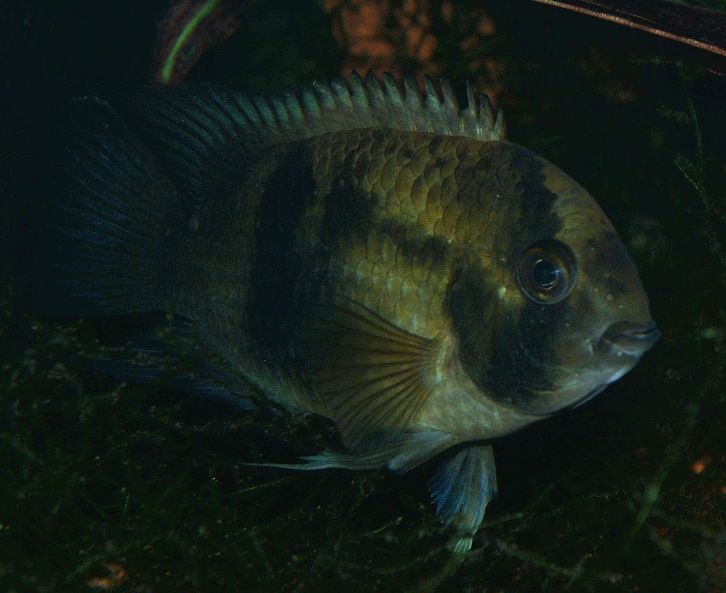
除繁殖期外通常不凶猛,可搭配条件相近的温和鱼。小型群居陪游鱼有助于减轻胆怯;受到威胁时,它会颜色加深并钻入植物、木根或落叶间。避免强领地鱼、攻击性鱼及要求更硬水的伙伴。
幼鱼可成群,成熟后会自行配对,繁殖对占据约 60 cm 宽的领地。鱼苗级别的小鱼仍不能视为绝对安全。
雌雄区分
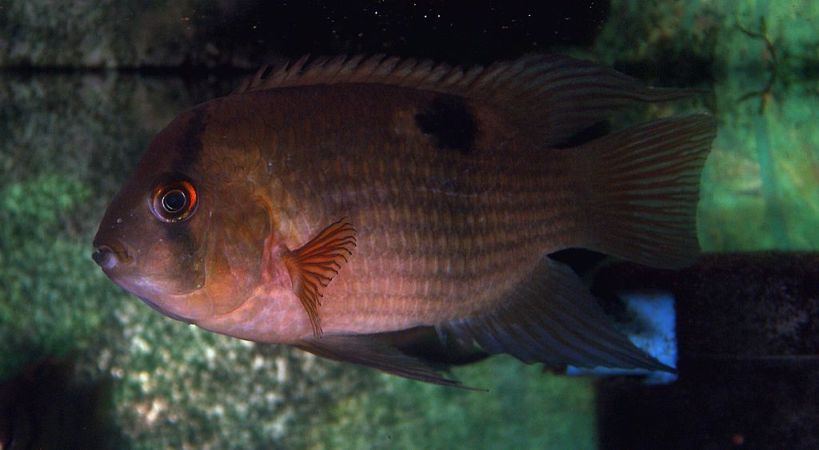
幼鱼很难准确看外表分辨。成年雄鱼明显更大,背鳍和臀鳍延长。
繁殖
成对、双亲照护的底床产卵鱼。通常不需要特殊刺激,稳定维护和良好调养更关键;可从一群幼鱼开始,让其自然配对后分开安排。
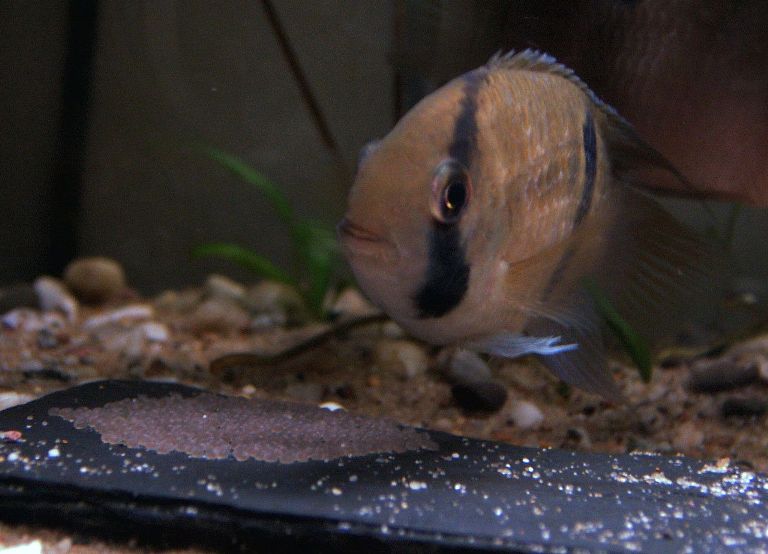
卵产在平石、沉木、宽叶或缸壁等坚硬表面,一窝可约 300 粒。雌鱼近距离照看卵,雄鱼守卫外围。年轻或受惊的亲鱼可能吃掉早期几窝;若希望保留更多后代,应在混养环境中隔开其他鱼或卵。
鱼苗起游后可吃适口粉料、丰年虾无节幼体或微虫,双亲照护可延续数月。
图片
图片来自 SeriouslyFish,版权归各摄影者所有。
English
Overview
The keyhole-shaped flank mark identifies Cleithracara maronii, a shy cichlid that is generally peaceful outside breeding. Shelter, stable established water, and appropriate small companion groups help it behave more confidently.
Distribution & habitat
Its range includes French Guiana, Guyana, Suriname, Venezuela's Orinoco delta, and Trinidad. The Trinidad records are old and should not be treated as evidence of easy present-day occurrence.
Lowland blackwater streams and tributaries are slow or nearly still, with humic staining and few dissolved minerals. Leaves, branches, submerged roots, and occasional aquatic plants supply cover.
Aquarium setup
Allow at least a 90 by 30 cm footprint. Pots or tubing are usable if they provide sufficient structure and refuge. Sand, wood, leaves, and a few flat stones create a more natural arrangement. Limited digging makes many planted aquariums suitable.
Use mature filtration, avoid excessive current, and prevent deterioration in water quality. Inadequate maintenance or nutrition can contribute to health and growth problems.
Diet & feeding
A natural omnivorous diet of bottom-associated invertebrates and organic debris is considered likely. Captive fish accept many prepared foods, but offer varied quality dry products and live or frozen bloodworms, water fleas, and brine shrimp. Mixed gel foods incorporating shellfish, fruit, vegetables, and dry feed have also been used successfully.
Behaviour & compatibility
Most peaceful fishes sharing its environmental needs are potential companions. Small open-water shoals can reduce shyness. Threatened fish darken and retreat into vegetation or woody cover. Avoid strongly territorial or aggressive neighbors and species requiring harder water.
Juveniles associate in groups before forming pairs at maturity. Breeding pairs occupy an area roughly 60 cm across. Fry-sized fishes should not be assumed safe from predation.
Sexual dimorphism
Juveniles cannot be sexed accurately by appearance alone. Adult males become appreciably larger with extended dorsal and anal fins.
Breeding
This is a paired, biparental substrate spawner. Good condition and consistent maintenance matter more than a special trigger. Young fish can form pairs naturally before being separated for breeding.
Eggs are laid on rocks, wood, broad leaves, or aquarium glass, with around 300 possible in a brood. Females attend nearby while males defend the surroundings. Inexperienced or disturbed parents may consume early attempts. Separating companions or eggs improves prospects when many fry are wanted.
Free-swimming fry accept fine prepared food, brine-shrimp nauplii, and microworms. Parental attention can continue for several months.
来源
- https://www.seriouslyfish.com/species/cleithracara-maronii(抓取于 2026-10-10)
cleithracara-maronii · 文件: data/species/cleithracara-maronii.md · 状态: 草稿