斑纹胡鲶 · Walking Catfish
概要
| 字段 | 值 |
|---|---|
| 类别 | 鱼 |
| 学名 | Clarias batrachus |
| 别名 | 蟾胡鲶、蟾鬍鯰、斑紋鬍鯰 |
| 分类 | 鲶形目 Siluriformes › 胡子鲶科 Clariidae › Clarias |
| 水体 | 淡水 |
| 原产地 | 印度尼西亚 |
| 成体体长 | 24.5 cm |
| 饲养难度 | 中等 |
| 最小水体 | 2268 L |
| 最小缸长 | 210 cm |
| 特征 | 吃小鱼: 是;会跳缸: 是 |
| 外部数据 | seriouslyfish clarias-batrachus;fishbase 3054 |
| 食性 | 杂食 |
| 繁殖方式 | 附着产卵 |
水质参数
| 参数 | 耐受范围 | 最适范围 | 单位 |
|---|---|---|---|
| 水温 | 20–26 | — | °C |
| pH | 5.5–8 | — | — |
| 总硬度 | 2–25 | — | dGH |
概述
斑纹胡鲶(Clarias batrachus)能呼吸空气,并在身体保持湿润时借胸鳍硬棘短距离越陆移动。它捕食性强、生长快,缸盖和成年空间必须提前规划,绝不是普通小型混养缸的成员。
分布与栖息地
狭义本种目前可靠记录仅来自印度尼西亚爪哇岛。过去从巴基斯坦到印度尼西亚都被称作本种的鱼,实际上包括多个种;印度东北部和孟加拉国的相关鱼为 Clarias magur,东南亚大陆及其他巽他地区个体也可能属于不同未厘清种。
河流、沼泽、水塘、稻田、运河和水沟等都可出现,雨季从主要水体进入淹水区,退水后可留在静止残水中。引入美国等地的“行走鲶”不能一概确认为狭义本种,佛罗里达种群身份尤其未明确。
饲养环境
成鱼可按约 210 × 120 × 90 cm、2268 L 的空间准备,底面积比水深更重要。柔软底床配合沉木、圆滑石块或塑料管提供躲藏处,水草并非必需。
缸盖必须严密贴合,同时保持鱼能接触水面呼吸。适应低氧的能力不应被当作限制其上浮或忽略维护的理由。
食性与喂食
杂食且贪吃,颗粒、动物性冷冻饵和植物材料可组成多样食谱。成鱼不一定每天都需喂食,不能因为持续索食便不断添加,注意避免过量。
习性与混养
会吃任何能吞下的鱼。若混养,需选同样强健、足够大的鲤科鱼、甲鲶类或慈鲷,而且同伴引入时应比它大,以应对幼鱼快速生长。配对繁殖后会强烈占据区域,应移走其他鱼。
雌雄区分
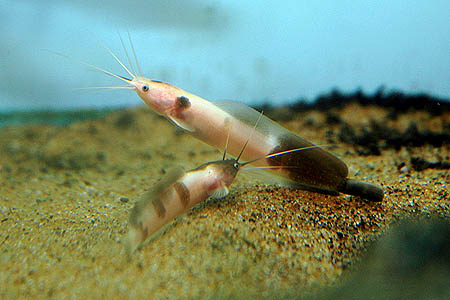
野生型雄鱼背鳍有斑点,但白化、白色等人工品系不能依此辨别。雄鱼生殖突较长而尖,雌鱼较短而钝,雌鱼腹部通常也更圆。
繁殖
养殖场以此名流通的鱼大量繁殖,水族箱中较少,但宽敞专缸也有成功。可从幼鱼群形成配对,配对后移走其他个体。水质维持在适用范围,不必追求特殊极端参数。
产前雌雄身体接触增加、并排游动。自然会在岸边掘洞产卵,缸内无洞时可挖底床浅坑,产卵过程最长约 20 小时,反复在产卵点接触,大型配对可能产生数千卵,卵下沉并黏住底部。
产后雌鱼暂时退开,雄鱼在卵上方持续巡守,其水流也可能帮助卵发育。约 24~36 小时孵化后,雌鱼又参与守护外围,雄鱼留在巢边。再过约 48 小时亲鱼逐渐失去兴趣,此后约 72 小时幼鱼自由游动。要提高存活率,可在此时转移幼鱼,先喂丰年虾无节幼体,随快速生长增加饵料大小。
补充说明
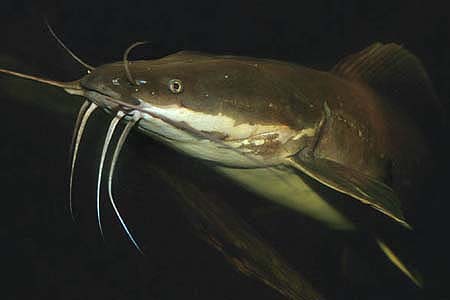
贸易中常见白化或白色及斑驳人工类型,野生型多为棕色、腹部白色。旧名下混有多个种,外形和繁殖记录应结合来源理解。
行走鲶因养殖引入和逃逸,在一些地区成为生态问题,能够捕食或排挤原生动物。其耐受力和越陆能力也说明缸内防逃不能只依赖较高水位差。
图片
图片来自 SeriouslyFish,版权归各摄影者所有。
English
Overview
Air breathing and short overland movements supported by stiff pectoral spines distinguish Clarias batrachus. Strong predation, rapid growth, and escape ability demand permanent-space planning and secure containment, far beyond a small community aquarium.
Distribution & habitat
In the strict sense, confirmed records are limited to Java, Indonesia. The historically broad name covered several species. Fish from northeastern India and Bangladesh are Clarias magur, while mainland Southeast Asian and other Sundaland populations may represent additional unresolved species.
Rivers, swamps, pools, rice fields, canals, and ditches are used. Rainy-season movements bring fish into flooded ground, where retreating water can leave isolated pools. Introduced walking catfish populations cannot automatically be assigned to the Javan species; the Florida population remains uncertain in identity.
Aquarium setup
The stated adult accommodation is about 210 × 120 × 90 cm and 2,268 L, with footprint more important than depth. Soft substrate, wood, rounded rocks, and plastic tubes supply retreats. Plants are optional.
Fit the lid securely while preserving access to the surface for air breathing. Low-oxygen tolerance does not justify blocking that access or neglecting maintenance.
Diet & feeding
A greedy omnivore, it accepts pellets, animal-based frozen foods, and plant material. Adults need not be fed daily. Continued food-seeking should not be taken as a reason for unlimited feeding.
Behaviour & compatibility
Any fish small enough to swallow can be consumed. If attempting a community, companions must be large and robust, such as appropriate cyprinids, armored catfishes, or cichlids. Introduce them at a larger size to account for rapid juvenile catfish growth. A breeding pair excludes other fish, requiring separation.
Sexual dimorphism
Wild-type males have dorsal-fin spotting, a distinction unsuitable for pale ornamental forms. The male genital papilla is longer and pointed; the female's is shorter and blunt, with a generally rounder abdomen.
Breeding
Fish traded under this name reproduce extensively on farms and occasionally in suitably large aquariums. A juvenile group can form pairs, after which other fish should be removed. Keep conditions within the established ranges rather than seeking extremes.
Increased contact and side-by-side swimming precede spawning. Natural nests are bank excavations; aquarium fish without a cave may dig a substrate depression. Repeated contacts over the site can continue for about 20 hours. Large pairs may produce thousands of sinking adhesive eggs.
The female initially withdraws while the male patrols above the eggs, possibly helping circulation. Hatching takes about 24–36 hours. She then guards the perimeter while he remains at the nest. Roughly 48 hours later parental interest declines, followed about 72 hours afterward by free swimming. Transfer young at that stage for better survival, starting with Artemia nauplii and increasing food size as they grow.
Notes
Albino, leucistic, and marbled forms dominate aquarium offerings; wild fish are generally brown above and white below. The historical name's mixed application makes provenance relevant to appearance and breeding accounts.
Aquaculture introductions and escapes have created ecological problems in some regions through predation and competition. Overland ability reinforces the need for secure containment rather than relying only on water-level clearance.
来源
- https://www.seriouslyfish.com/species/clarias-batrachus(抓取于 2026-10-10)
clarias-batrachus · 文件: data/species/clarias-batrachus.md · 状态: 草稿