尾斑丽体鱼 · Mayan Cichlid
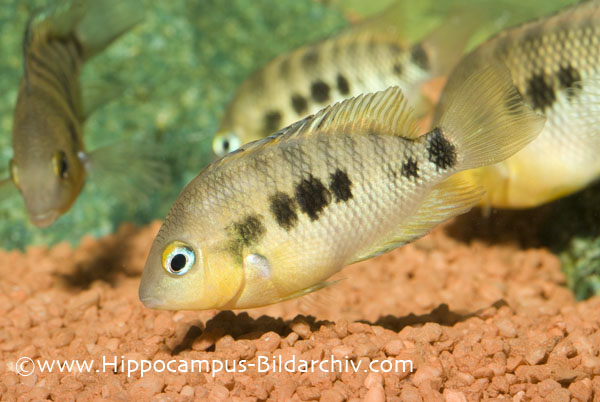
概要
| 字段 | 值 |
|---|---|
| 类别 | 鱼 |
| 学名 | Cichlasoma urophthalmus |
| 别名 | 尾斑麗體魚 |
| 分类 | 慈鲷目 Cichliformes › 慈鲷科 Cichlidae › Cichlasoma |
| 水体 | 淡水 |
| 原产地 | 伯利兹、危地马拉、洪都拉斯、墨西哥、尼加拉瓜 |
| 成体体长 | 40 cm |
| 饲养难度 | 中等 |
| 最小水体 | 756 L |
| 最小缸长 | 210 cm |
| 领地性 | 是 |
| 外部数据 | seriouslyfish cichlasoma-urophthalmus;fishbase 4798 |
| 性情 | 攻击性 |
| 特征 | 翻底砂: 是 |
| 繁殖方式 | 产卵 |
水质参数
| 参数 | 耐受范围 | 最适范围 | 单位 |
|---|---|---|---|
| 水温 | 20–30 | — | °C |
| pH | 7–8 | — | — |
| 总硬度 | 0–20 | — | dGH |
概述
尾斑丽体鱼(Cichlasoma urophthalmus)是适应能力强的大型慈鲷,能生活在淡水与不同盐度的水域,也有在海水条件下繁殖的记录。耐受范围广并不代表容易混养,它的领地性和攻击性仍是主要限制。
分布与栖息地
原生于墨西哥、伯利兹、危地马拉、洪都拉斯和尼加拉瓜的东侧地区,美国与新加坡有引入种群。主要见于沿海平原及低地的沼泽、湿地和池塘,也利用红树林和沿海潟湖,可在那里产卵。
饲养环境
淡水中可以饲养,也能适应半咸水。需要宽裕游泳区,同时用稳固岩石和木材提供遮蔽。它会挖底,直接栽种的水草和盆栽都容易遭到破坏,可考虑浮水植物或附着于木石的植物。
食性与喂食
野外主要摄食水生无脊椎动物。胃含物中也发现较多藻类和其他植物材料,但无法确定是主动摄食,还是随猎物胃内容物进入,因此不能简单据此判断其植物食物需求。缸中通常不挑食,可用优质慈鲷颗粒,配合虾肉和贻贝肉等。
习性与混养
领地性强且较具攻击性,只适合考虑中大型、健壮的伙伴,例如体型相称的慈鲷、脂鲤或鲶类。即使如此也无成功保证,应布置足够可划分领地的空间。另一选择是在单种缸中饲养已经稳定配对的个体。
雌雄区分
雄鱼一般较大、颜色较鲜明,背鳍及臀鳍延长。
繁殖
野外红树林和沿海潟湖中有产卵记录,也能在全海水条件下繁殖。不能把这种盐度耐受直接理解为人工繁殖必须加盐;家庭缸的具体繁殖流程并未明确。
补充说明
适应范围广使引入种群可能影响当地鱼类。它的强健体质与领域行为应分别看待,前者不能抵消后者带来的混养难度。
图片
图片来自 SeriouslyFish,版权归各摄影者所有。
English
Overview
Cichlasoma urophthalmus is a large, adaptable cichlid able to occupy fresh and saline water, with reproduction even recorded under fully marine conditions. Broad environmental tolerance does not make it an easy community fish: territorial aggression remains a major constraint.
Distribution & habitat
The native range covers eastern parts of Mexico, Belize, Guatemala, Honduras, and Nicaragua. Introduced populations occur in the United States and Singapore. It chiefly uses slow lowland and coastal waters, including swamps, marshes, ponds, mangroves, and lagoons.
Aquarium setup
Freshwater maintenance is possible, and brackish conditions are also tolerated. Provide extensive swimming space together with securely arranged rocks and wood. Digging is likely to destroy rooted plants or disturb pots; floating growth and plants attached to hard surfaces are alternatives.
Diet & feeding
Aquatic invertebrates dominate the wild diet. Algae and other plant material also occur in stomachs, but it is unclear whether these were eaten directly or arrived inside prey. Their presence alone does not establish a plant-feeding requirement. Quality cichlid pellets with supplementary prawn and mussel flesh are readily usable in captivity.
Behaviour & compatibility
Only robust medium to large fishes merit consideration as companions, and even an appropriately sized cichlid, characin, or catfish community may fail. Furnish the aquarium to permit separate territories. A bonded pair can instead be housed alone.
Sexual dimorphism
Males become larger and more colorful, with extended dorsal and anal fins.
Breeding
Spawning occurs around mangroves and coastal lagoons, and the fish can reproduce in fully marine water. This tolerance does not establish that salt is necessary for captive breeding. A detailed home-aquarium breeding procedure remains unconfirmed.
Notes
Wide environmental tolerance contributes to concern about introduced populations and their effects on native fishes. Physical hardiness and social compatibility should be assessed separately.
来源
- https://www.seriouslyfish.com/species/cichlasoma-urophthalmus(抓取于 2026-10-10)
cichlasoma-urophthalmus · 文件: data/species/cichlasoma-urophthalmus.md · 状态: 草稿