索氏丽体鱼 · Salvini
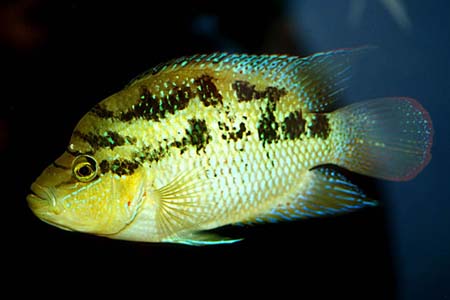
概要
| 字段 | 值 |
|---|---|
| 类别 | 鱼 |
| 学名 | Cichlasoma salvini |
| 别名 | 索氏麗體魚、Salvin's Cichlid |
| 分类 | 慈鲷目 Cichliformes › 慈鲷科 Cichlidae › Cichlasoma |
| 水体 | 淡水 |
| 原产地 | 伯利兹、危地马拉、墨西哥 |
| 成体体长 | 15.2 cm |
| 饲养难度 | 中等 |
| 最小水体 | 103 L |
| 最小缸长 | 90 cm |
| 领地性 | 是 |
| 外部数据 | seriouslyfish cichlasoma-salvini;fishbase 4693 |
| 性情 | 攻击性 |
| 特征 | 吃小鱼: 是 |
| 繁殖方式 | 附着产卵 |
水质参数
| 参数 | 耐受范围 | 最适范围 | 单位 |
|---|---|---|---|
| 水温 | 22–26 | — | °C |
| pH | 6.5–8 | — | — |
| 总硬度 | 8–15 | — | dGH |
概述
索氏丽体鱼(Cichlasoma salvini)颜色鲜明,但在同等体形的慈鲷中攻击性较强,繁殖时尤其明显。它会捕食能够吞下的鱼,饲养重点是安排领地、选择合适伙伴和管理配对,不能因成鱼不算巨型就忽略冲突。
分布与栖息地
原生于墨西哥南部的东侧地区、危地马拉和伯利兹。与一些偏好岸边活动的近亲不同,它似乎常在河流及支流较开阔、流动的中央区域猎食。
饲养环境
通常偏好砂质底床。养多条或与其他强势鱼混养时,需要大量藏身处和遮挡,同时保留宽阔游泳区。水草也可加入,但不能让全部空间都变成狭窄通道。
食性与喂食
自然食物以水生无脊椎动物和小鱼为主。缸中通常不挑食,可用优质慈鲷颗粒作为主食,搭配活饵、冷冻饵料,并偶尔提供含蔬菜或螺旋藻的饲料。人工食谱的多样性不应掩盖它对小鱼的捕食风险。
习性与混养
领地性强,只宜考虑体型及攻击性接近的健壮伙伴,繁殖时仍可能发生剧烈追逐。单养一条往往十分胆小,可能大部分时间躲藏;同种缸在个体尚未成熟或等级关系未稳定时,也可能表现隐蔽。
雌雄区分
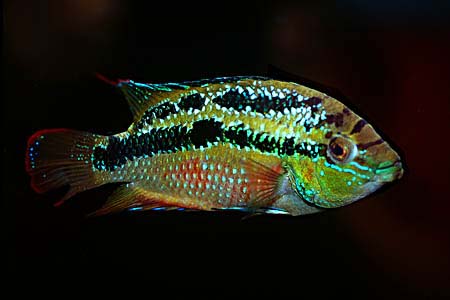
雄鱼颜色较鲜明,背鳍和臀鳍末端更尖,黑白区域对比也较明显。雌鱼背鳍中央有斑块,鳃盖下方另有深色斑点。
繁殖
从约六条幼鱼养起,等待自然形成稳定鱼对,比随意购买两条成鱼配对更可靠。亲鱼会先清理多个产卵表面,雌鱼把最多约五百粒卵分散产在这些位置。双亲守护卵和幼鱼,并被观察到为幼鱼提供早期营养来源,因此不宜过早拆散亲幼鱼;可让鱼苗与亲鱼共同生活至孵化约一个月。
补充说明
不适合初学者仅凭色彩选购。需要时间形成配对,强行把不相容成鱼同缸很快就可能引发攻击;是否能长期混养应以实际个体关系为准。
图片
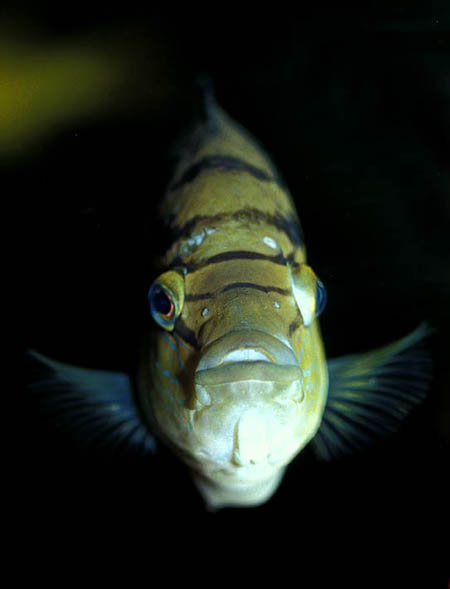
图片来自 SeriouslyFish,版权归各摄影者所有。
English
Overview
Cichlasoma salvini combines strong color with substantial aggression for its size, especially during breeding. Fish that fit its mouth are potential prey. Territory layout, companion choice, and pair management are therefore central concerns even though it is smaller than many giant cichlids.
Distribution & habitat
It originates in eastern areas of southern Mexico, Guatemala, and Belize. It apparently spends considerable time hunting in the flowing central portions of rivers and tributaries.
Aquarium setup
Sand is generally preferred. Multiple individuals or aggressive companions require numerous retreats and visual barriers, together with ample open swimming space. Plants can be included without filling every passage with dense cover.
Diet & feeding
Aquatic invertebrates and small fishes dominate the natural diet. Captive fish readily take quality cichlid pellets, supplemented with live and frozen foods and occasional vegetable- or spirulina-containing foods. A varied aquarium menu does not remove the danger to small tankmates.
Behaviour & compatibility
This territorial fish should only be considered alongside similarly sized, robust, aggressive species. Breeding can intensify conflicts. A lone individual is often very shy and may remain hidden except at feeding time. Species groups can also be withdrawn before maturity or before a hierarchy develops.
Sexual dimorphism
Males are more vividly colored, with sharper dorsal and anal tips and stronger contrast between pale and dark patches. Females have a central dorsal-fin blotch and a dark mark low on the gill cover.
Breeding
Raise approximately six juveniles and allow a bonded pair to emerge rather than assuming two purchased adults will cooperate. Several surfaces are cleaned before the female distributes up to roughly five hundred eggs among them. Both parents defend eggs and young. Adults reportedly provide an early nutritional source, so premature separation is discouraged; young can remain with them until about a month after hatching.
Notes
This is an unsuitable choice for a beginner attracted solely by color. Pair formation takes time, and incompatible adults can quickly become aggressive. Long-term mixed housing depends on the actual relationships among individuals.
来源
- https://www.seriouslyfish.com/species/cichlasoma-salvini(抓取于 2026-10-10)
cichlasoma-salvini · 文件: data/species/cichlasoma-salvini.md · 状态: 草稿