贡氏结耙非鲫
概要
| 字段 | 值 |
|---|---|
| 类别 | 鱼 |
| 学名 | Chromidotilapia guntheri |
| 别名 | 洛氏结耙非鲫、貢氏結耙非鯽、洛氏結耙非鯽 |
| 分类 | 慈鲷目 Cichliformes › 慈鲷科 Cichlidae › Chromidotilapia |
| 水体 | 淡水 |
| 原产地 | 贝宁、布基纳法索、喀麦隆、科特迪瓦、赤道几内亚、加纳、几内亚、利比里亚、马里、尼日尔、尼日利亚、多哥 |
| 成体体长 | 15 cm |
| 饲养难度 | 中等 |
| 最小水体 | 108 L |
| 最小缸长 | 120 cm |
| 群居方式 | 成对 |
| 外部数据 | seriouslyfish chromidotilapia-guntheri;fishbase 8159 |
| 食性 | 杂食 |
| 领地性 | 是 |
| 繁殖方式 | 口孵 |
水质参数
| 参数 | 耐受范围 | 最适范围 | 单位 |
|---|---|---|---|
| 水温 | 24–27 | — | °C |
| pH | 6–8 | — | — |
| 总硬度 | 1–15 | — | dGH |
概述
贡氏结耙非鲫(Chromidotilapia guntheri)会含沙筛食,细沙与低蛋白、富植物成分的食谱很重要。成鱼不以大群相处,配对后领地性强;繁殖由雄鱼口孵、雌鱼守护周边。
分布与栖息地
广布西非沿岸河流,从利比里亚延至尼日利亚、喀麦隆,并包括尼日尔河和贝努埃河。主要在低地洪泛平原、稀树草原及林区水域活动,似偏爱有树根、倒木遮蔽的平缓水域。
饲养环境
一对至少考虑 120 × 30 厘米底面。柔软细沙方便自然筛食,弱光、沉木和根枝提供分隔,也可放平滑扁石作产卵面。对水质下降敏感,不宜放入未成熟缸;高效过滤配每周约 30%~50% 换水维持稳定。
食性与喂食
杂食,野外筛食小型无脊椎动物、藻类、有机碎屑及虾卵。缸内应以含较多植物成分的下沉粮为主,偶尔补红虫、水蚤、丰年虾等活饵或冷冻食物,避免高蛋白单一肉食。混合鱼粮、贝肉、果蔬的凝胶食物也可考虑。
习性与混养
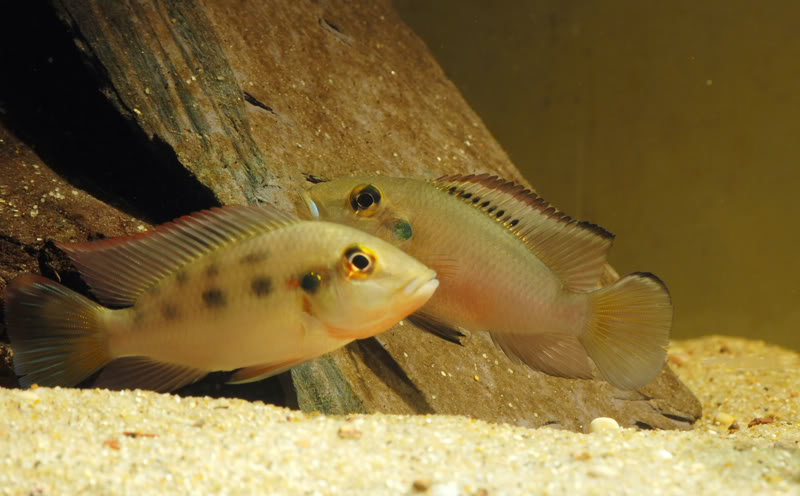
多数情况下只养一对。可谨慎搭配温和的开放水域鱼,其他慈鲷只有在不争夺食物与领地时才适合;繁殖时单独饲养或只配小口、不捕食鱼苗的伴游鱼更稳妥。
雌雄区分
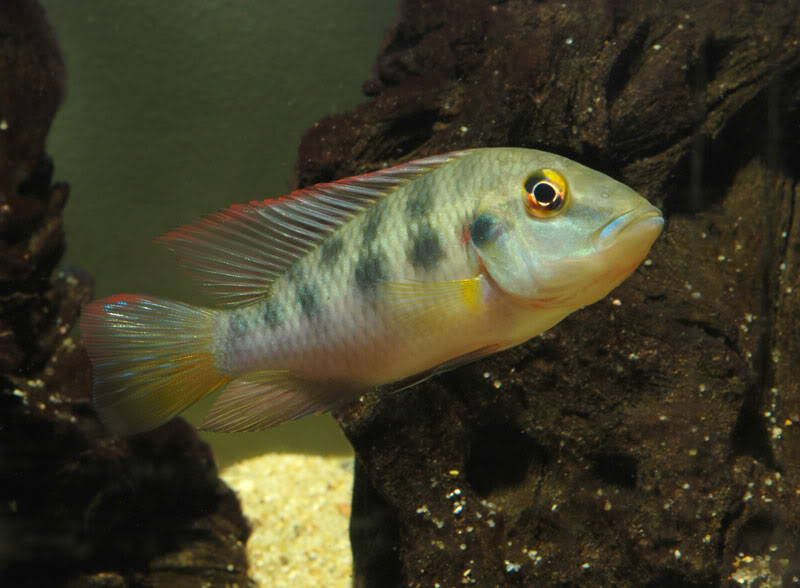
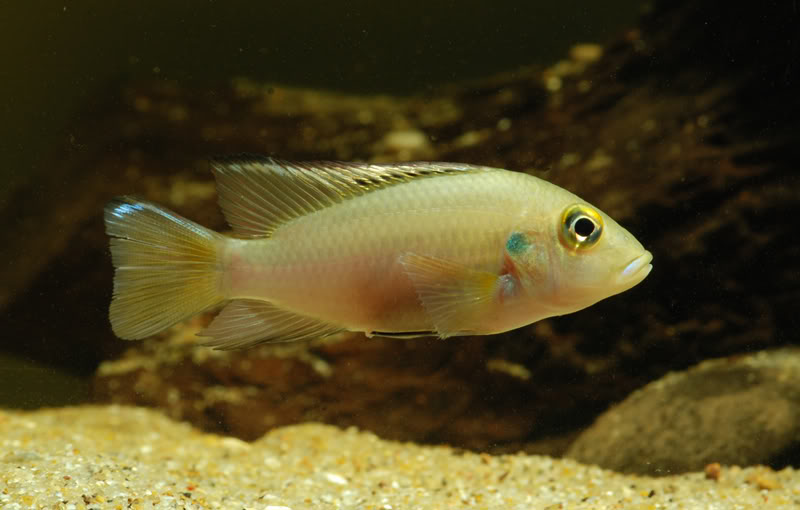
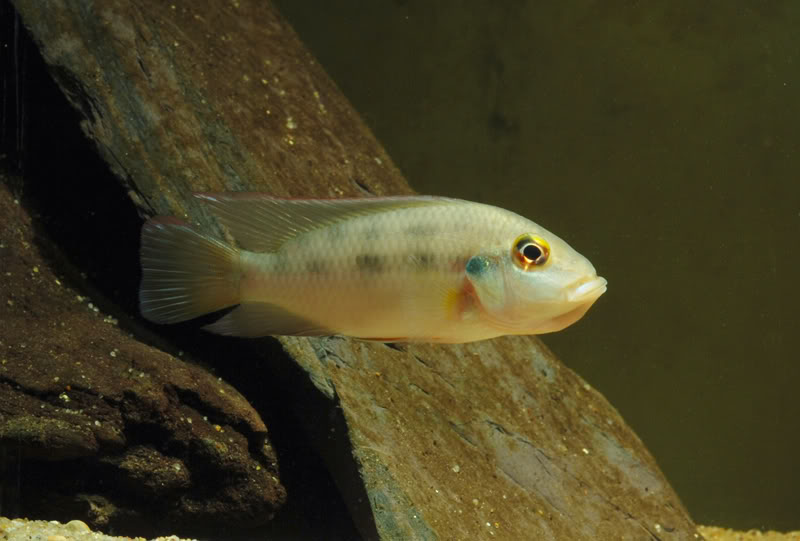
雄鱼第一胸鳍鳍条延长更明显。繁殖状态雌鱼腹部偏红粉,背鳍上方的浅白色带也更鲜明。
繁殖
先在基面产卵,受精后雄鱼立即将整窝含入口中,雌鱼守卫周边。孵化和卵黄吸收通常共需 10~14 天,放出的幼鱼可吃丰年虾无节幼体或同等大小食物。护幼至少再持续两周,受惊时鱼苗可能躲进双亲的口中。
补充说明
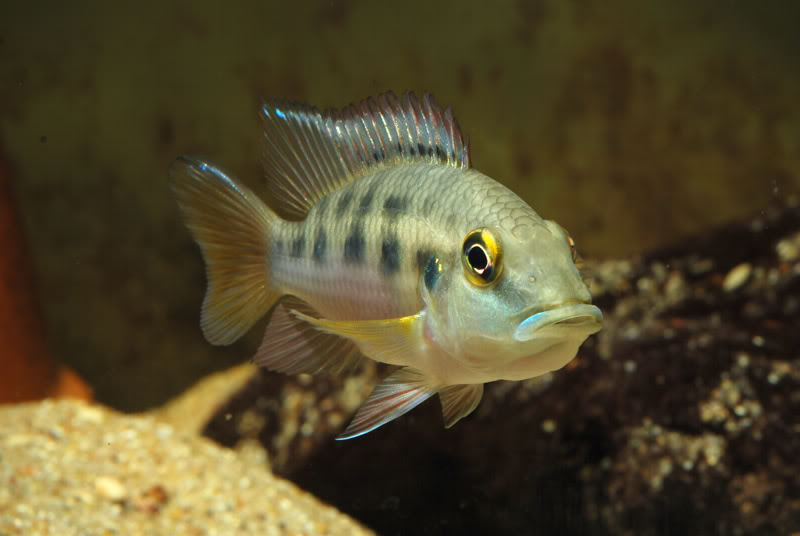
地理色型较多,喀麦隆个体常有背鳍暗斑。部分局地种群的分类地位仍不明确,应保留产地而不凭色斑自行拆分。
图片
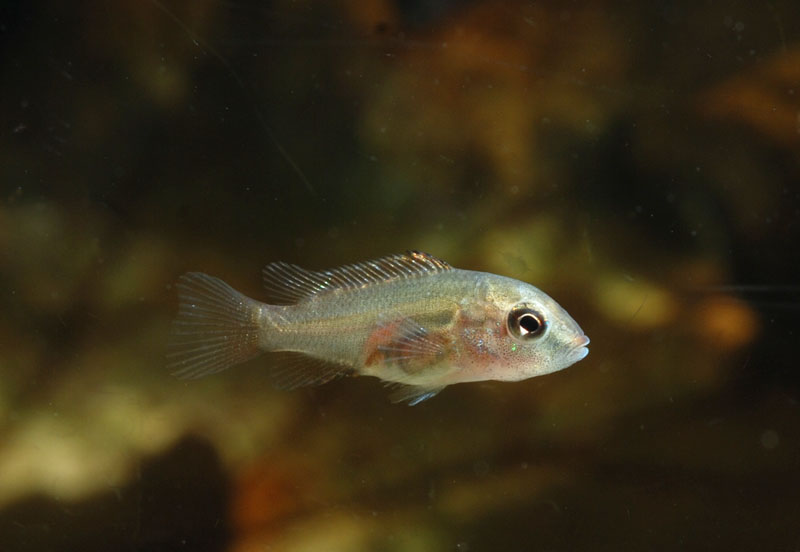
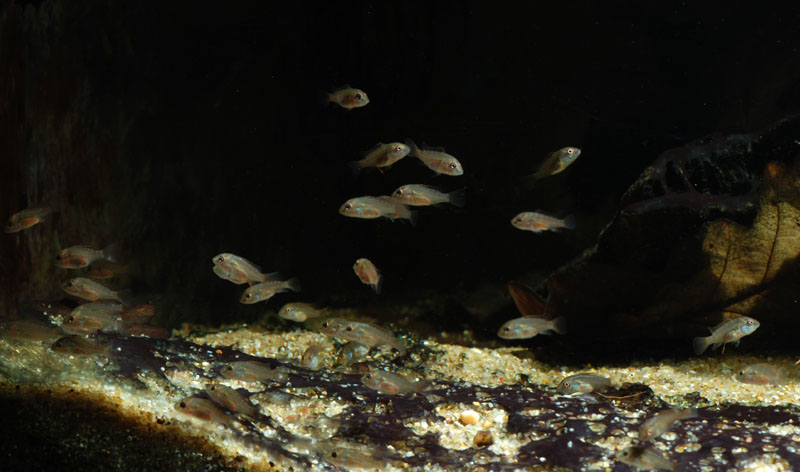
图片来自 SeriouslyFish,版权归各摄影者所有。
English
Overview
Substrate sifting is central to Chromidotilapia guntheri feeding, making fine sand and a relatively low-protein, plant-rich menu useful. Adults are not strongly social, and bonded pairs defend territory. The male mouthbroods while the female protects the surrounding area.
Distribution & habitat
The range spans western African coastal drainages and the Niger-Benue system. Lowland floodplains, savannas and forest waters are occupied, apparently favoring calmer areas with submerged roots or fallen branches.
Aquarium setup
Allow at least a 120 by 30 cm footprint for a pair. Soft sand supports natural browsing, while wood and subdued light offer cover. Flat smooth rocks can provide spawning surfaces. Use established filtration and weekly changes of roughly thirty to fifty percent to prevent declining water quality.
Diet & feeding
Natural food includes small animals, algae and detritus sifted from the substrate. Favor sinking prepared food with substantial vegetable content, supplemented occasionally by live or frozen invertebrates. Avoid treating it as a high-protein specialist. Mixed gel food is another option.
Behaviour & compatibility
One pair is usually the best arrangement. Peaceful open-water companions may work, while other cichlids must not compete excessively for food or territory. Dedicated breeding accommodation, or only small-mouthed nonpredatory companions, is preferable for brood recovery.
Sexual dimorphism
The first pectoral ray is more extended in males. Breeding females develop a pink-red abdomen and a more vivid pale dorsal band.
Breeding
After substrate spawning and fertilization, the male collects the entire clutch for mouthbrooding. The female guards nearby territory. Incubation and yolk absorption generally take ten to fourteen days, after which fry can take brine-shrimp nauplii. Care continues for at least two more weeks, and threatened fry may shelter in either parent’s mouth.
Notes
Geographic forms vary, including dorsal blotches in many Cameroonian fish. Uncertain local forms are best retained with locality data rather than split solely by appearance.
来源
- https://www.seriouslyfish.com/species/chromidotilapia-guntheri(抓取于 2026-10-10)
chromidotilapia-guntheri · 文件: data/species/chromidotilapia-guntheri.md · 状态: 草稿