鲍孔弓背鱼 · Indian Featherback
概要
| 字段 | 值 |
|---|---|
| 类别 | 鱼 |
| 学名 | Chitala chitala |
| 别名 | 铠甲弓背鱼、鮑孔弓背魚、鎧甲弓背魚、Mystus chitala、Notopterus chitala、Notopterus maculatus、Notopterus buchanani |
| 分类 | 骨舌鱼目 Osteoglossiformes › 弓背鱼科 Notopteridae › Chitala |
| 水体 | 淡水 |
| 原产地 | 孟加拉国、印度、尼泊尔、巴基斯坦 |
| 成体体长 | 122 cm |
| 饲养难度 | 中等 |
| 群居方式 | 群游 |
| 性情 | 温和 |
| 外部数据 | seriouslyfish chitala-chitala;fishbase 2078 |
| 食性 | 肉食 |
| 特征 | 夜行性: 是;吃小鱼: 是;吃虾: 是 |
| 繁殖方式 | 附着产卵 |
水质参数
| 参数 | 耐受范围 | 最适范围 | 单位 |
|---|---|---|---|
| 水温 | 20–28 | — | °C |
| pH | 6–8 | — | — |
| 总硬度 | 2–15 | — | dGH |
概述
鲍孔弓背鱼(Chitala chitala)是体形巨大的南亚弓背鱼,真正进入观赏贸易的个体很少,它的学名却常被误用于其他七星刀类鱼。长期饲养通常只适合公共水族馆或极大型专门设施。
分布与栖息地
可靠范围可能限于巴基斯坦、印度、尼泊尔和孟加拉国所在的印度次大陆。过去缅甸及东南亚记录有误认近缘鱼的情况,不能把所有同名商品鱼都当成本种。
多见于大河主河道和淡水湖,也在沼泽及季节性湿地出现,后者可能与繁殖有关。
饲养环境
需要超大型成熟系统,照明偏暗,以大型沉木、岩石或宽管提供庇护。过滤容量、溶氧和维护能力必须与成年体形相匹配,并保持适度水流。
每周部分换水约 50%–70% 是较严格的维护要求,不适合作为普通家庭混养缸的装饰鱼。
食性与喂食
本种是主要夜间活动的肉食捕食鱼,自然吃小鱼、甲壳类等。多数能接受非活饵:幼鱼可喂红虫、小蚯蚓和碎虾肉,成鱼可喂鱼肉条、整虾、贝肉或较大蚯蚓,也会吃活河虾。
若接受干颗粒,可用于搭配而不宜独作主食。不宜常喂牛心、鸡肉等陆生肉类,饵料鱼则有引入疾病、寄生虫和营养不当的风险。
习性与混养
对吞不下的鱼相对温和,但同种或外形相似的鱼可能引起地盘争夺,空间不足时更明显。所有可能被吞的小鱼和虾都不安全,成年后更需要按实际口径筛选缸友。
繁殖
缸内繁殖尚无确认记录,自然界则有雌鱼将卵产在水下树桩、木桩等硬表面的观察,之后由雄鱼守护和照料。繁殖有季节性,主要在五月至八月的夏季季风期。
补充说明
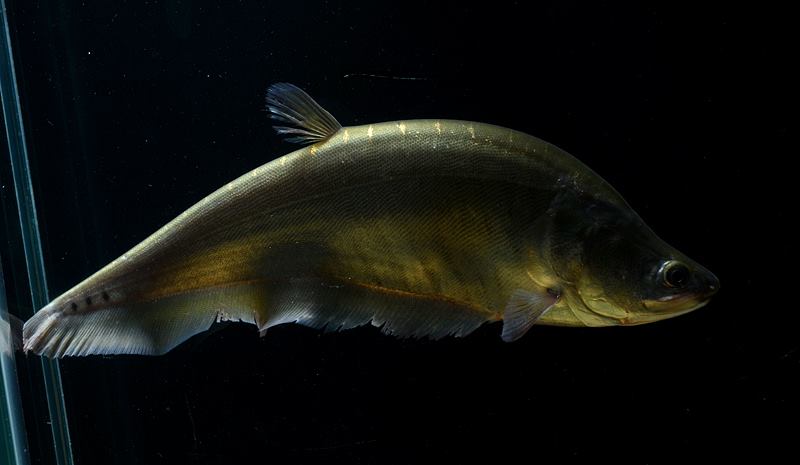
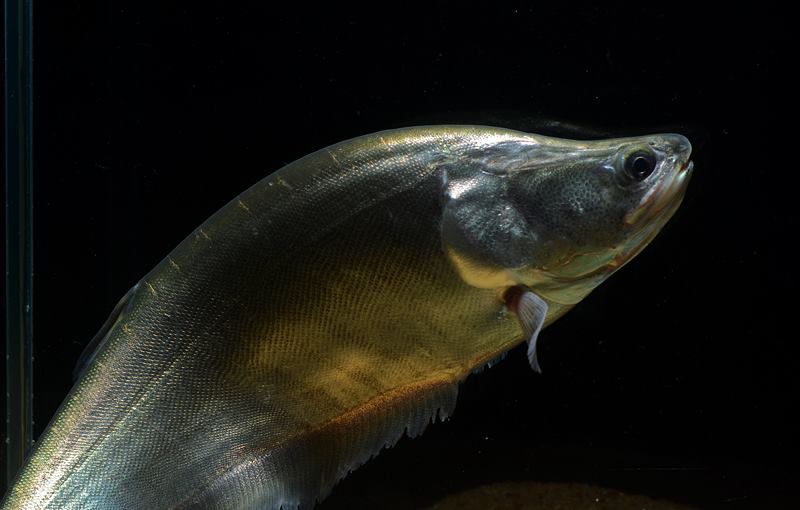
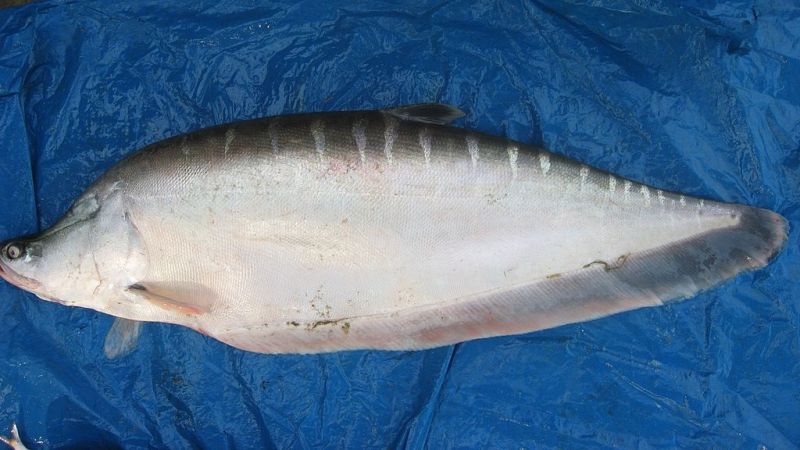
臀鳍上方的黑斑没有典型眼斑的环状轮廓,背部通常还有金色或银色横带,是与七星刀(Chitala ornata)区分的线索。不要只凭卖家使用的学名判断身份。
本种在印度也作为食用鱼捕捞和养殖;食用养殖的存在不等于家庭观赏缸适合维持成年鱼。
图片
图片来自 SeriouslyFish,版权归各摄影者所有。
English
Overview
The genuine South Asian Chitala chitala is rarely exported for ornamental use, although its name is frequently applied to other featherbacks. Its enormous adult size makes long-term care a task for public aquariums or exceptionally large specialist installations.
Distribution & habitat
The species is probably restricted to Pakistan, India, Nepal, and Bangladesh. Older reports from Myanmar and Southeast Asia include misidentifications, so a familiar scientific label in trade is not conclusive evidence of identity.
It is associated chiefly with major river channels and freshwater lakes. Records from swamps and seasonal wetlands may relate to reproduction.
Aquarium setup
Provide an exceptionally large mature system, subdued light, and substantial retreats formed by wood, rocks, or wide pipes. Filter capacity and oxygenation must match adult demands, with some water movement.
Weekly partial water changes of approximately 50–70% illustrate the scale of maintenance required. It is unsuitable as a decorative addition to an ordinary household community tank.
Diet & feeding
This predominantly nocturnal carnivore consumes small fishes, crustaceans, and other invertebrates. Most adapt to nonliving foods. Young fish can take bloodworms, small earthworms, and chopped prawn; adults accept fish strips, whole shrimp, mussel, and larger worms. Live river shrimp are also eaten.
Accepted pellets can supplement the menu but should not be the sole staple. Avoid routine beef heart, chicken, and similar terrestrial meat. Feeder fishes can introduce disease or parasites and may be nutritionally inappropriate.
Behaviour & compatibility
It is relatively peaceful with fishes too large to swallow, but may contest space with conspecifics or similarly shaped species, particularly under crowded conditions. Small fishes and shrimp remain prey. Adult mouth size must guide companion selection.
Breeding
Aquarium breeding is unreported. In nature, females deposit eggs on hard surfaces such as submerged stumps or stakes, after which males guard and tend them. The seasonal spawning period falls mainly between May and August, during the summer monsoon.
Notes
Black spots above the anal fin lack the conspicuous eye-like rings of Chitala ornata. Gold or silver bars across the back are another useful distinction. A seller's scientific label alone should not settle identification.
It is also fished and cultured for food in India. Food production does not imply that adult specimens can be maintained appropriately in ordinary ornamental aquariums.
来源
- https://www.seriouslyfish.com/species/chitala-chitala(抓取于 2026-10-10)
chitala-chitala · 文件: data/species/chitala-chitala.md · 状态: 草稿