白氏铠甲弓背鱼 · Royal Featherback
概要
| 字段 | 值 |
|---|---|
| 类别 | 鱼 |
| 学名 | Chitala blanci |
| 别名 | 虎纹弓背鱼、白氏鎧甲弓背魚、虎紋弓背魚、Notopterus blanci |
| 分类 | 骨舌鱼目 Osteoglossiformes › 弓背鱼科 Notopteridae › Chitala |
| 水体 | 淡水 |
| 原产地 | 柬埔寨、老挝、泰国、越南的湄公河流域 |
| 成体体长 | 120 cm |
| 饲养难度 | 中等 |
| 群居方式 | 群游 |
| 性情 | 温和 |
| 外部数据 | seriouslyfish chitala-blanci;fishbase 6086 |
| 食性 | 肉食 |
| 特征 | 夜行性: 是;吃小鱼: 是;吃虾: 是 |
| 繁殖方式 | 产卵 |
水质参数
| 参数 | 耐受范围 | 最适范围 | 单位 |
|---|---|---|---|
| 水温 | 20–28 | — | °C |
| pH | 6–8 | — | — |
| 总硬度 | 2–15 | — | dGH |
概述
白氏铠甲弓背鱼(Chitala blanci)成年体形巨大,通常只适合公共水族馆或极大型专门设施。它主要夜间捕食,幼鱼时漂亮的花纹不能抵消成年空间、过滤和混养方面的要求。
分布与栖息地
特有于老挝、泰国、越南和柬埔寨境内的湄公河流域,包括三角洲及洞里萨湖系统。多数记录来自主河道和部分支流下段,偏好深潭、急流等岩石较多且水流中等至较快的环境,雨季进入被淹森林繁殖。
饲养环境
普通家用鱼缸不适合长期饲养。大型系统中照明宜暗,以大型沉木、岩石或宽管提供躲藏处,留足周转空间。
需要容量很大且已成熟的过滤,保持高溶氧和适当水流,每周部分换水约 50%–70%。庞大的维护量应在养鱼前就纳入规划。
食性与喂食
属于肉食性捕食鱼,自然吃小鱼、甲壳类及其他无脊椎动物,通常在夜间活动。缸内大多可转食非活饵,不必依赖饵料鱼。
幼鱼可喂红虫、小蚯蚓及切碎虾肉;成年后可用鱼肉条、整虾、贝肉、较大蚯蚓等,活河虾也会被吃。干颗粒可以接受时也不宜成为唯一主食。牛心、鸡肉等陆生肉类不宜作为常规饵料,活饵鱼还可能带入寄生虫和疾病。
习性与混养
对大到不被视为猎物的鱼相对温和,但对同种及相似体形的鱼可能争夺地盘,空间紧张时更明显。不要把现时互不追逐当成成年后安全的保证,小鱼和虾均不适合。
繁殖
缸内尚无确认繁殖记录。自然界在雨季被淹森林中繁殖,雄鱼以树枝和叶片筑巢,并在产卵后守护卵及鱼苗。这种明确的自然护幼行为,不代表普通鱼缸能轻易提供繁殖条件。
补充说明
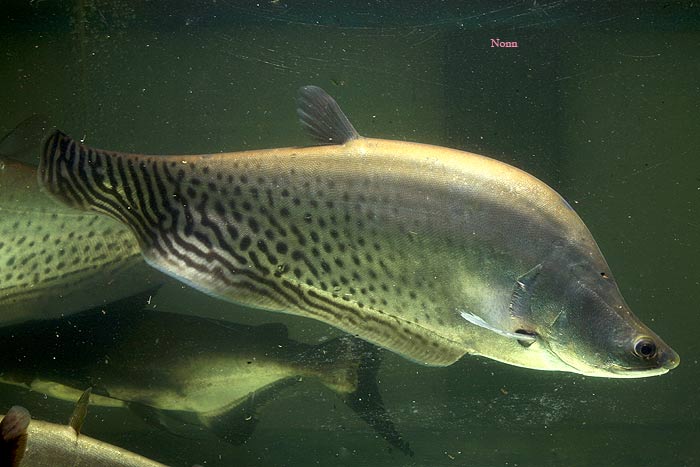
体前部密布小暗点,向后逐渐连成不规则斜纹,并延伸到臀鳍和尾鳍,是辨识线索。水坝及人为改变生境被认为可能构成压力,不能仅据此判断具体保护等级。该科有呼吸空气的能力,但清洁富氧的饲养要求仍然成立。
图片
图片来自 SeriouslyFish,版权归各摄影者所有。
English
Overview
The immense adult size of Chitala blanci generally restricts it to public aquariums or exceptionally large specialist facilities. Attractive juvenile markings should not obscure the eventual demands for space, filtration, and careful companion selection. Feeding is predominantly nocturnal.
Distribution & habitat
It is confined to the Mekong drainage in Laos, Thailand, Vietnam, and Cambodia, including the delta and Tonlé Sap system. Most records concern the main channel and lower tributaries. Rocky pools and rapids with moderate to fast current are favored, and flooded forest is used for wet-season spawning.
Aquarium setup
A conventional home aquarium is unsuitable for long-term care. In appropriately large accommodation, provide subdued light and substantial shelters made from wood, rocks, or wide pipes, with ample maneuvering room.
A very large mature filter, oxygen-rich water, and some current are essential. Weekly partial changes of approximately 50–70% represent a substantial maintenance commitment that should be planned before acquisition.
Diet & feeding
This carnivorous predator naturally eats smaller fishes, crustaceans, and other invertebrates. Most individuals adapt to nonliving foods in captivity, so feeder fish are unnecessary.
Juveniles can take bloodworms, small earthworms, and chopped prawn. Adults accept fish strips, whole shrimp, mussel, and larger worms, including live river shrimp when offered. Pellets may be accepted but should not form the sole staple. Terrestrial meats such as beef heart and chicken are unsuitable routine fare, while feeder fish risk introducing parasites and disease.
Behaviour & compatibility
It is relatively placid toward fish too large to be prey. Conspecifics and similarly shaped fishes may provoke territorial interactions, especially in restricted space. Lack of chasing at one stage does not guarantee long-term compatibility. Small fishes and shrimp are unsuitable companions.
Breeding
Aquarium reproduction is unreported. In nature, males construct nests from branches and leaves in seasonally flooded forest, then guard eggs and fry. This established natural behavior does not imply that an ordinary aquarium can provide adequate breeding conditions.
Notes
Small dark spots toward the front merge into irregular diagonal markings extending toward the rear fins. Dams and other habitat modifications have been suggested as pressures, without establishing a particular conservation classification here. The family's air-breathing ability does not remove this species' need for clean, highly oxygenated aquarium water.
来源
- https://www.seriouslyfish.com/species/chitala-blanci(抓取于 2026-10-10)
chitala-blanci · 文件: data/species/chitala-blanci.md · 状态: 草稿