黄金眼镜蛇雷龙 · Orange-spotted Snakehead
概要
| 字段 | 值 |
|---|---|
| 类别 | 鱼 |
| 学名 | Channa aurantimaculata |
| 分类 | 攀鲈目 Anabantiformes › 鳢科 Channidae › Channa |
| 水体 | 淡水 |
| 原产地 | 印度 |
| 成体体长 | 40 cm |
| 饲养难度 | 中等 |
| 最小水体 | 540 L |
| 最小缸长 | 150 cm |
| 特征 | 会跳缸: 是;翻底砂: 是;吃虾: 是 |
| 外部数据 | seriouslyfish channa-aurantimaculata;fishbase 57932 |
| 食性 | 肉食 |
| 繁殖方式 | 口孵 |
| 性情 | 攻击性 |
| 领地性 | 是 |
| 别名 | Channa aurantimaculata |
水质参数
| 参数 | 耐受范围 | 最适范围 | 单位 |
|---|---|---|---|
| 水温 | 10–28 | — | °C |
| pH | 6–8 | — | — |
| 总硬度 | 2–20 | — | dGH |
概述
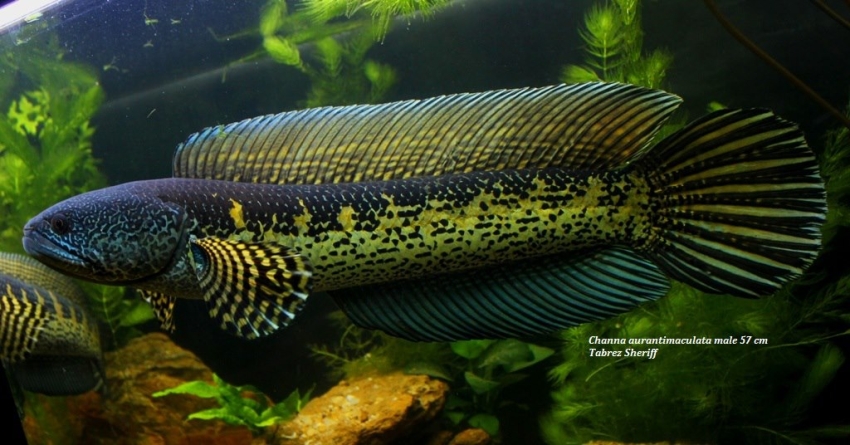
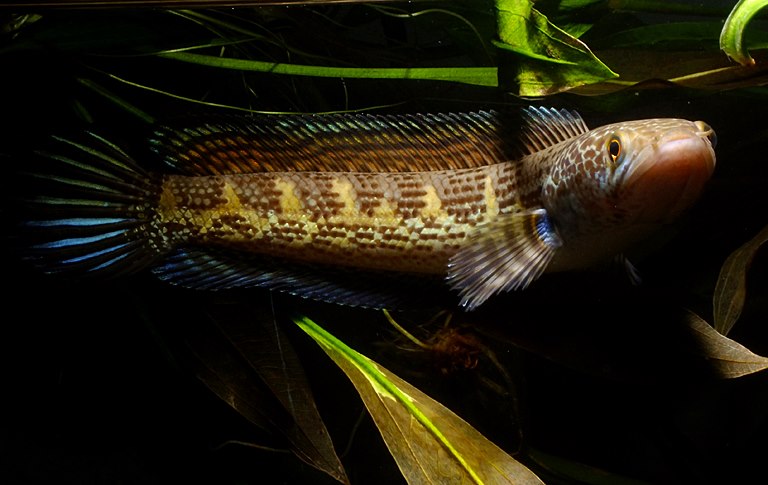
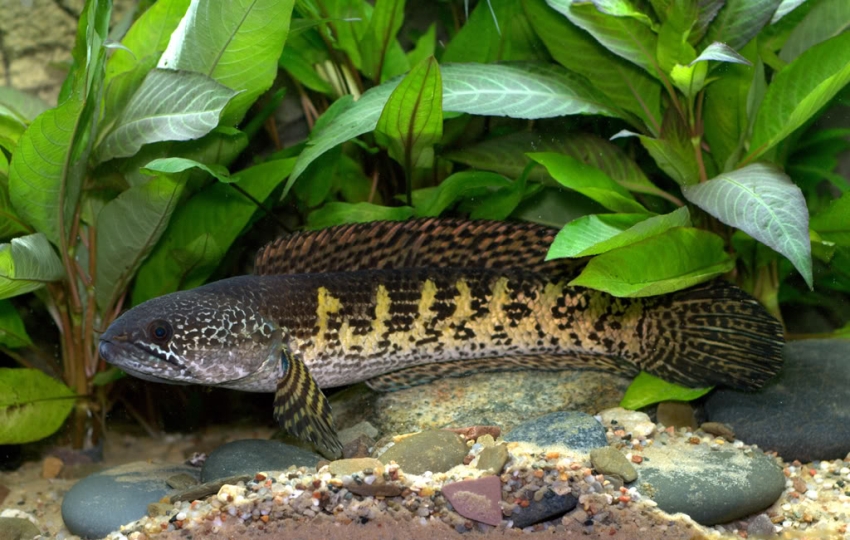
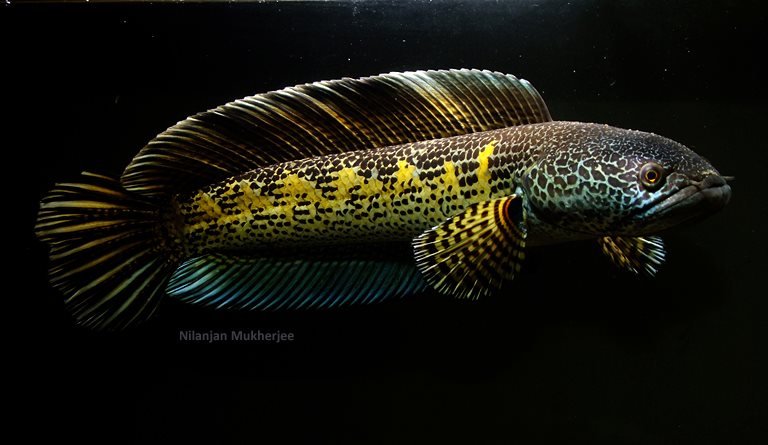
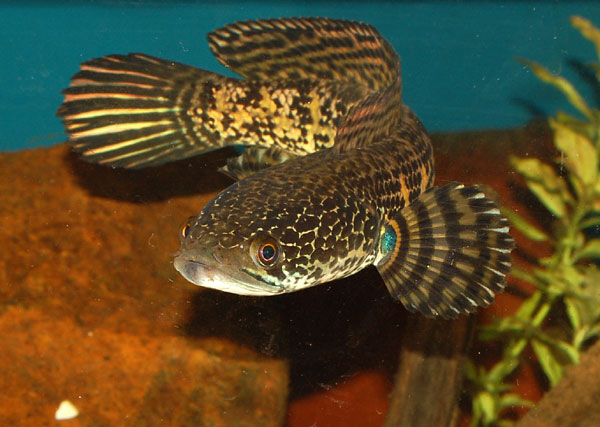
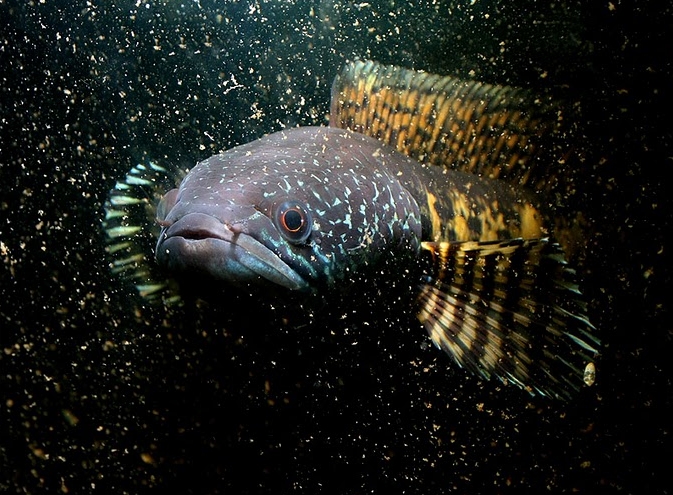
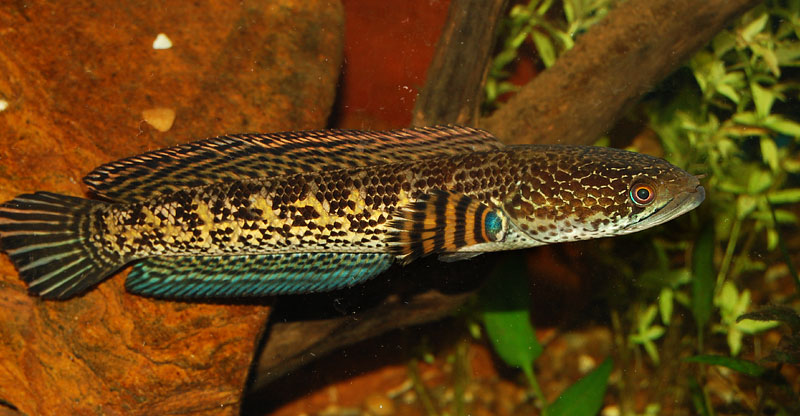
黄金眼镜蛇雷龙(Channa aurantimaculata)深色身体上有七至八块醒目的不规则橙斑,是体形较大的强领域性鳢类。同种之间即使已共同生活很久,也可能突然爆发严重冲突,配对不等于永久安全。
分布与栖息地
原生于印度东北部阿萨姆邦和阿鲁纳恰尔邦的布拉马普特拉河流域,分布边界尚不完全清楚,记录包括北阿萨姆及 Tezu 附近。
它与季风森林环境有关,可能生活在相连的溪流、沼泽和池塘中。野外有在树桩附近挖掘深洞的记录,干冷季节躲入洞中,季风淹水后出来捕猎和繁殖。这类随季节淹水的森林微环境,对其生活周期有重要作用。
饲养环境
建议底面积至少约 150 × 60 cm,水深不低于 30 cm。照明偏暗,浮水植物和水下遮蔽提供安全感。缸盖须紧密防逃,水面上方保留可供呼吸的湿润空气层。
需要明确冷暖季,不能全年恒温。冷季减少喂食,水位可自然下降而不持续补满。季节性管理是正常饲养要求,并不只是繁殖时才考虑的刺激。
食性与喂食
它是专性捕食者,野外可能吃小鱼和昆虫。多数个体能适应非活体食物,幼鱼可喂红虫、小蚯蚓及碎虾,成鱼轮换鱼肉条、整虾、贝肉、活河虾和较大蚯蚓。接受干粮的个体也不宜以干粮作主食。
不要喂牛心或鸡肉等禽畜肉,普通活饲料鱼也无必要,可能带入寄生虫和病原。能够吞食小型动物的捕食习性应纳入混养判断。
习性与混养
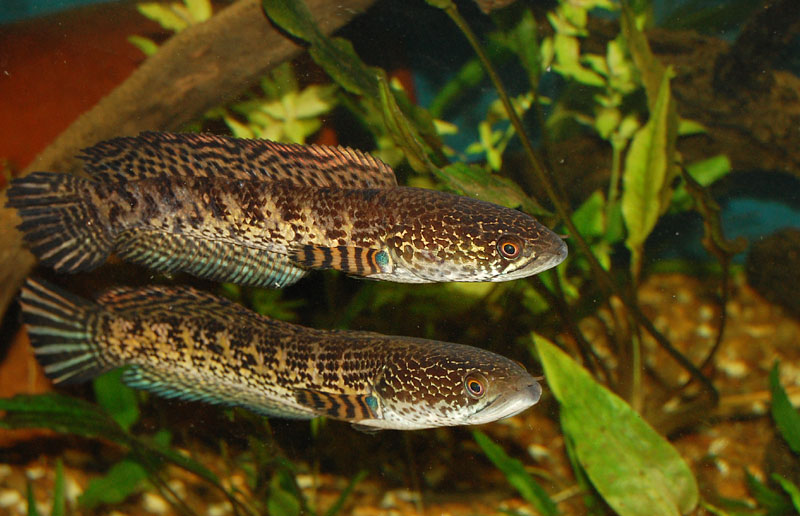
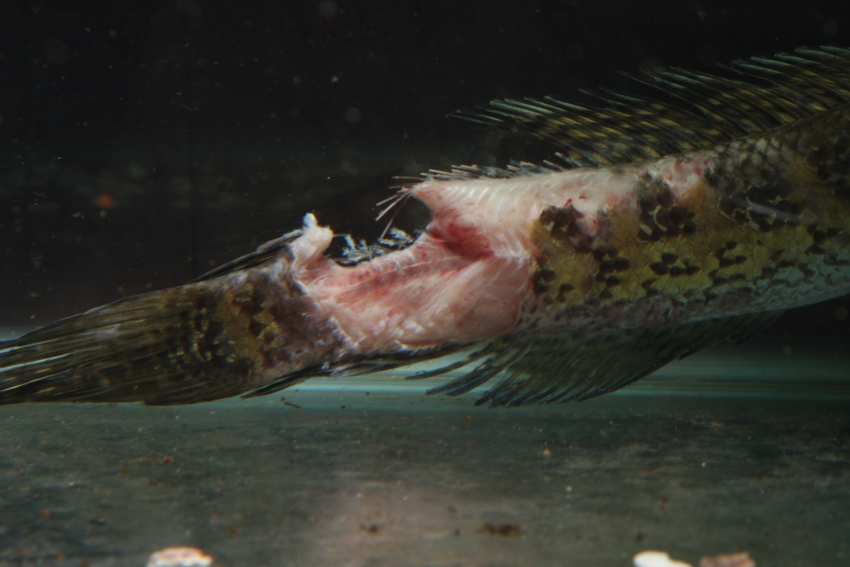
适合专养缸。同种领域冲突强烈,即使原先稳定的配对或群体,也可能突然互相攻击,不能只凭过去相处正常判断后续安全。布置和日常观察都要围绕同种冲突风险安排。
雌雄区分
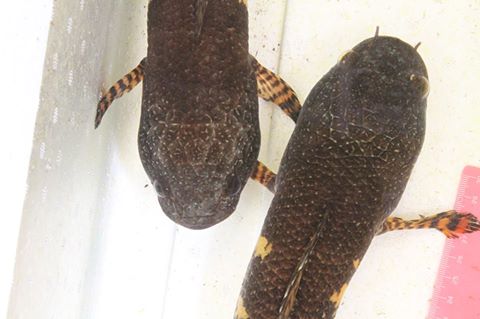
雄鱼长到约 15 cm 后,背鳍开始更延长、图案更浓。俯视成熟个体时,雌鱼头部通常更宽;应结合多个特征,不凭单一瞬间体色判断。
繁殖
雄鱼口孵,缸内已有成功记录,但并不常见。对配对关系的观察仍是重点,不能借用其他小型雷龙的成熟繁殖流程作为本种保证。
补充说明
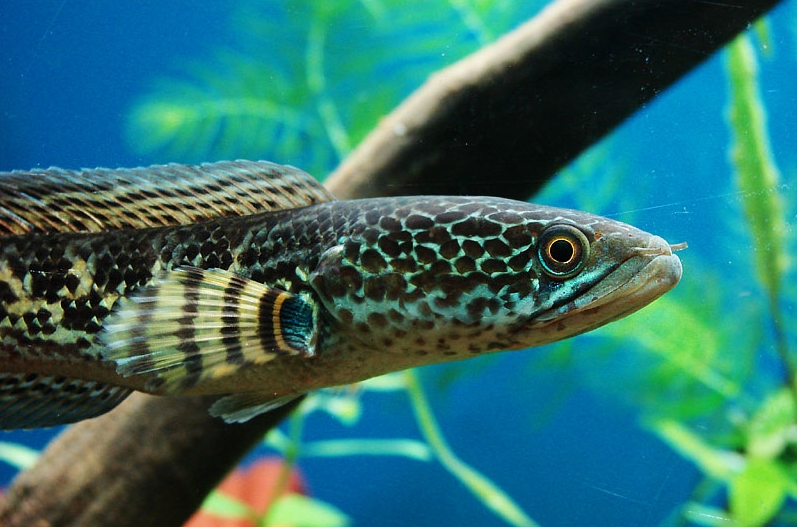
胸鳍基部有黑斑并带宽暗带,上半身深褐至黑色与大橙斑构成醒目组合。和其他鳢类一样,它用鳃上附属呼吸结构吸取空气,水面通路及湿润空气层不能被严密封盖的防逃措施阻断。
图片
图片来自 SeriouslyFish,版权归各摄影者所有。
English
Overview
Channa aurantimaculata, the golden cobra snakehead, carries seven or eight irregular orange blotches over a dark body. This large snakehead is strongly territorial toward its own kind. Serious fighting can begin suddenly even after prolonged coexistence, so an established pair is not permanently safe by definition.
Distribution & habitat
It is native to the Brahmaputra basin in Assam and Arunachal Pradesh, northeastern India. Records include northern Assam and the vicinity of Tezu, although the full range remains uncertain.
The species is associated with monsoon forest and probably uses connected streams, swamps, and ponds. Field observations describe deep burrows dug near tree stumps, occupied during the dry winter. Fish emerge to hunt and reproduce when monsoon water floods the area. This specialized seasonal forest setting is important to its life cycle.
Aquarium setup
Provide at least about 150 × 60 cm with water no shallower than 30 cm. Dim lighting, floating vegetation, and submerged cover offer security. Use a tight escape-proof lid while preserving a humid air gap above the water.
Distinct cool and warm seasons are required; do not keep the fish at one temperature throughout the year. Reduce food during the cool period and allow the level to decline instead of continually topping it up. Seasonality belongs in ordinary care, not merely in attempts to induce breeding.
Diet & feeding
An obligate predator, it probably takes smaller fish and insects in nature. Most specimens adapt to nonliving foods. Offer juveniles bloodworms, small earthworms, and chopped shrimp; adults accept fish strips, whole shrimp, mussels, live river shrimp, and larger earthworms. Dry foods should not become the staple even when accepted.
Avoid beef heart, chicken, and other mammalian or bird meat. Routine feeder fish are unnecessary and can introduce parasites or pathogens. Its predatory feeding habits must also inform compatibility decisions.
Behaviour & compatibility
A dedicated aquarium is the best option. Conspecific territorial aggression can erupt in a previously stable pair or group. Earlier coexistence therefore does not establish lasting compatibility; layout and observation should account for this risk.
Sexual dimorphism
At about 15 cm, males begin developing a longer dorsal fin with more intense patterning. Mature females usually have a broader head when viewed from above. Assess several features rather than relying on a momentary color difference.
Breeding
Males mouthbrood, with relatively infrequent captive successes. Pair behavior remains important, and established methods for smaller snakeheads should not be assumed to guarantee reproduction here.
Notes
A black pectoral-base blotch, broad dark pectoral bands, and large orange body markings form a useful recognition pattern. Like other snakeheads, it breathes air through supplementary chambers above the gills. Escape prevention must preserve access to the surface and humid air above it.
来源
- https://www.seriouslyfish.com/species/channa-aurantimaculata(抓取于 2026-10-10)
channa-aurantimaculata · 文件: data/species/channa-aurantimaculata.md · 状态: 草稿