兰副双边鱼 · Indian Glass Fish
概要
| 字段 | 值 |
|---|---|
| 类别 | 鱼 |
| 学名 | Chanda ranga |
| 别名 | 蘭副雙邊魚、Parambassis ranga |
| 分类 | 双边鱼科 Ambassidae › Chanda |
| 水体 | 淡水 |
| 原产地 | 孟加拉国、柬埔寨、印度、马来西亚、缅甸、尼泊尔、巴基斯坦、泰国 |
| 成体体长 | 8 cm |
| 饲养难度 | 入门 |
| 最小水体 | 72 L |
| 最小缸长 | 80 cm |
| 群居方式 | 群游 |
| 外部数据 | seriouslyfish chanda-ranga;fishbase 10130 |
| 性情 | 温和 |
| 繁殖方式 | 附着产卵 |
水质参数
| 参数 | 耐受范围 | 最适范围 | 单位 |
|---|---|---|---|
| 水温 | 20–30 | — | °C |
| pH | 6.5–8 | — | — |
| 总硬度 | 8–20 | — | dGH |
概述
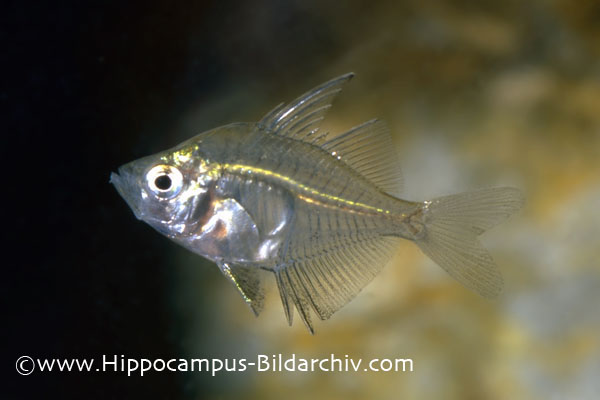
兰副双边鱼(Chanda ranga)身体半透明,骨骼和内脏清晰可见。它是害羞、温和的群居鱼,淡水条件下并不需要例行加盐。市场上曾出现注射荧光染料的“彩色玻璃鱼”,这种人工处理会损害健康,应选择自然体色个体。
分布与栖息地
原产印度、巴基斯坦、尼泊尔、孟加拉国、缅甸、泰国、马来西亚和柬埔寨,日本及中国香港的种群为引入。通常栖息于静水或缓流水域,多数自然记录在淡水中,也可见于轻微半咸水。
饲养环境
缸长至少约 80 cm。深色底床有助减轻紧张,部分区域密植水草,搭配浮水植物、石块和沉木作遮蔽。
可以在淡水或适当轻微半咸水中生活,但加盐并非必需。购买时确认此前水质,若一直在淡水中,就没有必要因为“玻璃鱼要盐”的说法而改变环境。自然栖地甚至包含较软、偏酸水域,但缸内仍应按已有参数稳定维护。
食性与喂食
多数常见活饵、冷冻饵和干粮均可接受,喂食选择较灵活。
习性与混养
避免活跃抢食、好斗或会骚扰它的同伴。按实际淡水或半咸水条件挑选相容鱼,不能把两种系统的混养名单互换。
至少养 6 条,单条或两条通常状态不好。繁殖雄鱼可能短暂占领地,但真正造成伤害较少。
雌雄区分
雄鱼背鳍和臀鳍边缘偏蓝,身体黄色更深,繁殖时更加明显。透明身体内可见的鳔,雄鱼后端较尖。
繁殖
产卵不算很难,难点是育苗。宽敞密植缸中放 6~8 条亲鱼,以多样优质食物调理;晨间自然光可能有帮助。调理可在约 21~24 °C、接近中性的水中进行。
雄鱼增色、雌鱼腹圆后,可在晚间通过换入较温暖的水逐步调整至约 26.5~29 °C,次晨可能产卵。每对可产约 200 粒,卵黏附在水草叶片和茎上,产后可移走亲鱼。
卵容易霉变,应保持孵化环境洁净并观察。约 24 小时孵化,幼鱼先悬挂在植物上,再过约 3~4 天自由游动。它们不积极追食,而是等待食物漂近,可用丰年虾无节幼体配合柔和水流增加相遇机会;较高投喂量同时要求频繁少量换水,防止污染积累。
补充说明
人工染色鱼需反复注射,许多处理后的个体存活不了数月;染色造成的易病不能归咎于淡水饲养。
近似种常被误售为本种。暹罗副双边鱼(Chanda siamensis)眼后无斑纹且身体更修长,本种眼后有深色区域;Parambassis lala 眼后有三条竖纹。购买时应结合外形鉴别,不只依商品名。
图片
图片来自 SeriouslyFish,版权归各摄影者所有。
English
Overview
The translucent body of Chanda ranga exposes bones and internal organs. This shy, peaceful shoaling fish does not require routine salt addition in freshwater. Artificially dye-injected glassfish have appeared in trade, but that treatment compromises health; choose naturally colored stock.
Distribution & habitat
Its native range includes India, Pakistan, Nepal, Bangladesh, Myanmar, Thailand, Malaysia, and Cambodia. Japan and Hong Kong have introduced populations. Still or slow waters are typical, mostly freshwater with some mildly brackish occurrences.
Aquarium setup
Provide at least about 80 cm of tank length. Dark substrate helps reduce nervousness. Dense planted sections, floating cover, rocks, and wood offer shelter.
Suitable freshwater or mildly brackish systems are possible, but salt is not obligatory. Establish the supplier's conditions before purchase. Fish maintained in freshwater do not need salt added simply because of a common glassfish myth. Some natural sites are soft and acidic, although aquarium conditions should remain stable within the established range.
Diet & feeding
Most live, frozen, and prepared aquarium foods are accepted, making feeding relatively flexible.
Behaviour & compatibility
Avoid aggressive or excessively vigorous companions. Match every occupant to the actual freshwater or brackish system rather than treating stocking options as interchangeable.
Maintain at least six. Single fish or pairs tend to fare poorly. Males may defend small spawning areas, but physical injury is uncommon.
Sexual dimorphism
Males have blue dorsal- and anal-fin edges and a deeper yellow body, especially during breeding. The visible swim bladder ends more sharply toward the rear in males.
Breeding
Spawning is easier than raising the young. Condition six to eight adults in a spacious, well-planted tank on a varied quality diet. Morning natural light may help. About 21–24 °C and near-neutral water suit conditioning.
Once males intensify in color and females become rounded, an evening change with warmer water can gradually bring conditions toward 26.5–29 °C. Spawning may follow next morning. A pair can produce about 200 eggs attached to leaves and stems; remove adults afterward.
Eggs are vulnerable to fungus, so maintain clean incubation conditions and observe them. Hatching occurs after about 24 hours. Larvae hang from plants before swimming freely three or four days later. They wait for drifting food rather than actively hunting it. Artemia nauplii and gentle circulation improve food encounters, while frequent small water changes manage the waste from generous feeding.
Notes
Repeated dye injections can leave treated fish with survival measured in months. Illness associated with that practice should not be attributed to freshwater itself.
Similar species are sometimes mislabeled. Chanda siamensis has a more elongated body and no mark behind the eye; this species has a dark area there, while Parambassis lala shows three vertical bars. Examine the fish rather than relying entirely on trade labels.
来源
- https://www.seriouslyfish.com/species/chanda-ranga(抓取于 2026-10-10)
chanda-ranga · 文件: data/species/chanda-ranga.md · 状态: 草稿