Champsochromis spilorhynchus
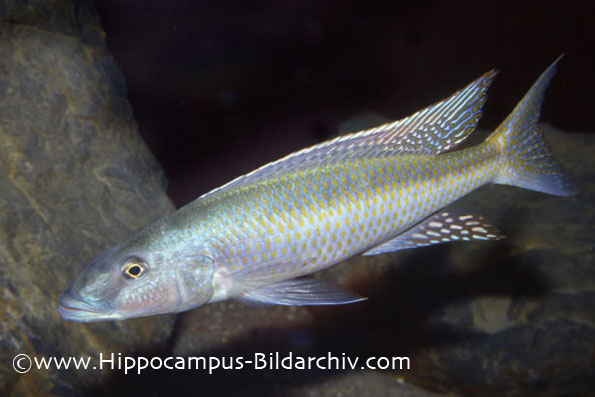
概要
| 字段 | 值 |
|---|---|
| 类别 | 鱼 |
| 学名 | Champsochromis spilorhynchus |
| 分类 | 慈鲷目 Cichliformes › 慈鲷科 Cichlidae › Champsochromis |
| 水体 | 淡水 |
| 原产地 | 马拉维 |
| 成体体长 | 35 cm |
| 饲养难度 | 中等 |
| 最小水体 | 648 L |
| 最小缸长 | 180 cm |
| 外部数据 | seriouslyfish champsochromis-spilorhynchus;fishbase 2250 |
| 食性 | 肉食 |
| 特征 | 吃小鱼: 是 |
| 领地性 | 是 |
| 繁殖方式 | 口孵 |
水质参数
| 参数 | 耐受范围 | 最适范围 | 单位 |
|---|---|---|---|
| 水温 | 24–27 | — | °C |
| pH | 7.5–8.5 | — | — |
| 总硬度 | 5–30 | — | dGH |
概述
Champsochromis spilorhynchus 是大型追逐型捕食慈鲷,体形较高,吻部有醒目的黑色标记。它活动量大、口裂宽,需要大型设施,混养首先要排除能够被吞食的伙伴。
分布与栖息地
见于马拉维湖、马隆贝湖和连接马拉维湖的夏尔河上游。多在岸边观察到,也会在完全开阔的水域捕猎。
饲养环境
至少 180 × 60 × 60 cm,更大更好。尽量保留连续、开阔的泳道,使用砂底即可,布景不应挤占大部分活动空间。若安排繁殖群,需为雌鱼留下可退避的位置。
食性与喂食
天然会追逐较小的鱼,包括其他慈鲷的幼鱼。人工饲养无需活鱼,虾肉、贝肉及适口鱼肉可组成轮换菜单。干粮只作补充,避免长期过量喂食造成体态臃肿。
习性与混养
对大到无法吞下的鱼通常不特别凶猛,仍须选择健壮、适应相同水质的伙伴。大型底部活动鱼更值得考虑,岩栖啃藻慈鲷并不理想。
一雄可配数雌,同性雄鱼之间领地冲突明显,多雄需要极宽裕空间。
雌雄区分
雄鱼更大、更鲜艳,成熟时有些个体的背鳍、臀鳍和尾鳍会延长,雌鱼没有同样明显表现。
繁殖
人工繁殖已有成功记录,雌鱼口孵。可在单种环境中安排一雄至少三雌,调养后维持 25–26.5 °C、pH 8.2–8.5,并提供躲藏空间。
似乎不会专门筑巢。雄鱼直接向雌鱼展示并追求,雌鱼在底床产卵后收入口中,再被臀鳍卵斑吸引靠近雄鱼,卵在口中受精。
含卵约 3–4 周,雌鱼期间不进食。惊扰可能导致提前吐卵或吞卵,隔离及回群均需考虑压力和原有等级。释放后的鱼苗已能吃丰年虾无节幼体。
补充说明
较高的体形及吻部黑色斑纹有助于区别近似同属鱼。它自然生活常较独立,不能因市场偶见集中饲养,就忽略成年后的空间和同性冲突问题。
图片
图片来自 SeriouslyFish,版权归各摄影者所有。
English
Overview
A large pursuit-hunting cichlid, Champsochromis spilorhynchus has a relatively deep body and conspicuous black snout markings. Its activity and capacious mouth demand very large housing and companions chosen first for their ability to avoid being swallowed.
Distribution & habitat
Known waters include Lake Malawi, Lake Malombe, and the upper Shire River flowing from Lake Malawi. Fish are most often seen near shores but also hunt in fully open water.
Aquarium setup
Provide at least 180 by 60 by 60 cm, preferably more. Preserve extensive open swimming lanes over sand rather than filling the aquarium with decoration. Females in a breeding group still require places to evade persistent attention.
Diet & feeding
Natural prey consists of smaller fishes, including juvenile cichlids. Live feeders are unnecessary. Vary appropriate fish pieces, shrimp flesh, and shellfish, with dry foods as a supplement. Avoid chronic overfeeding and loss of the streamlined profile.
Behaviour & compatibility
Fish too large to swallow are not usually subjected to exceptional aggression, but must remain robust and suited to the same water. Large bottom-associated companions are better prospects than mbuna.
Several females can accompany one male. Males defend space against one another, making multiple-male housing an option only with exceptionally extensive accommodation.
Sexual dimorphism
Males are larger and brighter. Some mature males develop elongated dorsal, anal, and caudal fins not seen in females.
Breeding
Successful captive spawning has been recorded, with maternal mouthbrooding. A dedicated arrangement of one male and at least three females, refuges, good conditioning, 25–26.5 °C, and pH 8.2–8.5 is suggested.
A special nest apparently is not constructed. The male courts directly; females lay on the substrate and collect the eggs before approaching his anal-fin egg spots, allowing fertilization in the mouth.
Broods are carried for about three to four weeks without feeding. Stress can cause premature release or loss. Both removal and later return should account for disturbance and social rank. Released young accept brine-shrimp nauplii.
Notes
Body depth and the dark snout pattern help distinguish similar congeners. Its relatively solitary natural habits and male rivalry remain relevant despite temporary crowding sometimes seen in trade.
来源
ID:champsochromis-spilorhynchus · 文件: data/species/champsochromis-spilorhynchus.md · 状态: 草稿