Champsochromis caeruleus · Malawi Trout
概要
| 字段 | 值 |
|---|---|
| 类别 | 鱼 |
| 学名 | Champsochromis caeruleus |
| 分类 | 慈鲷目 Cichliformes › 慈鲷科 Cichlidae › Champsochromis |
| 水体 | 淡水 |
| 原产地 | 马拉维、莫桑比克、坦桑尼亚 |
| 成体体长 | 32.5 cm |
| 饲养难度 | 中等 |
| 最小水体 | 648 L |
| 最小缸长 | 180 cm |
| 外部数据 | seriouslyfish champsochromis-caeruleus;fishbase 2249 |
| 食性 | 肉食 |
| 特征 | 吃小鱼: 是 |
| 领地性 | 是 |
| 繁殖方式 | 口孵 |
水质参数
| 参数 | 耐受范围 | 最适范围 | 单位 |
|---|---|---|---|
| 水温 | 24–27 | — | °C |
| pH | 7.5–8.5 | — | — |
| 总硬度 | 10–30 | — | dGH |
概述
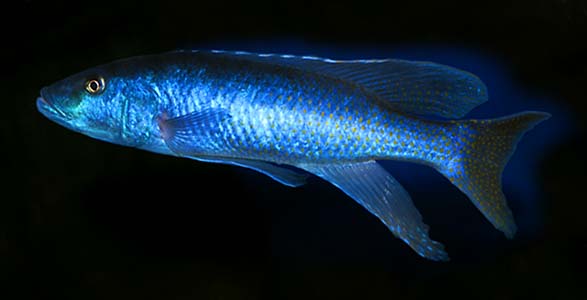
Champsochromis caeruleus 是马拉维湖大型追逐型捕食慈鲷,体形修长,游动活跃。它需要非常宽敞的活动空间,不能因为对大型伙伴不特别凶猛,就忽视其吞食小鱼的能力。
分布与栖息地
特有于马拉维湖,从岩岸附近到完全开阔水域都有记录,会在湖中较大范围巡游。
饲养环境
180 × 60 × 60 cm 只是最低规格,更大的设施更合适。布景形式不是关键,应优先保留尽可能多的游泳空间,底部以砂为宜。繁殖群需要躲藏处,让暂不愿产卵的雌鱼避开雄鱼。
食性与喂食
野外主要追捕湖内小型鱼类。缸中无需投喂活鱼,可轮换提供虾肉、贻贝、其他贝肉和适口鱼肉等。干粮可作为补充,不应占主导。避免过量喂食,以免身体失去修长轮廓。
习性与混养
伙伴必须大到不会被吞食,并适应相同环境;较合适的通常是大型底层活动鱼,岩栖啃藻慈鲷并非理想选择。
可一雄搭配数雌,雄鱼之间有明显领地冲突,多雄共存需要极大的空间。
雌雄区分
雄鱼更大、颜色更鲜明,成熟后背鳍、臀鳍和尾鳍延长,雌鱼没有同样特征。
繁殖
已有人在人工环境中繁殖成功,为雌性口孵。建议单种、一雄至少三雌,调养充分,繁殖温度 25–26.5 °C,pH 8.2–8.5。可提供平石和开阔底床作为产卵点,并保留雌鱼退避处。
雄鱼清理场地后展示体色,追逐可能较强。雌鱼产卵后把卵收入口中,雄鱼臀鳍卵斑吸引其靠近,从而完成口中受精过程。
雌鱼含卵约 3–4 周,期间不进食。搬动或惊扰可能导致提前吐卵或失卵,离群过久还可能影响重新入群后的地位。自然释放的鱼苗能够吃丰年虾无节幼体。
补充说明
与外观相似的同属鱼相比,本种体形更修长。野外常较独立活动,不能把商品群暂时聚在一起的情况当作长期高密度饲养依据。
图片
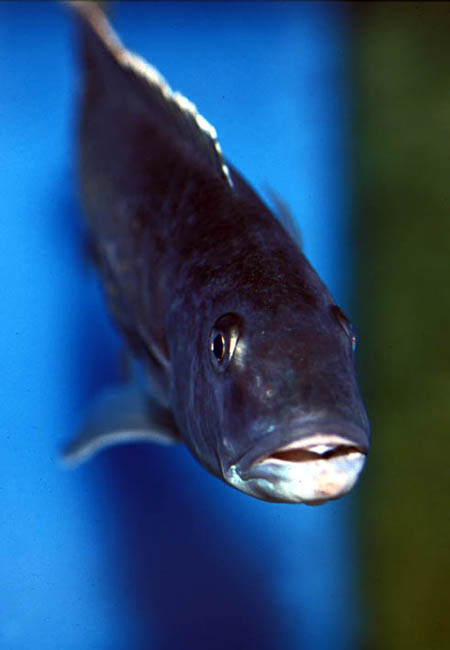
图片来自 SeriouslyFish,版权归各摄影者所有。
English
Overview
An elongated pursuit predator from Lake Malawi, Champsochromis caeruleus needs exceptional swimming room. Limited aggression toward large companions does not make small fishes safe: predation is a separate concern from territorial behavior.
Distribution & habitat
Endemic to Lake Malawi, it ranges from rocky shorelines into open water and has been recorded in several habitat types.
Aquarium setup
A 180 by 60 by 60 cm aquarium is only a minimum; larger accommodation is preferable. Maximize uninterrupted swimming space rather than elaborate decoration, with sand as a suitable bottom. Breeding arrangements also need places where unreceptive females can escape a male.
Diet & feeding
Small lake fishes form the principal wild prey. Live feeder fish are unnecessary in captivity. Rotate suitable shrimp flesh, mussels, other shellfish, and fish pieces. Dry foods can supplement this menu but should not dominate it. Excess feeding spoils the characteristic streamlined condition.
Behaviour & compatibility
Companions must be too large to swallow and share its environmental needs. Large bottom-associated fishes are generally more suitable than rock-grazing mbuna.
One male may live with several females, while additional males require an enormous area because of territorial disputes.
Sexual dimorphism
Males become larger and much more colorful. Mature males develop extended dorsal, anal, and caudal fins that females lack.
Breeding
Aquarium reproduction has succeeded. Females mouthbrood, with a dedicated group of one male and at least three females preferred. Condition adults well; 25–26.5 °C and pH 8.2–8.5 are suggested breeding conditions. Flat stones and open substrate provide sites while refuges reduce pressure on females.
The male cleans a site and displays intensely. Females collect laid eggs, then approach the anal-fin egg markings as sperm is released and fertilization occurs in the mouth.
Incubation lasts around three to four weeks without maternal feeding. Disturbance or transfer can cause brood loss, while a long absence may affect a female's position when returned. Released fry can immediately take brine-shrimp nauplii.
Notes
Its relatively elongated shape distinguishes it from similar members of the genus. A largely solitary wild lifestyle should temper assumptions based on temporary groups seen in sales tanks.
来源
- https://www.seriouslyfish.com/species/champsochromis-caeruleus(抓取于 2026-10-10)
champsochromis-caeruleus · 文件: data/species/champsochromis-caeruleus.md · 状态: 草稿