Chalinochromis sp. 'ndobhoi'
概要
| 字段 | 值 |
|---|---|
| 类别 | 鱼 |
| 学名 | Chalinochromis sp. 'ndobhoi' |
| 分类 | 慈鲷目 Cichliformes › 慈鲷科 Cichlidae › Chalinochromis |
| 水体 | 淡水 |
| 原产地 | 坦桑尼亚 |
| 成体体长 | 12 cm |
| 饲养难度 | 中等 |
| 最小水体 | 243 L |
| 最小缸长 | 120 cm |
| 群居方式 | 成对 |
| 领地性 | 是 |
| 外部数据 | seriouslyfish chalinochromis-sp-ndobhoi |
| 食性 | 肉食 |
| 特征 | 翻底砂: 是 |
| 繁殖方式 | 附着产卵 |
水质参数
| 参数 | 耐受范围 | 最适范围 | 单位 |
|---|---|---|---|
| 水温 | 24–28 | — | °C |
| pH | 8–9 | — | — |
| 总硬度 | 7–25 | — | dGH |
概述
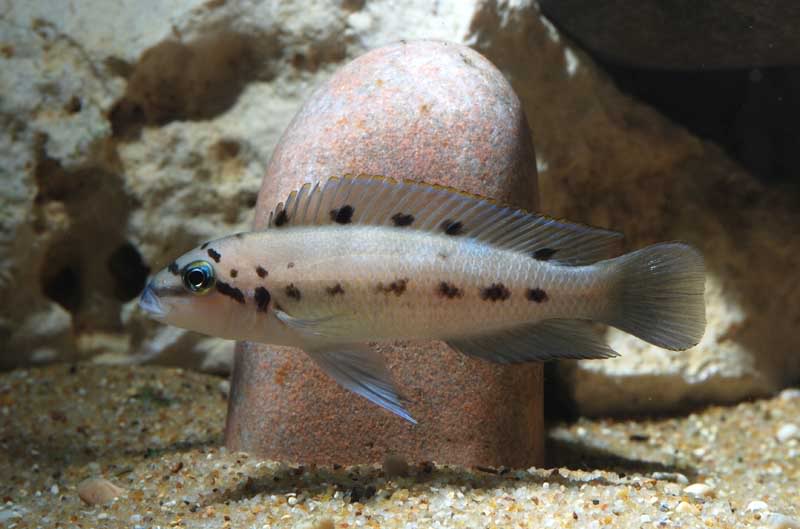
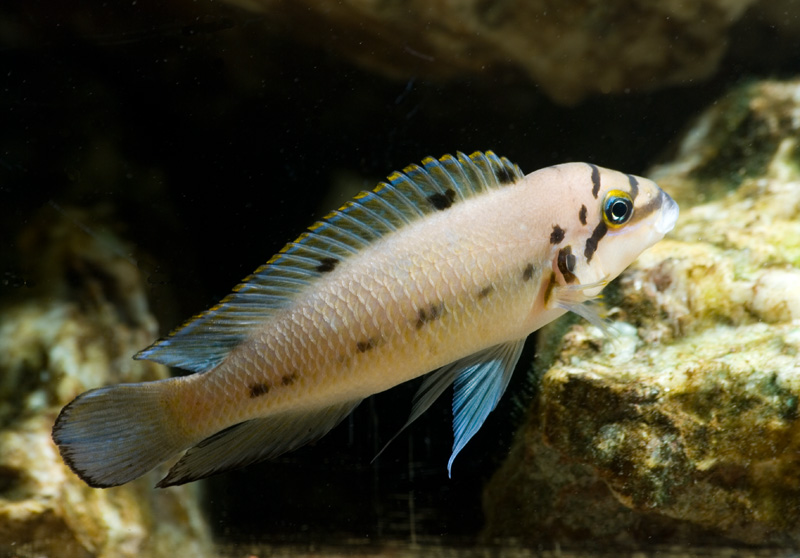
Chalinochromis sp. 'ndobhoi' 是坦干伊喀湖东岸的未正式描述慈鲷,体侧两三列不规则深色斑块是识别线索。成熟雄鱼领地意识强,成对后往往不能继续容忍其他同种鱼进入领地。
分布与栖息地
已知分布限于坦桑尼亚一段湖岸,包括布卢角至卡索杰之间及近岸卡里拉尼岛周围。同属鱼通常利用岸边岩石下方及缝隙生活,很少长时间进入开阔水域。
饲养环境
即使只有一对,也建议至少 120 × 45 cm 的缸底空间。非繁殖期雌雄可能分占领地,小缸容易产生冲突。
底部铺砂,设置复杂且稳固的石堆,先让石块直接落在缸底,再填砂,防止挖掘后倒塌。不同石堆之间留一段开阔底床,帮助划分领地。维持优良水质,每周换水可达 50%。
食性与喂食
厚而肉质的嘴唇适合从岩间获取无脊椎动物,尤其偏爱淡水海绵。可接受含植物成分的优质干粮,也应搭配红虫、蚊幼虫、水蚤、丰年虾、糠虾等活饵或冷冻饵。
习性与混养
伙伴必须谨慎选择,成熟雄鱼会积极保卫领地。除非缸很大,不宜再加类似生态位的岩栖鱼。不要与其他同属鱼混养繁殖,以免杂交。
群体会形成等级,最初偶发争执并不代表能够一直共处;一旦配对,其他鱼常会被驱出配对鱼的活动范围。
雌雄区分
外观性差不显著。成熟雄鱼可见突出的生殖乳突,雌鱼没有同样明显的小突起。
繁殖
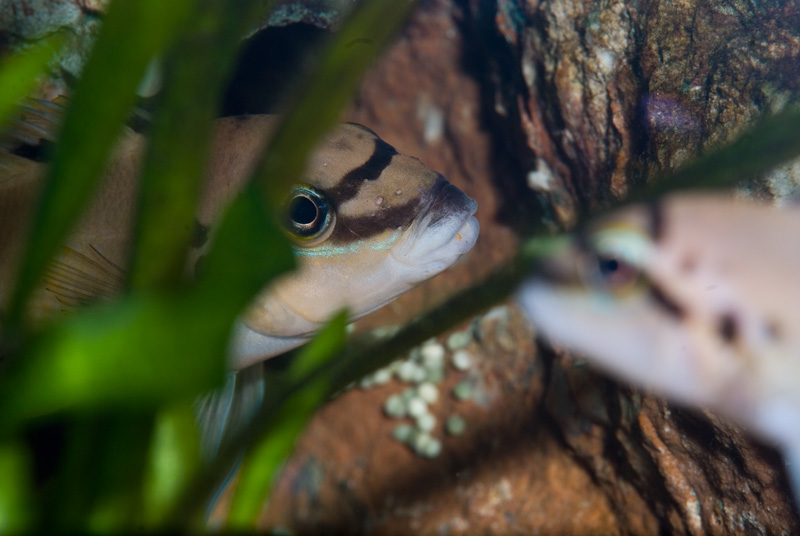
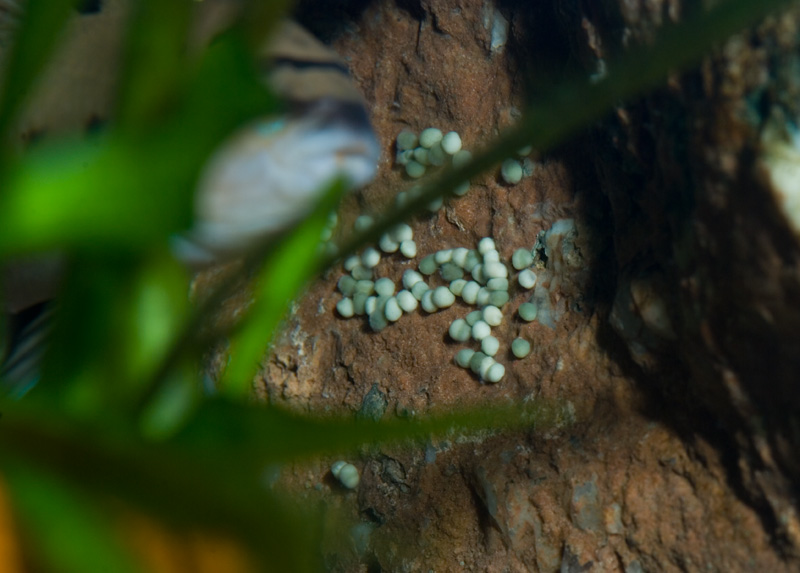
双亲共同护幼,在洞穴或其他遮蔽处的坚硬表面产卵。只有一个伙伴时可维持配对,但有其他选择时,据观察可能在不同繁殖轮次更换配偶。
雌鱼直接照顾卵和幼鱼,雄鱼守卫周围小片领地。孵化后的鱼苗先留在附着处消耗卵黄,起游后亲鱼照护可持续 6–8 周。
停止照顾上一窝后,亲鱼可能很快再产卵,旧鱼苗暂时不能进入新巢区,直到新一窝起游。空间充足时可容纳几代后代。幼鱼啄成年鱼体表的行为可能是在取食黏液或小寄生物,具体目的尚不确定。
补充说明
贸易中还可见略有不同的拼写,未描述状态及原学名代号应保留。识别应结合体侧斑块形态,不能把所有同属条纹鱼当成相同种。
图片
图片来自 SeriouslyFish,版权归各摄影者所有。
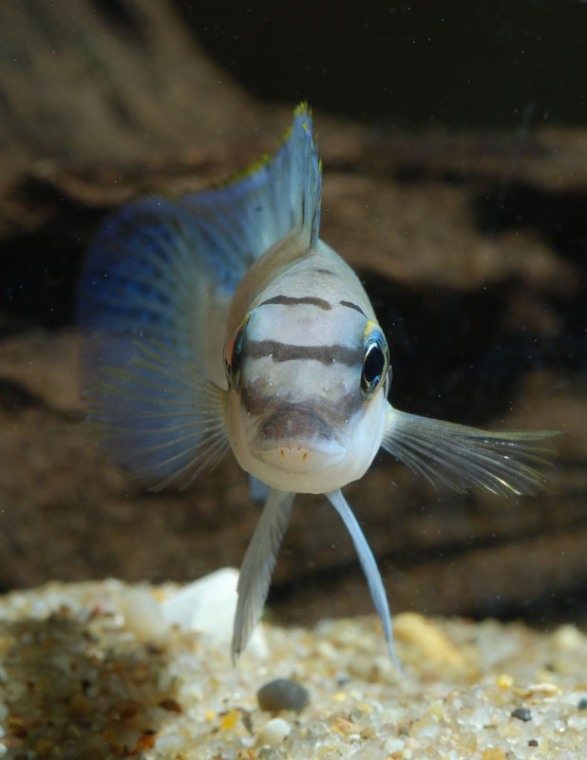
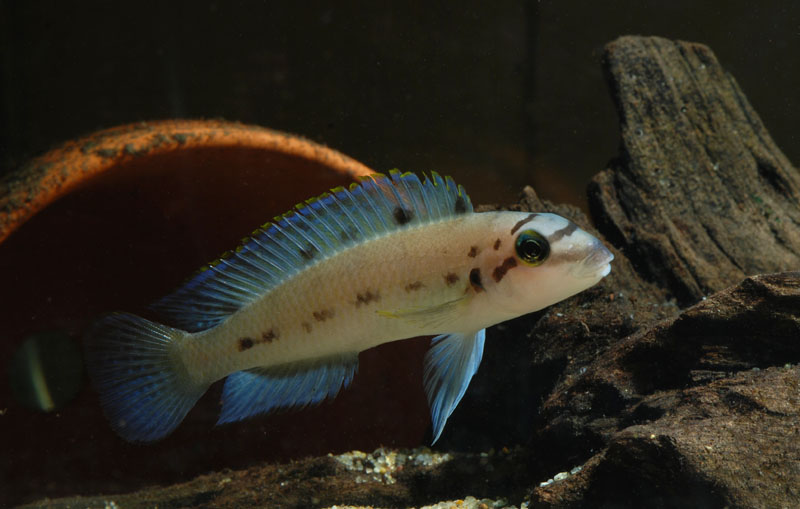
English
Overview
Chalinochromis sp. 'ndobhoi' is an undescribed Tanganyikan cichlid with two or three irregular rows of dark flank patches. Mature males become strongly territorial, and an established pair may exclude other conspecifics from its area.
Distribution & habitat
Known sites occupy a limited stretch of Tanzania's eastern lakeshore between Bulu Point and Kasoje, including nearby Karilani Island. Members of the genus typically use crevices and spaces beneath shoreline rocks rather than spending much time in open water.
Aquarium setup
Even one pair should have at least a 120 by 45 cm footprint. Outside spawning periods, the sexes may hold separate areas, making restricted housing problematic.
Use sand around complex, stable rock structures. Set rocks on the aquarium base before adding sand so excavation cannot undermine them. Separate piles with short open gaps to create distinct areas. Maintain excellent water quality, with weekly changes reaching up to 50%.
Diet & feeding
Fleshy lips allow it to extract invertebrates from its habitat, with freshwater sponges particularly favored. Vegetable-containing dry foods are usually accepted but should be supplemented with live or frozen bloodworms, mosquito larvae, water fleas, brine shrimp, and mysids.
Behaviour & compatibility
Select companions cautiously because mature males defend space vigorously. Similar rock-dwelling fishes are best avoided except in very large displays. Do not combine it with other members of its genus for breeding, as hybridization occurs readily.
A group establishes rank relationships, but tolerable early skirmishes do not guarantee lasting coexistence. Pair formation often results in the remaining fish being excluded from the pair's territory.
Sexual dimorphism
External differences are subtle. Mature males show a small projecting genital papilla not similarly apparent in females.
Breeding
Both parents care for broods deposited on solid surfaces in caves or other sheltered places. A single available partner can produce a lasting pair, while alternative partners may lead to changes between breeding episodes.
The female tends eggs and young directly as the male guards nearby space. Newly hatched fry remain attached while using their yolk. Care may continue for six to eight weeks after free swimming begins.
Adults can spawn again soon after ending care of an older brood. Older juveniles are excluded until the new fry become free-swimming, allowing several generations to coexist where space permits. Picking at adult bodies may involve mucus or small parasites, but the function remains uncertain.
Notes
Alternative trade spellings do not resolve the fish's undescribed status. Flank patch arrangement is more useful than assuming all similarly striped congeners represent the same species.
来源
- https://www.seriouslyfish.com/species/chalinochromis-sp-ndobhoi(抓取于 2026-10-10)
chalinochromis-sp-ndobhoi · 文件: data/species/chalinochromis-sp-ndobhoi.md · 状态: 草稿