连尾鮡 · Frogmouth Catfish
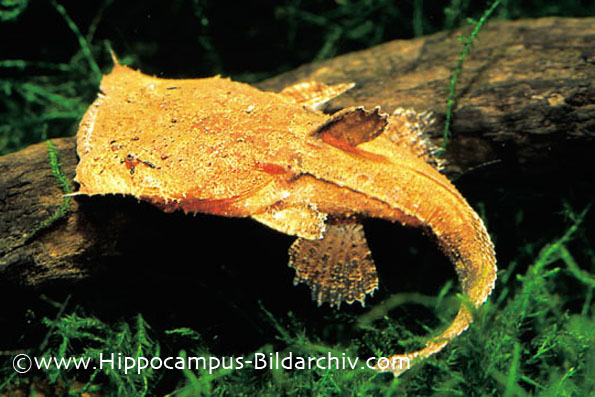
概要
| 字段 | 值 |
|---|---|
| 类别 | 鱼 |
| 学名 | Chaca chaca |
| 别名 | 毛鲶、連尾鮡、毛鯰 |
| 分类 | 鲶形目 Siluriformes › 方头鲶科 Chacidae › Chaca |
| 水体 | 淡水 |
| 原产地 | 孟加拉国、印度、尼泊尔、印度尼西亚 |
| 成体体长 | 20 cm |
| 饲养难度 | 中等 |
| 特征 | 吃小鱼: 是;翻底砂: 是 |
| 外部数据 | seriouslyfish chaca-chaca;fishbase 10258 |
| 食性 | 肉食 |
| 繁殖方式 | 附着产卵 |
水质参数
| 参数 | 耐受范围 | 最适范围 | 单位 |
|---|---|---|---|
| 水温 | 22–25 | — | °C |
| pH | 6–8 | — | — |
| 总硬度 | 4–25 | — | dGH |
概述
连尾鮡(Chaca chaca)是一种伏击型捕食鲶,利用落叶般的伪装和会蠕动的须吸引猎物。它能吞下接近自身体型的鱼,不能因长时间趴着不动就按温和底栖清洁鱼安排混养。
分布与栖息地
记录来自印度、尼泊尔、孟加拉国和印度尼西亚。生活在大小不同的静水或缓流水体,藏于落叶和底部腐殖碎屑之间。
饲养环境
单尾空间可参考 90 × 30 × 30 厘米,使用柔软细砂让它埋身,配柔和照明、枝条和干燥橡叶或山毛榉叶。附生蕨类与莫丝较适合这种偏暗布置,不要为种满植物取消底部遮蔽。
连尾鮡属在狭小环境似乎会使水的 pH 降低,但机制尚不确定。水量越小越要留意变化并严格维护,既不能忽视酸度变化,也不能自行认定是某种已证实分泌物造成。
食性与喂食
有些幼鱼能接受干饲料或肉质冷冻饵,许多个体却一直只肯吃活饵。小鱼、河虾和蚯蚓都可用,转食能否成功需看个体,不能把购买后的停食简单当成它本来就少动。
习性与混养
适合单种饲养,同种相处通常没有问题。对其他鱼则高度捕食,任何游近嘴边的个体都可能被吞;快速上层鱼即使在大而深的缸里也不是没有风险。
雌雄区分
雄鱼身体比雌鱼更长、更瘦。
繁殖
已有一次人工繁殖记录:四尾同养,在直径约 7.6 厘米的管道内产卵,雄鱼守护约三天的孵化期,之后未见继续照顾,鱼苗约七天后能自由游动。小型活饵被推测可用于育苗,但并非该记录中已确认的喂法。
补充说明
通常比班甘连尾鮡(Chaca bankanensis)颜色浅,下唇与身体有小钩状突起。白天很少活动,偶尔在黑暗中离开伏击点觅食,红光可能有助观察。受网捕时不挣扎也不代表没有受到干扰。
图片
图片来自 SeriouslyFish,版权归各摄影者所有。
English
Overview
An ambush predator, Chaca chaca combines leaf-like camouflage with wormlike barbel movements to attract prey. Fish nearly its own size may be swallowed. Long periods of stillness do not make it a peaceful community scavenger.
Distribution & habitat
Records list India, Nepal, Bangladesh, and Indonesia. It inhabits still or slow waters of varying size, lying concealed among leaf litter and organic debris.
Aquarium setup
For one fish, 90 by 30 by 30 cm is suggested. Provide soft sand for burial, subdued lighting, branches, and dried oak or beech leaves. Tolerant attached ferns and mosses suit the dim setting.
The genus appears to lower pH under confined conditions, but the mechanism is unresolved. Monitor chemistry and maintain water quality carefully, especially in small volumes; avoid treating a proposed secretion mechanism as established fact.
Diet & feeding
Some young fish accept dry or frozen animal foods after weaning, but many require live offerings. Small fish, river shrimp, and earthworms are suitable options. Individual feeding response matters; normal inactivity should not conceal a failure to eat.
Behaviour & compatibility
Keep it apart from other species; conspecifics are generally tolerated. Any fish entering reach of the mouth may be eaten. Fast upper-water fish remain at risk even in large, deep aquaria.
Sexual dimorphism
Males have a longer, slimmer build than females.
Breeding
One captive account involved four fish spawning inside a tube about 7.6 cm across. The male guarded eggs during roughly three days of incubation, with no further care observed afterward. Fry became free-swimming after about seven days. Small live foods were suggested for rearing, rather than documented as the actual method.
Notes
Usually paler than Chaca bankanensis, it carries small hooklets on the lower lip and body. It rarely moves by day but sometimes forages after dark, when red lighting may aid observation. Failure to struggle during capture should not be mistaken for absence of disturbance.
来源
- https://www.seriouslyfish.com/species/chaca-chaca(抓取于 2026-10-10)
chaca-chaca · 文件: data/species/chaca-chaca.md · 状态: 草稿