网状特鲶 · Reticulated Driftwood Catfish
概要
| 字段 | 值 |
|---|---|
| 类别 | 鱼 |
| 学名 | Centromochlus reticulatus |
| 别名 | 網狀特鯰、Tatia reticulata |
| 分类 | 鲶形目 Siluriformes › 项鳍鲶科 Auchenipteridae › Centromochlus |
| 水体 | 淡水 |
| 原产地 | 巴西、圭亚那 |
| 成体体长 | 2.7 cm |
| 饲养难度 | 入门 |
| 最小水体 | 54 L |
| 最小缸长 | 60 cm |
| 群居方式 | 群游 |
| 性情 | 温和 |
| 外部数据 | seriouslyfish centromochlus-reticulatus;fishbase 47716 |
| 特征 | 夜行性: 是 |
水质参数
| 参数 | 耐受范围 | 最适范围 | 单位 |
|---|---|---|---|
| 水温 | 22–28 | — | °C |
| pH | 5–7.5 | — | — |
| 总硬度 | 1–12 | — | dGH |
概述
网状特鲶(Centromochlus reticulatus)是隐蔽、主要在夜间活动的小型鲶鱼,群居倾向强。它虽小,仍需要成体系的藏身空间,理想情况下至少八条一起养。
分布与栖息地
最初仅知于圭亚那鲁普努尼河上游,后来在巴西亚马孙州马瑙斯下游的普雷图达埃瓦河也有记录。秘鲁曾出口外形相同的鱼,但这不能直接当作已确认的本种分布。
白天藏在水下木质结构间,夜间出来觅食,隐蔽习性可能让一些产地记录被遗漏。
饲养环境
底面积至少约 60 × 30 cm,可营造溪流布局,以砂、细砾和不同大小的圆滑石块搭配。沉木枝条、陶管和花盆等应构成相连的阴暗缝隙与躲藏点。该属也会利用水面植物藏身,可在上部保留适当掩护。
食性与喂食
同属饲养经验显示,可接受沉底干饲料,尤其喜欢红虫、水蚯蚓等小型活饵和冷冻饵。适应后常会因投饵离开躲藏处,并到水面进食;应观察本缸个体是否确实吃到。
习性与混养
本种温和,可与经过筛选的小型安静鱼同养。群居需求明显,理想数量不少于八条,应同时提供足够藏身处。
雌雄区分
雄鱼臀鳍较长、较尖,雌鱼则较圆。雄鱼臀鳍起点的一小片皮褶中有泌尿生殖突伸出。
繁殖
这一科被认为采用体内授精,雌鱼可在体内同时保存成熟而未受精的卵及精包,待条件合适才受精、产卵。保存时长未确定,这些类群层面的繁殖特点不能当作本种已有完整人工繁殖流程,也不能理解为卵胎生。
补充说明
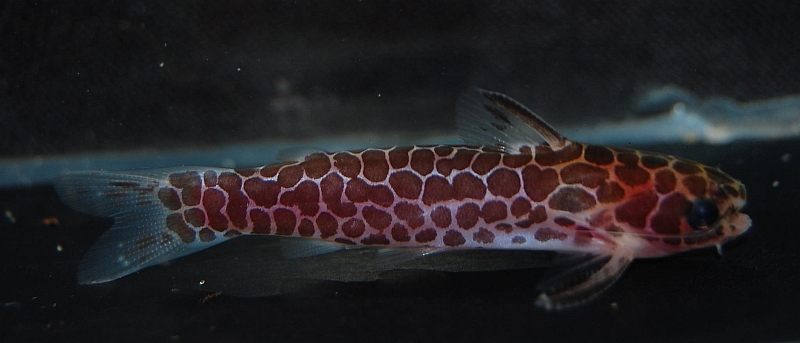
有时以紫色油鲶之类的英文商品名流通。辨认时应结合学名和网状花纹,不能仅依商品名判定身份。
图片
图片来自 SeriouslyFish,版权归各摄影者所有。
English
Overview
The secretive, mostly nocturnal Centromochlus reticulatus is strongly social. Its small size does not remove the need for a network of shelters. A group of at least eight is the preferred arrangement.
Distribution & habitat
First known from the upper Rupununi basin in Guyana, it has also been recorded in Brazil's Preto da Eva River downstream of Manaus. Similar-looking exports from Peru do not by themselves establish a confirmed Peruvian record for this species.
It shelters among submerged wood by day and searches for food at night. This inconspicuous behavior may have caused populations elsewhere to be overlooked.
Aquarium setup
Use a footprint of at least 60 × 30 cm. A stream-style arrangement can combine sand, fine gravel, and rounded stones of different sizes. Wood, ceramic pipes, and pots should form shaded crevices and connected retreats. Members of the genus also shelter among surface vegetation, making some upper-level cover useful.
Diet & feeding
Experience with the genus indicates acceptance of sinking dry food, with small live and frozen items such as bloodworms and tubificid worms particularly attractive. Acclimated fish often emerge for food and feed at the surface. Check the response of the actual group rather than assuming food left elsewhere has reached them.
Behaviour & compatibility
This is a peaceful species for carefully chosen communities of small, quiet fishes. Its pronounced social tendency supports keeping no fewer than eight, with enough retreats for the group.
Sexual dimorphism
The male anal fin is longer and more pointed, whereas the female fin is rounded. A male urogenital papilla emerges through a small skin fold at the anal-fin base.
Breeding
Internal insemination is thought to characterize the family. Females can retain mature unfertilized eggs and sperm packets, with fertilization and egg deposition occurring when conditions are suitable. The retention period is unspecified. These family-level observations should not be treated as a complete captive breeding method for this species or interpreted as livebearing.
Notes
It is sometimes traded under the name purple oil catfish. Scientific identity and the reticulated pattern are more informative than a trade label alone.
来源
- https://www.seriouslyfish.com/species/centromochlus-reticulatus(抓取于 2026-10-10)
centromochlus-reticulatus · 文件: data/species/centromochlus-reticulatus.md · 状态: 草稿