下锯脂鲤 · Wimpel Piranha
概要
| 字段 | 值 |
|---|---|
| 类别 | 鱼 |
| 学名 | Catoprion mento |
| 别名 | 下鋸脂鯉 |
| 分类 | 脂鲤目 Characiformes › 锯鲑脂鲤科 Serrasalmidae › Catoprion |
| 水体 | 淡水 |
| 原产地 | 哥伦比亚、委内瑞拉、圭亚那、巴西和玻利维亚 |
| 成体体长 | 15 cm |
| 饲养难度 | 困难 |
| 最小水体 | 137 L |
| 最小缸长 | 120 cm |
| 特征 | 吃小鱼: 是 |
| 外部数据 | seriouslyfish catoprion-mento;fishbase 11936 |
| 食性 | 肉食 |
水质参数
| 参数 | 耐受范围 | 最适范围 | 单位 |
|---|---|---|---|
| 水温 | 23–26 | — | °C |
| pH | 5.8–6.5 | — | — |
| 总硬度 | 1–5 | — | dGH |
概述
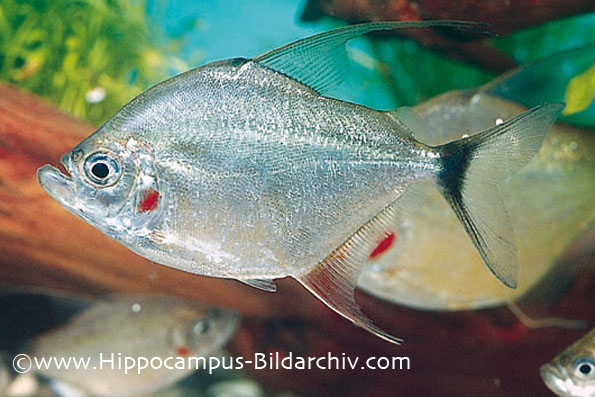
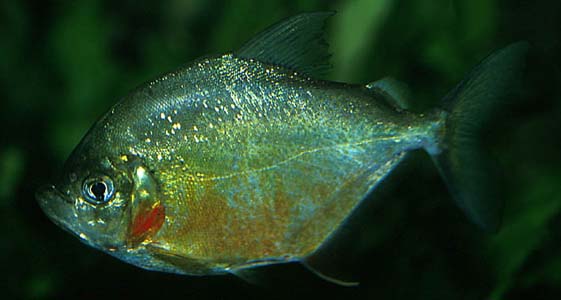
下锯脂鲤(Catoprion mento)专门取食其他鱼的鳞片,外形虽像食人鱼,却有特殊的颌部与牙齿适应。它并非普通混养鱼,成年后应单养,也很怕水质恶化和水化学突然变化。
分布与栖息地
分布于哥伦比亚、委内瑞拉、圭亚那、巴西及玻利维亚,生活在河流、溪流和支流,也见于水草丰富的潘塔纳尔湿地。部分自然环境为受有机物染色的黑水。
饲养环境
单条长期饲养可从约 120 × 38 cm 底面积安排。性情较胆小,宜有密植区、树根和枝条形成遮蔽,暗色底床及浮水植物可降低亮度。避免强烈水流。
可用水族安全的泥炭在过滤内帮助营造染色水,但重点仍是水质稳定。采用少量、规律换水,避免长期不换后一次大幅改变水化学。
食性与喂食
野外主要吃同种和其他鱼的鳞片,会高速冲撞并咬住目标,使鳞片脱落后摄食。缸内不需要让活鱼承受啃咬,多数个体能接受切碎虾肉、贻贝、鱼肉等动物性食物。
习性与混养
小鱼会被吃,大鱼也可能迅速失去鳍和鳞。曾有与强壮鲶鱼短期同养的例子,但这种安排并不稳定,不适合作为长期方案。
幼鱼可能成群,成年后宜只养一条,尤其成熟雌鱼会持续攻击雄鱼,不能把幼鱼阶段群游等同于终身群养需求。
雌雄区分
雄鱼臀鳍轮廓明显外凸,雌鱼没有这种明显凸形。
补充说明
成鱼背鳍前方鳍条延长,形成旗帜般的外观,是英文俗名的由来。这些延长部分在捞取、运输中可能损伤,处理时应格外小心。它对水质和化学波动敏感,适合已有相关饲养经验的人。
图片
图片来自 SeriouslyFish,版权归各摄影者所有。
English
Overview
Catoprion mento specializes in eating scales from other fishes, using distinctive jaws and teeth despite its piranha-like appearance. It is unsuitable for a community, and adults should be housed individually. Poor water quality and abrupt changes in chemistry are particular concerns.
Distribution & habitat
Its range includes Colombia, Venezuela, Guyana, Brazil, and Bolivia. Rivers, streams, tributaries, and the plant-rich Pantanal wetlands are occupied. Some natural settings have dark water stained by decomposing organic material.
Aquarium setup
A single fish can be housed long term with a footprint around 120 × 38 cm. Provide dense planted areas, roots, and branches for this rather shy species. Dark substrate and floating cover help reduce illumination. Avoid strong current.
Aquarium-safe peat in the filter can create stained water if desired, but stability is more important than appearance. Use modest, regular water changes rather than prolonged neglect followed by a drastic chemical shift.
Diet & feeding
Scales from conspecifics and other fishes make up most of its wild food. A rapid collision and bite dislodge scales from the target. Captive feeding need not expose living fish to this behavior: most specimens accept chopped shrimp, mussels, fish flesh, and similar animal foods.
Behaviour & compatibility
Small fishes are eaten, while larger ones can quickly lose fins and scales. Occasional reports of temporary coexistence with sturdy catfishes do not establish a stable long-term arrangement.
Young fish may form groups, but adults are best kept alone. Mature females in particular can attack males persistently, so juvenile schooling should not be mistaken for a lifelong group requirement.
Sexual dimorphism
The male's anal-fin outline is distinctly convex; the female lacks this pronounced outward curve.
Notes
Extended leading dorsal rays give mature fish a banner-like appearance and explain the English common name. These extensions can be damaged during capture and transport, calling for careful handling. Sensitivity to water quality and chemical fluctuation makes prior experience valuable.
来源
- https://www.seriouslyfish.com/species/catoprion-mento(抓取于 2026-10-10)
catoprion-mento · 文件: data/species/catoprion-mento.md · 状态: 草稿