黑翼飞脂鲤 · Blackwing Hatchetfish
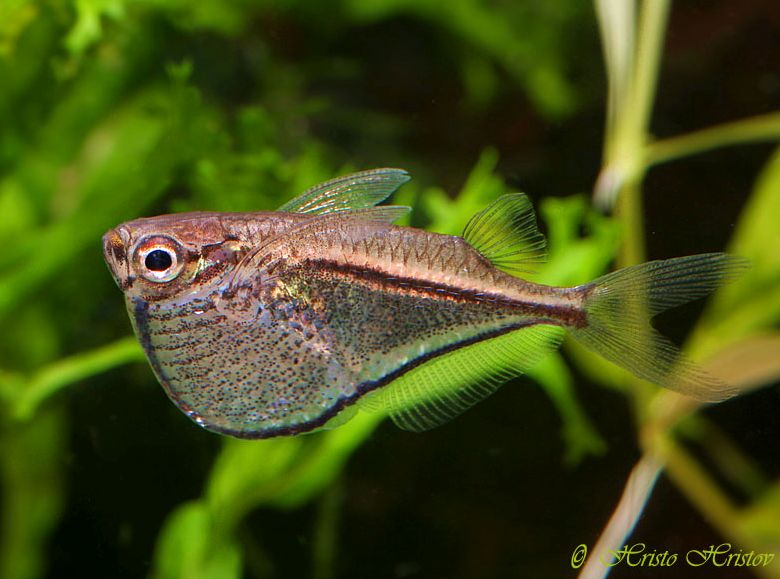
概要
| 字段 | 值 |
|---|---|
| 类别 | 鱼 |
| 学名 | Carnegiella marthae |
| 别名 | 黑翼飛脂鯉 |
| 分类 | 脂鲤目 Characiformes › 胸斧脂鲤科 Gasteropelecidae › Carnegiella |
| 水体 | 淡水 |
| 原产地 | 巴西、哥伦比亚、委内瑞拉 |
| 成体体长 | 2.8 cm |
| 饲养难度 | 入门 |
| 最小水体 | 54 L |
| 最小缸长 | 60 cm |
| 群居方式 | 群游 |
| 性情 | 温和 |
| 特征 | 会跳缸: 是 |
| 外部数据 | seriouslyfish carnegiella-marthae;fishbase 10733 |
| 食性 | 肉食 |
| 游动层 | 上层 |
水质参数
| 参数 | 耐受范围 | 最适范围 | 单位 |
|---|---|---|---|
| 水温 | 20–28 | — | °C |
| pH | 4–7 | — | — |
| 总硬度 | 1–10 | — | dGH |
概述
黑翼飞脂鲤(Carnegiella marthae)是小型、温和而胆怯的斧头鱼,多数时间停留在水面附近。它适合有遮蔽、同伴充足的安静环境,防跳缸盖比“平时很少跳”的观察更可靠。
分布与栖息地
主要记录来自委内瑞拉奥里诺科河上游及巴西亚马孙地区内格罗河,马德拉河也有零星记录。哥伦比亚存在记录,但范围仍需确认;隐藏的不同种可能使现有分布概念进一步缩小。
似乎高度依赖黑水环境,利用植被垂覆、底部有枝根和落叶的森林溪流及季节性淹没森林。雨季随水位进入林地觅食繁殖,退水后返回支流。水通常酸性、矿物质极低并受腐殖质染色。
饲养环境
水面面积至少约 60 × 30 cm。密植水草、深色底砂及浮水植物斑块提供遮蔽,同时留出水面活动区。沉木和干落叶可增加结构,落叶分解产生的微生物也是鱼苗潜在食物来源。
水流轻至中等,缸盖务必贴合,受惊时尤其存在跃出的风险。
食性与喂食
自然主要捕食水面附近的陆生、水生无脊椎动物及其他浮游动物。除适口干粮,还应定期提供丰年虾无节幼体、水蚤、微型蠕虫等活饵或冷冻饵。
小蟋蟀或果蝇也可使用,投喂前先让饵虫吃鱼食或植物材料。
习性与混养
体形小且胆怯,不适合随意混入普通热闹群落。可与相近大小的温和脂鲤、小型底栖鲶鱼共同饲养,也可在需求匹配时作为短鲷的陪游鱼。
理想至少十尾,同伴充足有助分散个体间争执,表现也更大胆自然。它不会主动追捕鱼苗,但这不等同于对所有微小缸友的绝对安全保证。
雌雄区分
较大、更圆润的个体可能是成熟雌鱼,尚不能将其视作完全可靠的标准。
补充说明
普通缸内繁殖记录尚缺。斧头鱼离水是强力跃起,不能在空中持续扇鳍飞行;尤其夜间不要留下缸盖缝隙。不同产地可能包含尚未完全厘清的近似种,保留来源信息有助辨认。
图片
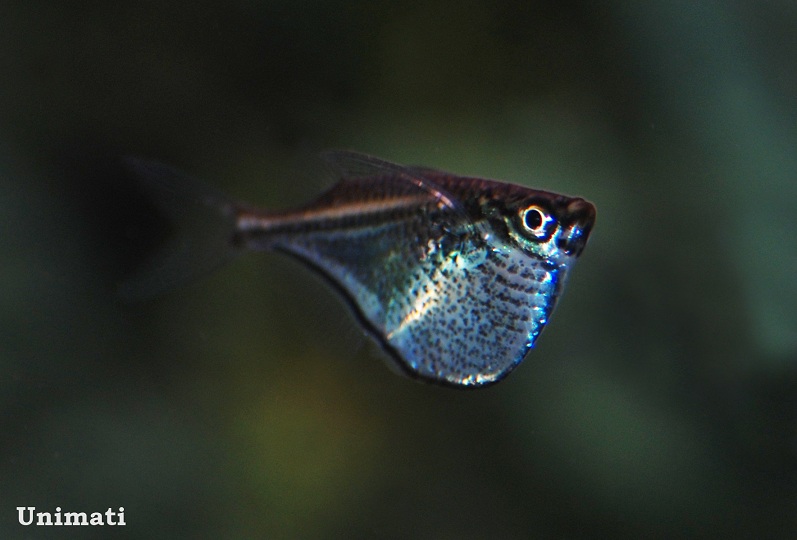
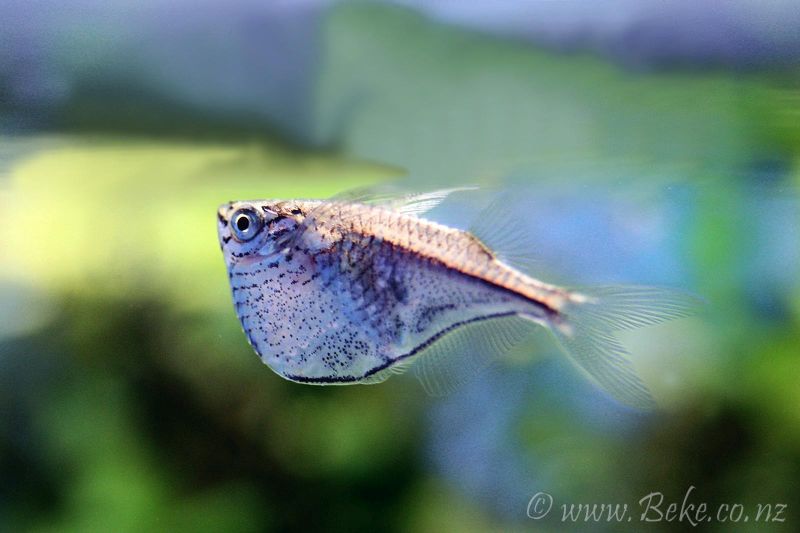
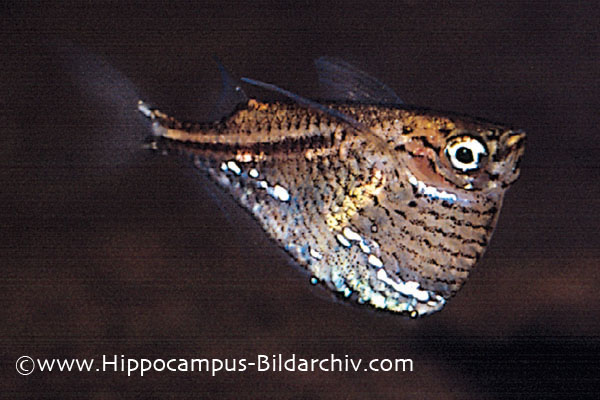
图片来自 SeriouslyFish,版权归各摄影者所有。
English
Overview
Carnegiella marthae is a tiny, peaceful but timid hatchetfish that spends most of its time close to the surface. Quiet surroundings and conspecific company suit it. A secure cover remains necessary even if jumping is seldom observed.
Distribution & habitat
Main records concern Venezuela's upper Orinoco and Brazil's Negro basin, with occasional Madeira records. Colombian occurrence and the full range remain uncertain. Hidden species diversity may eventually narrow the current geographic concept.
It appears strongly associated with blackwater forest streams and seasonally flooded woodland. Overhanging plants, submerged roots, branches, and litter characterize acidic, low-mineral, humic-stained water. Fish enter inundated forest during floods before retreating to tributaries as water falls.
Aquarium setup
Provide at least about 60 × 30 cm of surface area. Dense plants, dark substrate, and patches of floating cover should leave usable surface space. Wood and dry leaves add structure; decomposing litter can support microorganisms useful to fry.
Use gentle to moderate circulation and a close-fitting lid, since startled fish may jump.
Diet & feeding
Natural feeding focuses on terrestrial and aquatic invertebrates and other zooplankton near the surface. Supplement suitably sized dry foods with regular brine-shrimp nauplii, water fleas, small worms, and other live or frozen items.
Small crickets or fruit flies are additional options. Feed these insects fish food or plant material before offering them.
Behaviour & compatibility
Small size and nervousness make an arbitrary community unsuitable. Similar-sized placid characins and small bottom-dwelling catfishes are possible partners. With matching conditions it can also serve as a dither fish for dwarf cichlids.
Aim for at least ten. A larger group distributes minor disputes and encourages confidence. It does not actively hunt fry, which should not be extended into an absolute guarantee for every tiny companion.
Sexual dimorphism
Larger, rounder fish are presumed to be mature females, rather than confirmed by a dependable external character.
Notes
Aquarium reproduction is unrecorded. Hatchetfish leave the water through powerful jumps, not sustained powered flight. Keep cover gaps closed, particularly overnight. Locality information is useful where apparently similar populations may represent unresolved species.
来源
- https://www.seriouslyfish.com/species/carnegiella-marthae(抓取于 2026-10-10)
carnegiella-marthae · 文件: data/species/carnegiella-marthae.md · 状态: 草稿