巧克力娃娃 · Dwarf Puffer
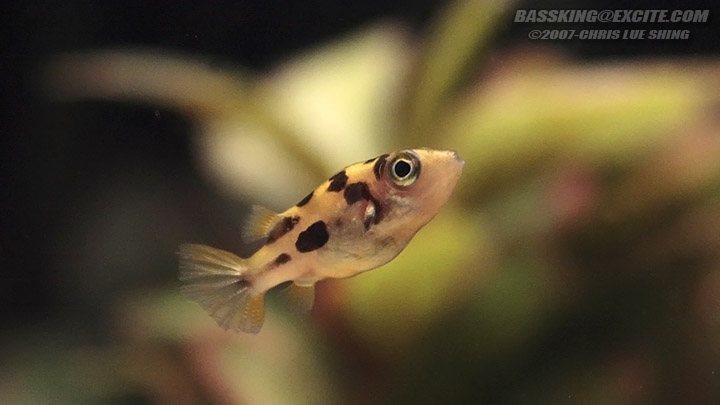
概要
| 字段 | 值 |
|---|---|
| 类别 | 鱼 |
| 学名 | Carinotetraodon travancoricus |
| 别名 | 狡魨、狡鲀 |
| 分类 | 鲀形目 Tetraodontiformes › 四齿鲀科 Tetraodontidae › Carinotetraodon |
| 水体 | 淡水 |
| 成体体长 | 2.5 cm |
| 饲养难度 | 入门 |
| 外部数据 | seriouslyfish carinotetraodon-travancoricus;fishbase 25293 |
| 原产地 | 印度 |
| 繁殖方式 | 散卵 |
水质参数
| 参数 | 耐受范围 | 最适范围 | 单位 |
|---|---|---|---|
| 水温 | 22–28 | — | °C |
| pH | 6.8–8 | — | — |
| 总硬度 | 5–25 | — | dGH |
概述
巧克力娃娃(Carinotetraodon travancoricus)是印度喀拉拉邦特有的小型纯淡水河豚。体形小、动作有趣,但会咬慢游或长鳍鱼,也容易在抢食中落后;它需要密植、低水流和精细喂养。
分布与栖息地
原生分布限于印度南部喀拉拉邦,通常生活在水流缓慢、水草繁密的内陆水域。
饲养环境
密植水草,加入弯曲根枝打断彼此视线,减少冲突并提供探索空间;浮水植物柔化光线,通常能让它更大胆。水流尽量柔和,定期部分换水。单尾可用小缸,但成组所需空间明显增加,不能把单尾布置直接套到多尾。
食性与喂食
以适口贝类、蠕虫及其他活饵或冷冻饵为主,定期提供带壳小螺帮助磨耗持续生长的喙齿。通常不接受干粮,不能只等它改吃饲料。
习性与混养
通常不建议放入普通混养缸:它会咬慢游鱼和长鳍鱼,又可能被更大的鱼吃掉,或抢不过活跃的伙伴。与部分淡水虾同养的结果不一致,不能视为可靠搭配。繁殖时竞争雄鱼甚至可能互相打死,密植也不能完全消除风险。
雌雄区分
幼鱼难分性别。成熟雄鱼腹部有明显纵向暗线,眼后通常有密集线纹;雌鱼没有腹部纵线,成熟时身体常更圆。
繁殖
已有多次人工繁殖,通常用一雄一雌或一雄多雌,既减少雄鱼争斗,也分散雌鱼受追逐的压力;其他性比也有成功记录。繁殖缸密植细叶草和莫丝,轻柔海绵过滤,温度放在既有适宜范围较高一端,用红虫和小螺养好状态。
雄鱼色纹加深、竖嵴展示,求偶可能伴随猛烈追逐和咬碰,雌鱼被引入低矮植物间,近透明、不黏的卵落下后原地发育。每次卵量通常很少,但可能每天产卵。建议用滴管或气管吸取卵,移到使用亲鱼缸水、同温的育苗缸,配海绵过滤及少量成熟莫丝,及时移除乳白坏卵。
约五天孵化,再过两三天吸收卵黄;先喂微虫等极小活动饵,约一周后可尝试丰年虾无节幼体,一个月左右再换较大饵料。大小鱼苗混养可能发生互食,宜按大小观察管理。雄鱼是否护卵尚未确认。
图片
图片来自 SeriouslyFish,版权归各摄影者所有。
English
Overview
Tiny and inquisitive, Carinotetraodon travancoricus is an exclusively freshwater puffer endemic to Kerala. Its small size does not make it an uncomplicated community fish: it can damage fins yet lose feeding contests to faster companions. Dense cover and careful feeding matter throughout its life.
Distribution & habitat
Its native range is confined to Kerala in southern India. Typical habitats are sluggish inland waters with abundant vegetation.
Aquarium setup
Use dense planting and branching wood to break sight lines and create an environment to explore. Floating cover reduces glare and can improve confidence. Gentle circulation and regular partial changes suit its sensitivity to poor water. A small single-fish setup cannot be assumed adequate for a group.
Diet & feeding
Offer suitable shellfish, worms, and other live or frozen foods, with frequent small shell-on snails to help wear the growing dental plates. Dry food is usually refused, so a dependable supply of accepted foods is necessary.
Behaviour & compatibility
Community combinations carry risks in both directions: fin damage to slow or long-finned fish, feeding competition, and predation by larger companions. Reports of shrimp cohabitation have mixed outcomes. Rival males can fight fatally during breeding, so dense planting does not guarantee safety.
Sexual dimorphism
Young fish are difficult to sex. Mature males show a dark longitudinal belly line and usually close-set lines behind the eye. Females lack the belly line and tend to become rounder.
Breeding
Successful breeding is commonly arranged with one male and one or several females. This reduces male rivalry and can spread courtship pressure, although other group compositions have also worked. Use dense fine vegetation and moss, gentle sponge filtration, and temperatures toward the upper part of the established range. Condition fish with small snails and quality frozen prey.
An intensified male display may lead to vigorous pursuit and nipping. Eggs and milt are released in low vegetation; the tiny, non-adhesive eggs develop where they fall. Batches are usually small, but spawning may recur daily. Collect eggs with a pipette or airline into a matching-temperature rearing tank using parental water, sponge filtration, and mature moss. Remove opaque failed eggs.
Hatching takes about five days, followed by another two or three days of yolk absorption. Start with tiny moving foods such as microworms, progressing to Artemia nauplii around a week later and larger foods as growth allows. Larger juveniles may eat younger siblings. Male guarding remains unconfirmed.
来源
ID:carinotetraodon-travancoricus · 文件: data/species/carinotetraodon-travancoricus.md · 状态: 草稿