纹唇龙嵴鲀
概要
| 字段 | 值 |
|---|---|
| 类别 | 鱼 |
| 学名 | Carinotetraodon salivator |
| 别名 | 紋唇龍嵴魨 |
| 分类 | 鲀形目 Tetraodontiformes › 四齿鲀科 Tetraodontidae › Carinotetraodon |
| 水体 | 淡水 |
| 原产地 | 马来西亚 |
| 成体体长 | 5 cm |
| 饲养难度 | 入门 |
| 最小水体 | 54 L |
| 最小缸长 | 60 cm |
| 群居方式 | 成对 |
| 外部数据 | seriouslyfish carinotetraodon-salivator;fishbase 27253 |
水质参数
| 参数 | 耐受范围 | 最适范围 | 单位 |
|---|---|---|---|
| 水温 | 20–28 | — | °C |
| pH | 5–7.5 | — | — |
| 总硬度 | 1–12 | — | dGH |
概述
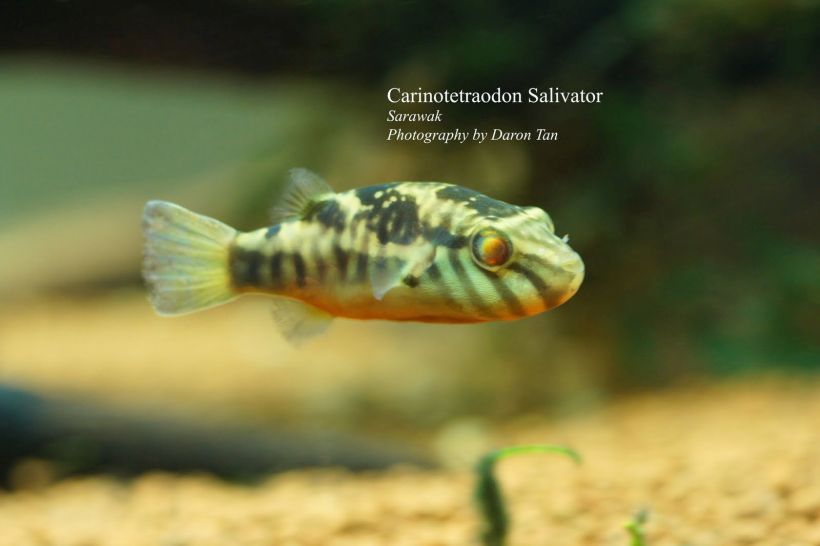
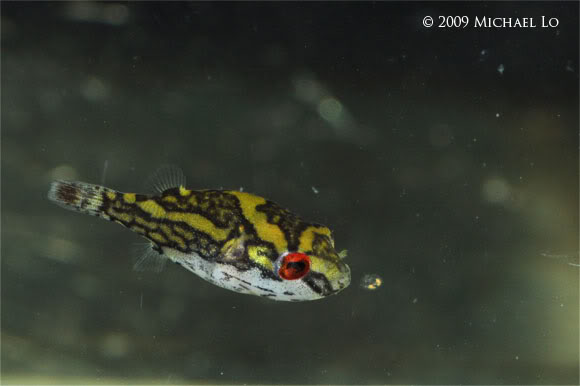
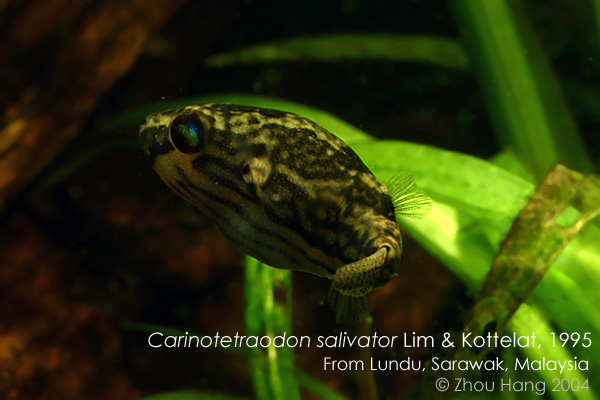
纹唇龙嵴鲀(Carinotetraodon salivator)来自婆罗洲砂拉越,雌雄头部和身体都有明显暗色横纹,下唇浅斑像一滴水。与不少近亲不同,它的采集环境包括流动较快的溪流,布缸可保留适度水流。
分布与栖息地
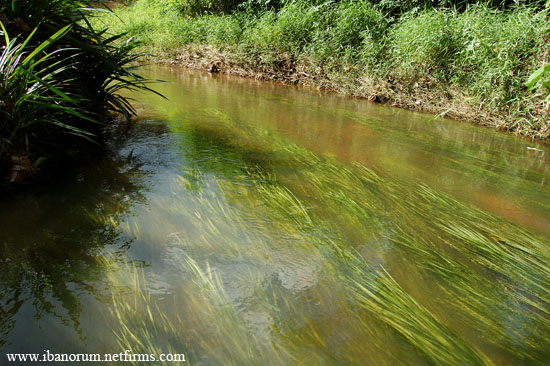
已知记录来自马来西亚砂拉越的鲁巴、砂拉越及拉让河系。常在溪流浅水边缘的落叶和淹没树根间采到,底部可为淤泥、砂或局部石质急滩;也有清澈快流林溪和流经泥炭沼泽的黑水溪流记录。
饲养环境
至少参考 60 × 30 × 30 厘米。用沉木根枝、密植水草和浮水植物形成遮蔽,干落叶既增加藏处,也为微生物提供表面。可有一定水流,但水质稳定和规律少量换水更重要,不能让污物长期积累。
食性与喂食
带壳螺、贝类及适口的小蟹足可帮助磨耗不断生长的喙状齿板,再配合切碎贝肉、小蚯蚓、红虫和丰年虾等。不要以干粮为主,坚硬颗粒可能有辅助价值。天然可能摄入较多附着生物,可保留硬景表面的藻膜。
习性与混养
攻击性比某些近亲低,但单养仍较稳妥。若搭配温和群游鱼,体形既要足够大以免被捕食,也不能强大到争食或威胁它。它只是松散聚集,雄鱼尤其可能守地盘;群养须有充足空间和遮蔽。
雌雄区分
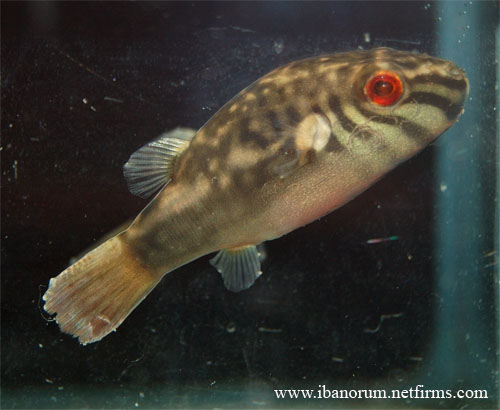
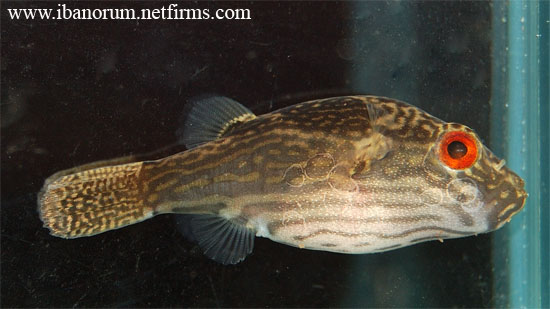
雄鱼背腹嵴发达,展示时会竖起,腹面偏红、前部带横纹;雌鱼腹面乳白并带深色条纹。
图片
图片来自 SeriouslyFish,版权归各摄影者所有。
English
Overview
Endemic in known records to Sarawak, Carinotetraodon salivator has dark head and body bars in both sexes and a pale lower-lip mark. Collection sites include flowing streams, suggesting that some water movement may be appreciated rather than an entirely still setup.
Distribution & habitat
Records come from the Lupar, Sarawak, and Rajang systems. Fish have been collected around shallow margins among leaves and submerged roots. Sites range from silty or sandy channels with rocky riffles to clear forest runs and faster blackwater draining peat swamp.
Aquarium setup
Start with the suggested minimum dimensions of 60 by 30 by 30 cm. Dense planting, wood, roots, and floating shade provide cover; leaf litter supports small food organisms as it matures. Allow some circulation while prioritizing stable, clean water and frequent small changes.
Diet & feeding
Regular small shelled invertebrates help control dental-plate growth. Supplement these with chopped shellfish, small earthworms, and suitable live or frozen prey. Dry products should remain secondary, although very hard pellets may be useful. Retaining biofilm allows for its possible contribution to natural feeding.
Behaviour & compatibility
Although less aggressive than some relatives, it is still best housed alone. Any peaceful schooling companions must be large enough to avoid predation without becoming threatening competitors. Social grouping is loose, and males tend toward territorial behavior; several fish require generous cover and space.
Sexual dimorphism
Male dorsal and ventral keels rise during displays. Their undersides are red with anterior crossbars; females have cream-colored undersides with dark stripes.
来源
- https://www.seriouslyfish.com/species/carinotetraodon-salivator(抓取于 2026-10-10)
carinotetraodon-salivator · 文件: data/species/carinotetraodon-salivator.md · 状态: 草稿