龙嵴鲀 · Redeye Puffer
概要
| 字段 | 值 |
|---|---|
| 类别 | 鱼 |
| 学名 | Carinotetraodon lorteti |
| 别名 | 洛氏龙嵴鲀、龍嵴魨、洛氏龍嵴魨、Tetraodon somphongsi、Carinotetraodon chlupatyi |
| 分类 | 鲀形目 Tetraodontiformes › 四齿鲀科 Tetraodontidae › Carinotetraodon |
| 水体 | 淡水 |
| 原产地 | 柬埔寨、泰国、越南 |
| 成体体长 | 6 cm |
| 饲养难度 | 中等 |
| 最小水体 | 54 L |
| 最小缸长 | 60 cm |
| 群居方式 | 独居 |
| 水流偏好 | 低 |
| 外部数据 | seriouslyfish carinotetraodon-lorteti;fishbase 25169 |
| 性情 | 攻击性 |
| 领地性 | 是 |
| 繁殖方式 | 产卵 |
水质参数
| 参数 | 耐受范围 | 最适范围 | 单位 |
|---|---|---|---|
| 水温 | 20–28 | — | °C |
| pH | 5–7.5 | — | — |
| 总硬度 | 1–12 | — | dGH |
概述
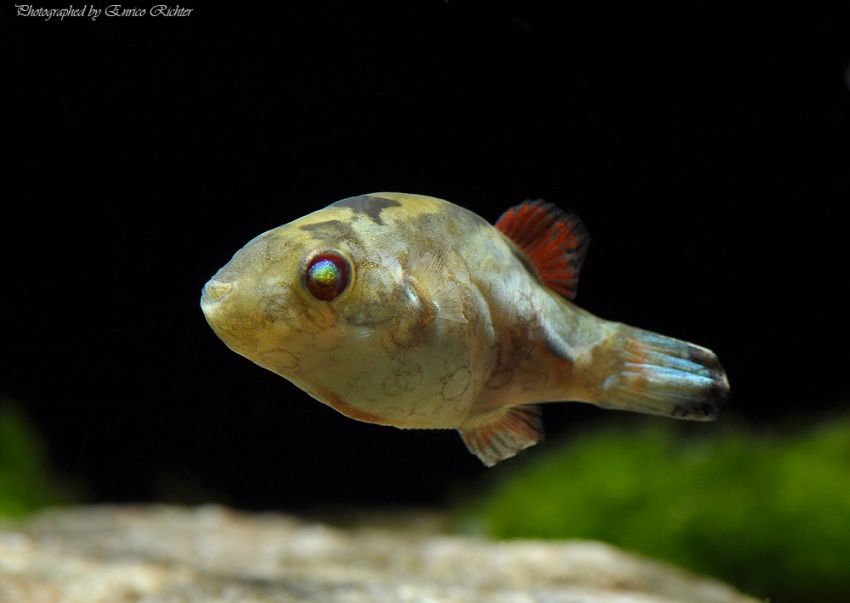
龙嵴鲀(Carinotetraodon lorteti)是红眼淡水小型河豚,不能因体形小就当作普通混养鱼。它会咬其他鱼的鳍,并有明显领地攻击性,单养通常更合适;想养一组,空间和遮蔽必须同时充分。
分布与栖息地
分布于泰国、越南和柬埔寨的湄公河下游,以及泰国中部湄南河流域,两者之间的小水系可能也有分布。常生活在林荫溪流、小支流和泛滥平原中的缓流或静水,水草、岸边植被、落叶和枝条提供隐蔽。
饲养环境
至少参考 60 × 30 × 30 厘米的空间。根枝、沉木和密植水草分隔活动区,浮水植物遮光,干落叶增加藏处并支持微生物生长。过滤出水不要太强,采用规律的小量换水,避免水质逐渐恶化。
食性与喂食
定期喂带壳螺类、小蟹足或贝类,让持续生长的喙状齿板得到磨耗。也可搭配切碎贝肉、小蚯蚓、红虫和丰年虾等。干粮不宜作为主食,坚硬颗粒可能有辅助作用;附着生物可能占天然食物的一部分,可在硬景上保留适量藻膜。
习性与混养
不适合普通混养缸,小缸尤其容易出现咬鳍。若尝试同种群养,要有足够空间和遮挡,并持续观察领地冲突。
雌雄区分
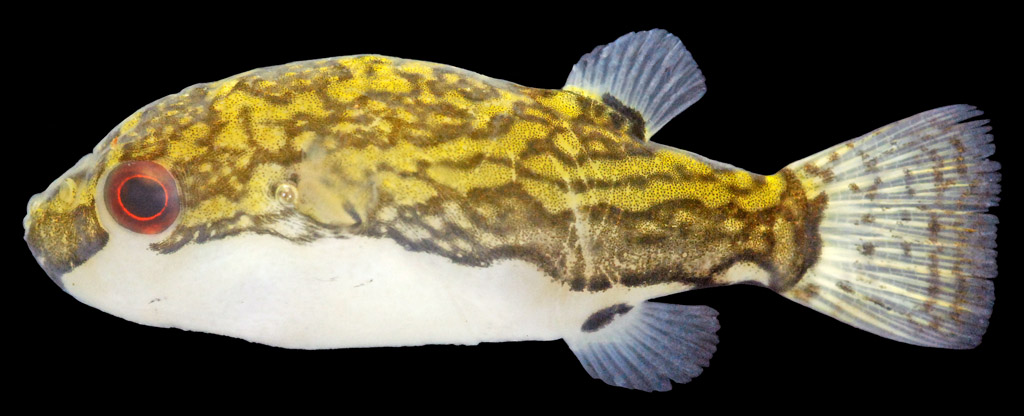
成年雄鱼背部、腹部的嵴明显,威吓和求偶时会竖起,身体及尾鳍色纹较一致;雌鱼身体和尾鳍呈网状斑纹。
繁殖
已有人工繁殖。雄鱼颜色加深并竖嵴求偶,半黏性的卵产在靠近底部的水草间,细叶莫丝适合作产卵处。产后雄鱼单独守卵,通常约 60–72 小时孵化。鱼苗卵黄囊再经数天吸收后自由游动,开口需用草履虫级别的细小食物。
图片
图片来自 SeriouslyFish,版权归各摄影者所有。
English
Overview
A small red-eyed freshwater puffer, Carinotetraodon lorteti needs more planning than its size suggests. Fin biting and territorial aggression make solitary housing the safest standard arrangement. Keeping several requires both ample space and a layout that provides extensive cover.
Distribution & habitat
Its range includes the lower Mekong in Thailand, Vietnam, and Cambodia and the Chao Phraya watershed. Smaller intervening drainages may also hold it. Shaded forest channels and floodplains provide slow or standing water with dense plants, leaf deposits, and branches.
Aquarium setup
The suggested minimum dimensions are 60 by 30 by 30 cm. Use wood, roots, and dense plants to divide the space, adding floating cover and dried leaves. Leaf-associated microbes can also support early fry feeding. Keep filter flow gentle and use regular small water changes to prevent deterioration.
Diet & feeding
Regular shelled foods help wear the continuously growing dental plates. Suitable meals include snails and small shellfish portions, supplemented with earthworms and small live or frozen prey. Dry diets should not dominate, though hard pellets may help. Biofilm may contribute to natural feeding, so established growth on decor can be retained.
Behaviour & compatibility
A general community is unsuitable, especially where cramped conditions intensify fin damage. A conspecific group is possible only with enough space and cover, and territorial conflicts still require close observation.
Sexual dimorphism
Males develop pronounced dorsal and ventral keels that rise during displays. Their body and tail coloration is more uniform, whereas females have a reticulated pattern.
Breeding
Aquarium breeding involves a male intensifying his color and displaying the keels. Semi-adhesive eggs are placed in vegetation near the bottom, with fine moss offering a useful spawning site. The male alone guards the clutch until hatching, usually after 60–72 hours. Once the yolk is absorbed over the following couple of days, free-swimming fry need infusoria-sized first foods.
来源
- https://www.seriouslyfish.com/species/carinotetraodon-lorteti(抓取于 2026-10-10)
carinotetraodon-lorteti · 文件: data/species/carinotetraodon-lorteti.md · 状态: 草稿