Carinotetraodon borneensis
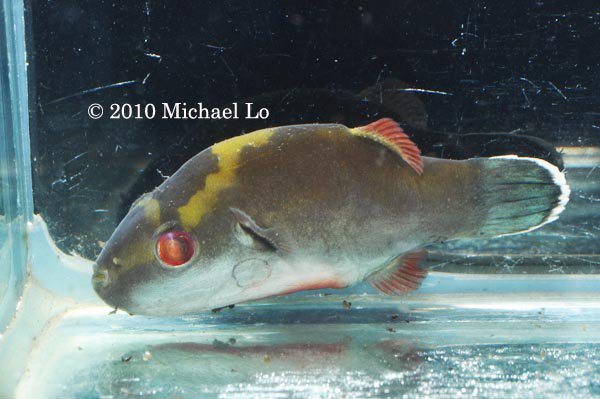
概要
| 字段 | 值 |
|---|---|
| 类别 | 鱼 |
| 学名 | Carinotetraodon borneensis |
| 别名 | Tetrodon borneensis |
| 分类 | 鲀形目 Tetraodontiformes › 四齿鲀科 Tetraodontidae › Carinotetraodon |
| 水体 | 淡水 |
| 原产地 | 马来西亚婆罗洲砂拉越州南部 |
| 成体体长 | 4.5 cm |
| 饲养难度 | 中等 |
| 最小水体 | 54 L |
| 最小缸长 | 60 cm |
| 群居方式 | 群游 |
| 水流偏好 | 低 |
| 外部数据 | seriouslyfish carinotetraodon-borneensis;fishbase 58204 |
水质参数
| 参数 | 耐受范围 | 最适范围 | 单位 |
|---|---|---|---|
| 水温 | 20–28 | — | °C |
| pH | 6–7.5 | — | — |
| 总硬度 | 2–12 | — | dGH |
概述
Carinotetraodon borneensis 是小型红眼淡水河鲀,观赏贸易中不常见,也会混在近似种里出售。它并非紧密群游鱼,雄鱼尤其有守护空间的倾向;丰富遮挡和足够活动面积是同种共养的前提。
分布与栖息地
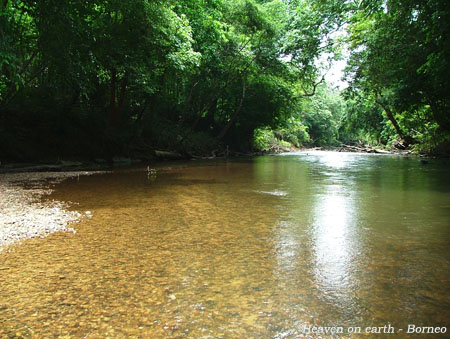
已确认分布限于马来西亚砂拉越州南部的砂拉越河、沙东河与拉让河水系。可能生活在水流缓慢、长有水草或被淹陆生植物的岸边区域,但具体栖地偏好仍带推测性质。
饲养环境
沉木枝根、水草和浮水植物共同提供复杂遮蔽及柔和光线。可加干落叶,既增加躲避空间,也能培养微生物。过滤出水不宜过强;它对水质恶化敏感,适合规律进行少量换水。
食性与喂食
河鲀的喙状口器持续生长,应经常提供适口螺类、带壳贝类或小蟹足等较硬食物,帮助磨耗。可搭配碎贝肉、小蚯蚓、红虫和丰年虾等活饵或冷冻饵,干粮不宜成为主食。
附着生物可能在天然食物中占有一定份量,可保留布景表面的藻膜;这不意味着只靠吃藻就能维持它。
习性与混养
比部分近亲温和,但仍以单养为稳妥选择。若搭配温和群居鲤科鱼,对方应大到不会成为猎物,同时又不能强势到压迫河鲀。多尾同种可以尝试,必须有足够遮挡与空间,留意雄鱼争执。
雌雄区分
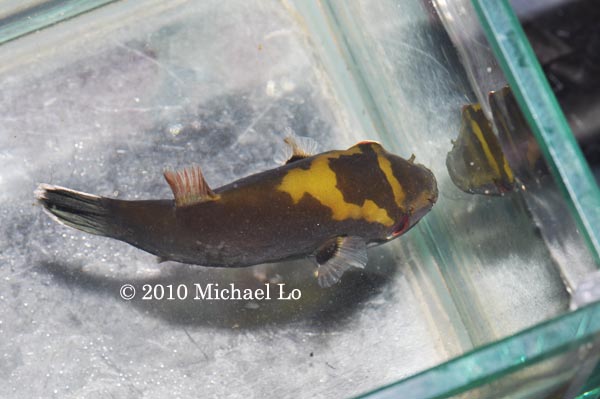
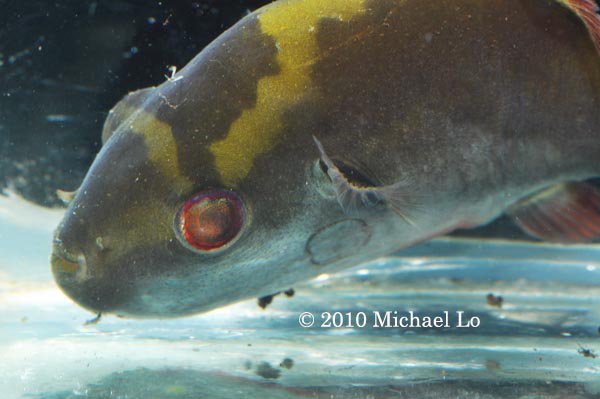
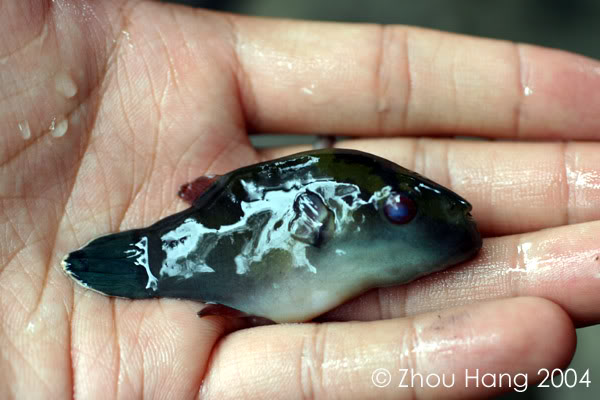
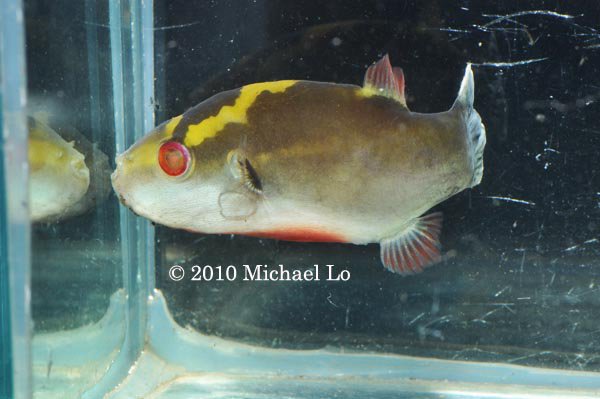
雄鱼灰色带淡斑的背侧逐渐过渡到白腹,眼后有细黄纵线,背面有浅色人字形纹,腹中线为宽红带;尾鳍常见黑白边带。雌鱼侧面浅带较宽且可能断续,体表有不规则浅斑,白腹没有褐色条斑;尾鳍偏黄,带网纹及暗横带。两性眼睛通常为红色,但部分雄鱼可显蓝绿色。
繁殖
本种繁殖尚无记录。近亲有在植物间散卵、由雄鱼护卵的情况,但不能直接视作本种的繁殖方式。
补充说明
近似的另一红眼河鲀,两性头部和身体都有明显暗横带;本种不具那种清晰横带组合。仅凭“红眼”不能完成鉴定。
图片
图片来自 SeriouslyFish,版权归各摄影者所有。
English
Overview
An uncommon small red-eyed freshwater puffer, Carinotetraodon borneensis sometimes arrives mixed with a similar species. Its loose social tendencies do not eliminate male territorial behavior. Keeping several requires ample space and extensive cover.
Distribution & habitat
Confirmed records are limited to southern Sarawak, Malaysian Borneo, in the Sarawak, Sadong, and Rajang systems. Slow margins with submerged terrestrial plants or aquatic vegetation are its likely habitat, rather than a firmly established preference.
Aquarium setup
Create a heavily structured aquarium with roots, branches, aquatic plants, and floating shade. Dried leaves add cover and support microbial growth. Keep filter outflow gentle. Frequent small water changes help prevent the deterioration to which this puffer is sensitive.
Diet & feeding
Puffer mouthparts grow continuously, so regularly provide manageable shelled foods such as snails, shellfish, or small crab legs to encourage wear. Add chopped shellfish, small earthworms, bloodworms, or Artemia. Dry preparations should not dominate feeding.
Attached growth may contribute to the natural diet, making biofilm on decor useful to retain. It should not be treated as a complete food supply.
Behaviour & compatibility
Although less aggressive than some relatives, it is most straightforward to keep alone. Peaceful shoaling cyprinids are a possible alternative only when too large to be prey but not large or assertive enough to threaten the puffer. Groups need generous shelter and room, with attention to disputes involving males.
Sexual dimorphism
Male gray mottling fades gradually into the pale underside. A narrow yellowish flank line, pale chevrons above, and a broad red belly stripe help distinguish males, whose tail often has dark and white edging. Females have a broader, sometimes broken pale side stripe, irregular light patches, and an unmarked whitish belly. Their yellowish tail carries reticulation and dark bars. Both sexes generally have red eyes, although some males appear blue-green.
Breeding
Breeding is unrecorded for this species. Egg scattering among plants and male guarding occur in a relative, but are not established here.
Notes
A similar red-eyed relative has conspicuous dark bars on both head and body in each sex. This species lacks that clear barred combination, so red eyes alone are insufficient for identification.
来源
- https://www.seriouslyfish.com/species/carinotetraodon-borneensis(抓取于 2026-10-10)
carinotetraodon-borneensis · 文件: data/species/carinotetraodon-borneensis.md · 状态: 草稿