Callochromis macrops · Big-eyed Mouthbrooder
概要
| 字段 | 值 |
|---|---|
| 类别 | 鱼 |
| 学名 | Callochromis macrops |
| 分类 | 慈鲷目 Cichliformes › 慈鲷科 Cichlidae › Callochromis |
| 水体 | 淡水 |
| 成体体长 | 13.5 cm |
| 饲养难度 | 中等 |
| 最小水体 | 243 L |
| 最小缸长 | 120 cm |
| 外部数据 | seriouslyfish callochromis-macrops;fishbase 8122 |
| 原产地 | 坦干伊喀湖 |
| 游动层 | 底层 |
| 特征 | 翻底砂: 是 |
| 繁殖方式 | 口孵 |
水质参数
| 参数 | 耐受范围 | 最适范围 | 单位 |
|---|---|---|---|
| 水温 | 24–27 | — | °C |
| pH | 7.8–9.5 | — | — |
| 总硬度 | 10–30 | — | dGH |
概述
Callochromis macrops 是坦干伊喀湖的底栖筛砂慈鲷,会吸入口中一团砂,再筛出其中的食物。雄鱼会修筑砂巢,颜色鲜艳,但同种之间冲突强烈,需要围绕沙地活动和雌鱼退避空间来布置。
分布与栖息地
特有于坦干伊喀湖,主要分布于南部。常在岩石附近的开阔砂地活动,似乎偏爱较浅、悬浮泥沙较多的水段,水色比湖内许多其他区域浑浊。岩石提供躲藏处,部分地点还有水草群落。
饲养环境
小群可按一雄配至少三雌安排,缸体约 120 × 45 × 45 cm。多雄需要明显更大的空间;缸底小于约 183 × 46 cm 时仅保留一雄。
大片开放砂地是核心,砂层可约 5–8 cm,供筛砂和筑巢。不要让石堆占满底部,但应在角落或一侧提供岩石躲藏区,并可用水草增加遮蔽。多雄大缸中用布景划出相对分开的领地。
食性与喂食
通常能接受多种食物,但宜以活饵及冷冻饵料为主要部分。取食几乎都在底部进行,应确保食物真正沉到底部,不能只看上层鱼是否吃饱。
习性与混养
可考虑健壮、占据不同活动区域的伙伴。除非空间非常宽裕,避免再加入其他筛砂鱼或贝壳栖居鱼,以免争夺底部空间。
野外虽能形成大群,缸内雄鱼间却可能激烈争斗。每雄搭配数雌能分散追逐压力,仍须观察弱势鱼是否有足够退路。
雌雄区分
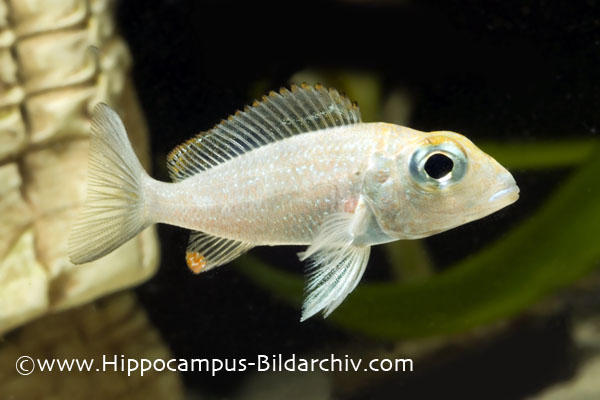
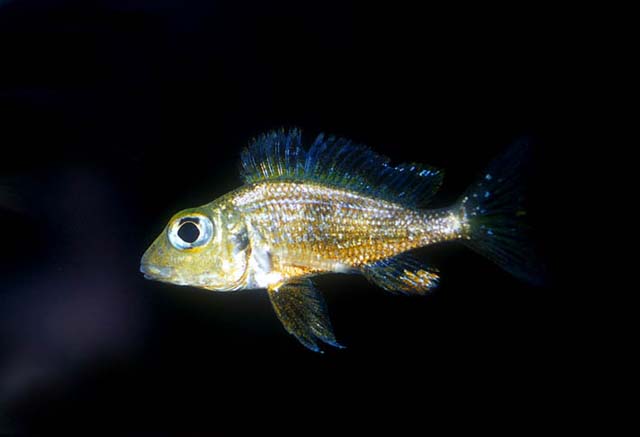
雄鱼较大,体色也明显比雌鱼鲜艳。
繁殖
雌鱼口孵,条件合适时可在混养缸产卵;专门繁殖以单种环境更便于管理。可用一雄配三四雌,软硬度维持日常适宜范围,温度 25–26.5 °C、pH 8–9。
雄鱼挖砂形成巢区,成熟后巢体可能很大。求偶时体色加深,并折叠臀鳍的橙红色斑块,形成类似卵的立体视觉效果。雌鱼产卵后随即含入口中,在继续寻找类似卵斑时完成受精过程。
每窝约 25–60 粒,含卵期可达三周,期间雌鱼不进食。过度惊扰可能导致提前吐卵或吞卵,隔离操作宜谨慎;离群过久也可能影响归群后的等级。
释放的鱼苗若仍带卵黄,可等卵黄消耗后开口;没有卵黄者可立即投喂丰年虾无节幼体。
补充说明
不同地理色型之间容易杂交,繁殖时应保持来源清晰,不混养不同色型。雄鱼巢的规模和展示行为会随成熟程度变化。
图片
图片来自 SeriouslyFish,版权归各摄影者所有。
English
Overview
A bottom-dwelling sand sifter from Lake Tanganyika, Callochromis macrops takes sand into its mouth and sorts out food. Colorful males construct sand bowers but can be strongly antagonistic toward one another. Housing must balance open floor space with refuges for females.
Distribution & habitat
The species is endemic to Lake Tanganyika and occupies its southern portion. Open sand near rocks is typical, apparently favoring shallow areas with suspended sediment. These sites can be murkier than much of the lake and may contain beds of aquatic plants.
Aquarium setup
An aquarium around 120 by 45 by 45 cm can house one male with at least three females. Multiple males require substantially more room; below approximately 183 by 46 cm of floor area, retain only one male.
Provide a broad sand bed roughly 5–8 cm deep for sifting and construction. Keep most of it open, adding rock refuges at the corners or one end and optional plants for cover. In sufficiently large multiple-male arrangements, furnishings should separate potential territories.
Diet & feeding
Many foods are accepted, but live and frozen offerings should supply most of the menu. Feeding occurs almost entirely from the bottom, so ensure enough food reaches the sand rather than being intercepted above.
Behaviour & compatibility
Robust companions using other parts of the aquarium may work. Other sand sifters and shell-dwellers compete for the same space and are unsuitable unless accommodation is exceptionally extensive.
Natural aggregations do not imply tolerance between confined males. Several females per male spread courtship pressure, while subordinate individuals still need accessible escape routes.
Sexual dimorphism
Males are larger and considerably more colorful than females.
Breeding
The female incubates the brood in her mouth. Spawning may occur in a community, though a dedicated species aquarium simplifies management. A male with three or four females can be conditioned in suitable water, with 25–26.5 °C and pH 8–9 used for breeding.
Males excavate bowers, which become substantial as they mature. Courtship combines stronger color with folding of the orange-red anal-fin marking to resemble a three-dimensional egg. Females collect newly laid eggs and are drawn back toward this display as fertilization occurs.
Broods of roughly 25–60 eggs may be carried for up to three weeks without maternal feeding. Disturbance can trigger premature release or loss of the brood. Moving a female also risks loss of her social position if she remains away too long.
Released fry with yolk remaining need no immediate food; once it is gone, they can take brine-shrimp nauplii.
Notes
Geographic color forms interbreed readily and should remain separate for breeding. Bower scale and display behavior change as males develop.
来源
- https://www.seriouslyfish.com/species/callochromis-macrops(抓取于 2026-10-10)
callochromis-macrops · 文件: data/species/callochromis-macrops.md · 状态: 草稿