长鳍鲑脂鲤 · Long-finned Tetra
概要
| 字段 | 值 |
|---|---|
| 类别 | 鱼 |
| 学名 | Bryconalestes longipinnis |
| 别名 | 長鰭鮭脂鯉、Brycinus longipinnis |
| 分类 | 脂鲤目 Characiformes › 非洲脂鲤科 Alestidae › Bryconalestes |
| 水体 | 淡水 |
| 原产地 | 刚果民主共和国、加蓬 |
| 成体体长 | 12.5 cm |
| 饲养难度 | 中等 |
| 最小水体 | 137 L |
| 最小缸长 | 120 cm |
| 群居方式 | 群游 |
| 外部数据 | seriouslyfish bryconalestes-longipinnis;fishbase 5234 |
| 繁殖方式 | 散卵 |
水质参数
| 参数 | 耐受范围 | 最适范围 | 单位 |
|---|---|---|---|
| 水温 | 22–26 | — | °C |
| pH | 6–7.5 | — | — |
| 总硬度 | 5–19 | — | dGH |
概述
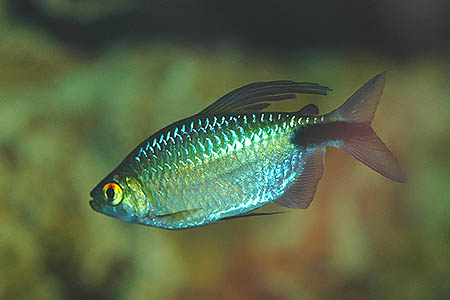
长鳍鲑脂鲤(Bryconalestes longipinnis)是活跃的西非群居脂鲤,成熟雄鱼背鳍飘长。运输适应期可能状态较差,稳定后通常较健壮,但对水质恶化尤其是硝酸盐积累仍敏感。
分布与栖息地
分布从冈比亚延伸至刚果民主共和国及加蓬。主要利用大河,也会进入小溪和支流,偶见于弱咸水河口;不能因偶见河口便默认所有饲养群体都需加盐。
饲养环境
约 120 × 38 × 30 cm 的空间可供小群体考虑。深色底砂、局部密植和浮水植物遮光有助减轻紧张,同时必须保留宽敞泳道。
自然水体常有植物腐败物释放的单宁,但染色并非管理水质的替代。持续维护、控制有机污染和硝酸盐积累十分重要。
食性与喂食
刚进口时可能挑食,通常可逐渐接受活饵、冷冻饵与干粮。适量提供切碎蚯蚓、虾肉等食物,有助满足其较高的动物性食物需求,但具体天然食性分类不宜仅由人工菜单决定。
习性与混养
至少六尾同种共同饲养,适合较大型群落。体形和持续游动可能惊扰小型或动作迟缓的缸友,可优先评估体形相称、较健壮的脂鲤、慈鲷及鲶鱼。
雌雄区分
成年雄鱼通常略大,背鳍明显延长,臀鳍外缘呈凸形。
繁殖
本种为散卵型,人工繁殖有难度但已有可行经验。调养后选状态好的雌雄,使用偏暗、软水且酸性的环境,配细叶植物或莫丝和温和的海绵过滤。
实际产卵动作记录不充分,不能把近缘种的追逐流程当作已确认。本种会产下数百枚橙色卵,亲鱼强烈吃卵,应在产卵后移出。鱼卵约四至六天孵化,再过一至两天平游,先供微型食物,之后两至三天转丰年虾无节幼体或微虫。早期持续充足溶氧尤其重要。
补充说明
旧资料使用属名 Brycinus,可与现用 Bryconalestes 对照辨认。新到鱼的运输恢复和摄食状态,比单凭“耐养”标签更值得观察。
图片
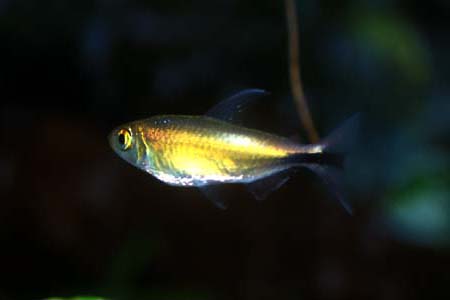
图片来自 SeriouslyFish,版权归各摄影者所有。
English
Overview
Bryconalestes longipinnis is an energetic West African schooling characin whose adult males develop a flowing dorsal fin. Shipping and initial acclimation can be difficult. Settled fish are usually robust but remain sensitive to deteriorating water, particularly nitrate accumulation.
Distribution & habitat
The range extends from Gambia toward the Democratic Republic of the Congo and Gabon. Large rivers are typical, with movements into smaller streams and tributaries and occasional records from lightly brackish estuaries.
Aquarium setup
A small group can be considered for accommodation around 120 × 38 × 30 cm. Dark substrate, planted patches, and floating shade reduce nervousness while leaving ample swimming space.
Many natural waters are stained by decomposing vegetation. Coloration is optional; consistent maintenance and control of waste and nitrate are essential.
Diet & feeding
New imports may be selective before accepting a mixture of live, frozen, and dry foods. Chopped earthworms and shrimp portions are useful regular offerings. The apparent need for protein-rich foods does not by itself define a confirmed wild dietary category.
Behaviour & compatibility
Keep at least six conspecifics in a suitably large community. Size and constant movement can intimidate small or slow fishes. Robust characins, compatible cichlids, and suitable catfishes are potential companions.
Sexual dimorphism
Adult males are slightly larger, with an elongated dorsal fin and a convex anal-fin profile.
Breeding
This egg scatterer can be bred, although success is demanding. Condition adults before selecting a strong pair for a dim, soft, acidic setup with fine plants or moss and gentle sponge filtration.
The spawning movements are poorly documented and should not be assumed from relatives. Several hundred orange eggs may be produced. Remove adults afterward because they readily eat eggs. Hatching takes around four to six days, followed by free swimming one or two days later. Begin with microscopic foods, then offer brine-shrimp nauplii or microworms after two or three days. Strong oxygen availability is particularly important through early development.
Notes
Older accounts use Brycinus for the current Bryconalestes name. Assess newly arrived fish for recovery and actual food intake rather than relying on their reputation after acclimation.
来源
- https://www.seriouslyfish.com/species/bryconalestes-longipinnis(抓取于 2026-10-10)
bryconalestes-longipinnis · 文件: data/species/bryconalestes-longipinnis.md · 状态: 草稿