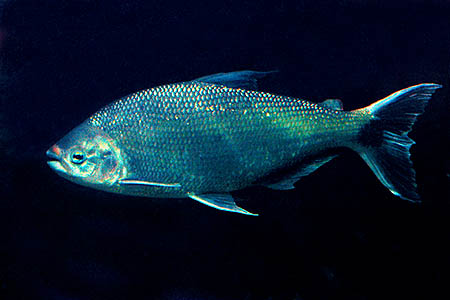
头石脂鲤 · Red-tailed Brycon
概要
| 字段 | 值 |
|---|---|
| 类别 | 鱼 |
| 学名 | Brycon cephalus |
| 分类 | 脂鲤目 Characiformes › 脂鲤科 Characidae › Brycon |
| 水体 | 淡水 |
| 原产地 | 玻利维亚、秘鲁 |
| 成体体长 | 22 cm |
| 饲养难度 | 中等 |
| 最小水体 | 756 L |
| 最小缸长 | 210 cm |
| 群居方式 | 群游 |
| 外部数据 | seriouslyfish brycon-cephalus;fishbase 25516 |
| 食性 | 杂食 |
| 特征 | 吃小鱼: 是;吃虾: 是;会跳缸: 是 |
水质参数
| 参数 | 耐受范围 | 最适范围 | 单位 |
|---|---|---|---|
| 水温 | 22–26 | — | °C |
| pH | 5.5–7.5 | — | — |
| 总硬度 | 1–15 | — | dGH |
概述
头石脂鲤(Brycon cephalus)是活跃、善跳的大型群居脂鲤,口中有细小锐齿,游动和捕食能力都很强。适合空间充裕的大型鱼缸,饲养前需把整群成鱼的活动范围、溶氧和防跳措施一并考虑。
分布与栖息地
原生于秘鲁、玻利维亚和巴西的亚马孙河上游。活动于黑水和白水河流的开阔流动水域,也会在有植被遮蔽的岸边松散聚群休息。洪水期间利用淹没森林,退水后也可出现在遗留湖泊和水潭中。
饲养环境
维持良好的水流和充足溶氧,以开阔游动区为优先。底砂、少量沉木和圆滑石块即可构成布景,不要把空间塞满。缸盖必须严密,它能跃出水面,不能因缸体较大就忽视顶部防护。
食性与喂食
野外机会性取食,小鱼、水生无脊椎动物以及果实、坚果、种子都在食谱内。缸中也较不挑食,但偏爱动物性饵料,可轮换干饲料、活饵和冷冻饵料;虾和活蚯蚓尤其容易接受。
习性与混养
避免体弱、娇小或慢游同伴,可考虑体型相当的强健慈鲷、大型脂鲤、鲤科鱼及鲶鱼。最好至少五六条同养,建立等级时仍会发生争斗;数量更少时,弱势个体可能被集中欺负,甚至受到更严重伤害。
雌雄区分
尚无可靠的外观鉴别方法,成熟雌鱼可能比雄鱼更丰满。
繁殖
水族缸内似乎尚未成功繁殖,自然繁殖与长距离季节洄游有关。雨季开始时,鱼从营养较贫乏的清水、黑水支流进入含泥沙的白水河流产卵,部分群体可迁移数百千米。卵向下游及食物丰富的泛滥平原漂流,成鱼产后返回原支流。
补充说明
一年中还会随洪水阶段再次迁入营养丰富的河段,水位下降后回到支流。近似种外观容易混淆,因此采购时应重视来源信息,不能只靠红尾商品名识别。
图片
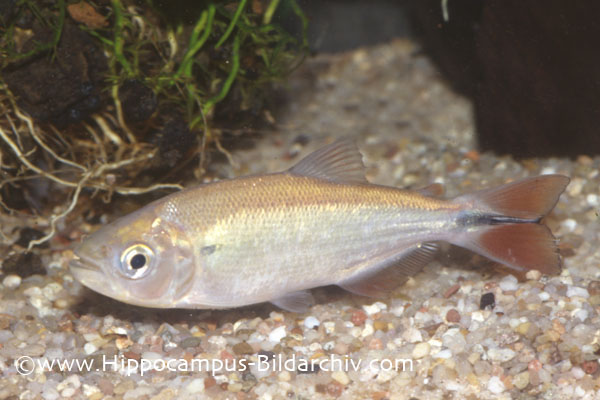
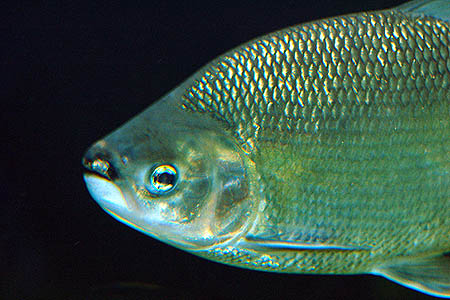
图片来自 SeriouslyFish,版权归各摄影者所有。
English
Overview
Brycon cephalus is a fast, powerful shoaling characid with sharp teeth and a strong jumping ability. It belongs in a spacious large-fish aquarium where the needs of an entire adult group can be met. Open swimming room, oxygenation, and a secure cover are central requirements.
Distribution & habitat
It is native to the upper Amazon in Peru, Bolivia, and Brazil. Fish use flowing open sections of both blackwater and sediment-rich whitewater rivers, resting in loose groups near vegetated banks. Flooded forest and pools or lakes left by receding floods are also occupied.
Aquarium setup
Maintain well-oxygenated water with good circulation. Keep decoration sparse enough to preserve a large swimming area; sand, a few branches, and smooth rocks are sufficient. A firmly fitting cover is essential because this species jumps readily.
Diet & feeding
Its opportunistic natural diet combines small fishes and aquatic invertebrates with fruit, nuts, and seeds. Aquarium fish remain flexible feeders but favor meaty items. Rotate dry, frozen, and live foods; shrimp and live earthworms are particularly attractive.
Behaviour & compatibility
Choose robust companions of comparable size, such as suitable large cichlids, characids, cyprinids, and catfishes. Delicate or slow species are inappropriate. A group of at least five or six is preferable. Hierarchy disputes still occur, but with fewer fish a subordinate individual may receive persistent, potentially severe bullying.
Sexual dimorphism
A reliable external distinction is not established. Mature females may be deeper-bodied than males.
Breeding
Aquarium breeding apparently has not been accomplished. In nature, reproduction is linked to seasonal migration. At the beginning of the rains, adults leave relatively nutrient-poor tributaries for turbulent, silty rivers, sometimes traveling hundreds of kilometers. Eggs drift downstream toward productive floodplains, while the adults return to their former tributaries after spawning.
Notes
Another seasonal movement brings fish into more productive river reaches during the flood period, followed by a return as water falls. Similar-looking congeners complicate identification, so a red-tail trade name alone is insufficient.
来源
- https://www.seriouslyfish.com/species/brycon-cephalus(抓取于 2026-10-10)
brycon-cephalus · 文件: data/species/brycon-cephalus.md · 状态: 草稿