壮兵鲶 · Robust Cory
概要
| 字段 | 值 |
|---|---|
| 类别 | 鱼 |
| 学名 | Brochis robusta |
| 别名 | 壯兵鯰、Corydoras robustus |
| 分类 | 鲶形目 Siluriformes › 美鲶科 Callichthyidae › Brochis |
| 水体 | 淡水 |
| 成体体长 | 9.5 cm |
| 饲养难度 | 中等 |
| 最小水体 | 68 L |
| 最小缸长 | 75 cm |
| 群居方式 | 群游 |
| 性情 | 温和 |
| 外部数据 | seriouslyfish brochis-robusta;fishbase 46220 |
| 原产地 | 巴西 |
| 食性 | 杂食 |
水质参数
| 参数 | 耐受范围 | 最适范围 | 单位 |
|---|---|---|---|
| 水温 | 22–26 | — | °C |
| pH | 6–7 | — | — |
| 总硬度 | 1–12 | — | dGH |
概述
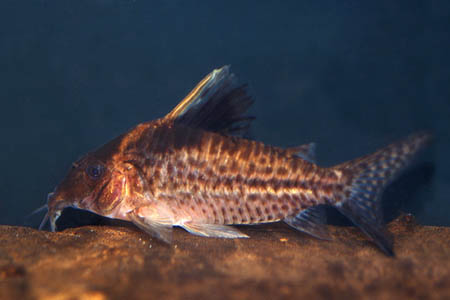
壮兵鲶(Brochis robusta)可达约 9.5 厘米,是体型较大的甲鲶。成熟雄鱼第一背鳍条延长显著,既要为群体留空间,也要重视洁净底床和稳定水质。
分布与栖息地
巴西普鲁斯河流域特有,生活在小支流、溪流、淹水森林和沙洲附近。
饲养环境
群养至少参考约 75 × 30 × 30 厘米。可用河沙、沉木枝、根部和干落叶模拟亚马逊环境,以较暗光照和淡茶色水呈现;落叶需定期更换,避免腐败污染。也能养在维护良好的水草缸,但底床必须洁净,不用底滤板,避免触须受损。
食性与喂食
杂食且较易接受食物,以优质下沉颗粒或片剂为基础,补水蚤、丰年虾、红虫等活冷冻饵。应主动保证食量,不能只靠残饵。
习性与混养
十分温和,至少六尾同养更好。避免大型或攻击性伙伴,可配适合的温和小鱼及其他温和鲶鱼。
雌雄区分
雌鱼从上方看更宽圆,通常略大,第一背鳍条不如雄鱼延长。雄鱼成熟时这一背鳍特征更明显。
繁殖
可借近缘鼠鱼方法尝试,一雌两雄、海绵过滤与细叶植物,参考水温 24 °C、酸碱度 6.5;软水调配可使用反渗透水。抱卵后用偏凉水换 50%~70% 并增氧。若产下附着卵,可分离亲鱼和卵,在原缸水中充氧孵化并移除霉卵,也可考虑桤木果辅助。近缘方案的孵化参考为三至五天,卵黄吸收后喂微虫或丰年虾无节幼体,薄沙底育苗;这些并不是本种已验证时程。
补充说明
偶尔上浮吞气正常,频率明显增加时应检查水质。胸鳍棘容易挂网,也可刺伤皮肤,搬动时避免拉扯或直接握压。
图片
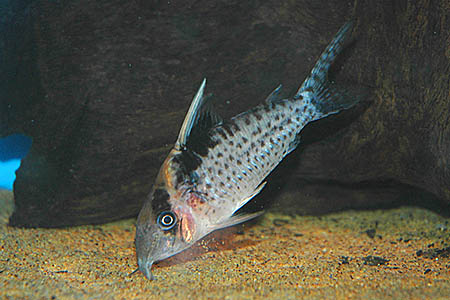
图片来自 SeriouslyFish,版权归各摄影者所有。
English
Overview
At about 9.5 cm, Brochis robusta is a substantial cory catfish. Mature males develop an elongated first dorsal ray. Group space, clean substrate, and consistent water quality are important priorities.
Distribution & habitat
It is endemic to Brazil’s Purus drainage, using small tributaries, creeks, flooded forest, and sandy banks.
Aquarium setup
A group needs at least about 75 by 30 by 30 cm. Sand, branches, roots, and dried leaves can create an Amazon-style layout under subdued lighting. Replace aging leaves before decay fouls the water. A planted aquarium can also work, but careful substrate maintenance is essential and undergravel filtration should be avoided.
Diet & feeding
This readily fed omnivore can use quality sinking pellets or tablets as the staple, supplemented with varied live and frozen foods. Ensure the group receives its own meals.
Behaviour & compatibility
Keep at least six to support its peaceful social behavior. Suitable small, calm fishes and catfishes are better companions than large or aggressive species.
Sexual dimorphism
Females tend to be slightly larger and broader from above, with a less extended first dorsal ray. Mature males show the strongest dorsal extension.
Breeding
A related-cory approach can be attempted with two males per female, sponge filtration, and fine plants around 24 °C and pH 6.5. Reverse-osmosis water can help prepare soft conditions. Once females are gravid, try a 50–70% cooler-water change with extra aeration. If eggs are obtained, separate them from adults, incubate in aerated breeding-tank water, and remove fungal eggs; alder cones are another optional aid. A three-to-five-day hatch and small live foods after yolk absorption are borrowed reference points, not confirmed timings for this species. Thin-sand rearing can be tried.
Notes
Occasional surface gulps supplement respiration; an unusual increase warrants a water-quality check. Sharp pectoral spines can snag netting or puncture skin, so avoid pulling entangled fish or gripping them directly.
来源
- https://www.seriouslyfish.com/species/brochis-robusta(抓取于 2026-10-10)
brochis-robusta · 文件: data/species/brochis-robusta.md · 状态: 草稿