Brochis pantanalensis
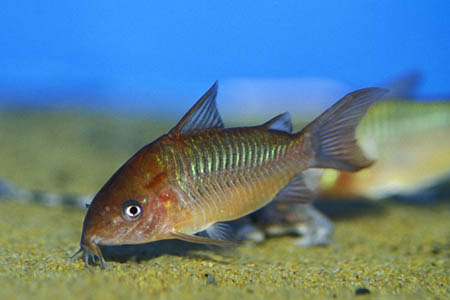
概要
| 字段 | 值 |
|---|---|
| 类别 | 鱼 |
| 学名 | Brochis pantanalensis |
| 别名 | Corydoras pantanalensis |
| 分类 | 鲶形目 Siluriformes › 美鲶科 Callichthyidae › Brochis |
| 水体 | 淡水 |
| 原产地 | 玻利维亚 |
| 成体体长 | 8 cm |
| 饲养难度 | 中等 |
| 最小水体 | 68 L |
| 最小缸长 | 75 cm |
| 群居方式 | 群游 |
| 性情 | 温和 |
| 外部数据 | seriouslyfish brochis-pantanalensis;fishbase 58333 |
水质参数
| 参数 | 耐受范围 | 最适范围 | 单位 |
|---|---|---|---|
| 水温 | 22–26 | — | °C |
| pH | 6.5–7.5 | — | — |
| 总硬度 | 5–12 | — | dGH |
概述
Brochis pantanalensis 来自潘塔纳尔湿地的玻利维亚部分,也以 C005 编号流通。成年雄鱼特有的网纹是重要辨别线索;饲养则以清洁底床、足够同伴和专门投喂为重点。
分布与栖息地
分布于玻利维亚境内的潘塔纳尔湿地。相关栖境以清澈水体和丰富水生植物为特点,不宜简单想象成所有南美甲鲶都生活于无草黑水。
饲养环境
可布置光线较充足、种植较多水草的缸,再加入浮水植物形成局部遮蔽。不要使用底砂过滤,底床必须仔细维护;脏污、维护不足的底床可能导致口须损伤甚至脱落。
食性与喂食
可接受多数沉底干粮,也可喂红虫、丰年虾和切碎蚯蚓等小型活饵或冷冻饵。不同食物搭配能帮助保持状态,不能只投一种饵料。
习性与混养
非常温和,适合与体型、性情相容的小型脂鲤、鲤科鱼、迷鳃鱼、短鲷及其他温和鲶鱼同养。避免特别大或好斗的伙伴。
建议至少六条同种,群养时通常更大胆、活跃。
雌雄区分
成熟雄鱼具有雌鱼没有的网状花纹,也通常更小、更纤细。
繁殖
尚无本种明确的人工繁殖流程,以下只能作为其他鼠鱼的经验性尝试。采用有莫丝等植物的繁殖缸,底部可裸露或铺细沙、细砾,使用不易吸走鱼苗的气动海绵或盒式过滤。约 24 °C、近中性水可以作为尝试条件,按每雌两雄调养,提供多样活饵、冷冻饵和干粮。
相关鱼类抱卵后常以适温内稍凉水进行约 50%~70% 换水,并加强充氧和水流,每天重复至产卵。部分种有雨季繁殖节律或成熟较慢,失败时需考虑季节、成熟程度及换水时机,而非无限加大刺激。
典型鼠鱼繁殖会先追逐,再呈 T 字抱对,雌鱼用腹鳍夹卵,常每次一枚,也可能数枚,随后把卵贴在玻璃等位置。具体受精路径仍有不同推测,不应当作本种已证实过程。
产后隔离亲鱼或移卵,孵化容器用原缸水并保持高溶氧,发现发霉卵及时移除。有繁殖者用少量亚甲蓝辅助防霉。近缘种常在三至四天孵化,卵黄耗尽后吃微虫或丰年虾无节幼体;薄沙底似乎比裸底较少患病,仍属经验性判断。
补充说明
旧名 Corydoras pantanalensis 和编号 C005 都可能出现在商品标签上,均不应据此另作一个物种。
图片
图片来自 SeriouslyFish,版权归各摄影者所有。
English
Overview
Known in the hobby as C005, Brochis pantanalensis comes from the Bolivian Pantanal. The reticulated pattern of mature males is particularly useful for identification. For care, prioritize clean substrate, conspecific company, and a deliberate feeding routine.
Distribution & habitat
Its range lies in the Bolivian portion of the Pantanal wetland. The described habitats combine clear water with abundant aquatic vegetation.
Aquarium setup
A well-lit planted aquarium with some floating cover reflects that setting. Avoid undergravel filtration and maintain the substrate carefully. Poorly maintained, dirty bottom material can lead to damaged or lost barbels.
Diet & feeding
Most sinking prepared foods are accepted, together with small live or frozen bloodworms, brine shrimp, and chopped earthworms. Vary the ration to maintain good condition.
Behaviour & compatibility
Very peaceful behavior allows suitable small characins, cyprinids, anabantoids, dwarf cichlids, and other gentle catfishes. Avoid very large or aggressive companions.
Keep at least six together. Conspecific company generally makes them more confident and active.
Sexual dimorphism
A netlike pattern develops in mature males but is absent from females. Males also tend to be smaller and slimmer.
Breeding
A confirmed captive procedure for this species is unavailable. The following approach is borrowed from other related catfishes. Use a spawning aquarium with moss or similar vegetation, bare flooring or fine sand or gravel, and an air-powered sponge or box filter that will not draw in fry. Around 24 °C and near-neutral water are possible starting conditions. Condition two males per female with varied live, frozen, and prepared foods.
For relatives, gravid females are often stimulated by a 50–70% change with slightly cooler water within the appropriate range, accompanied by extra aeration and movement. This may be repeated daily. Seasonal spawning and slow maturation can also matter, so unsuccessful attempts may call for patience or changed timing rather than increasingly forceful stimulation.
Typical related-catfish courtship includes chasing, a T-shaped pairing, and the female holding one or sometimes several eggs between her pelvic fins before attaching them to glass or another surface. The precise fertilization route remains subject to interpretation and is not established here for this species.
Separate adults and eggs, retaining the same water and good oxygenation for incubation. Remove fungused eggs promptly; some breeders use a little methylene blue. In related species, hatching commonly takes three to four days, with microworms or brine-shrimp nauplii offered after yolk absorption. A thin sand layer appears to reduce fry ailments compared with bare flooring, but this is an observational finding.
Notes
Older labels may use Corydoras pantanalensis or C005. These names do not represent additional species.
来源
- https://www.seriouslyfish.com/species/brochis-pantanalensis(抓取于 2026-10-10)
brochis-pantanalensis · 文件: data/species/brochis-pantanalensis.md · 状态: 草稿